

Athens City Tour 2025: Complete Guide to 12 Must-Explore Neighborhoods
Athens isn’t a single destination, it’s a mosaic of distinct neighborhoods, each revealing different chapters of this ancient capital’s 2,500-year story. An athens city tour through these urban villages transforms surface-level sightseeing into authentic cultural immersion, where neoclassical mansions share cobblestone streets with contemporary street art, ancient ruins anchor modern squares, and every district pulses with its own character. Understanding Athens through its neighborhoods rather than isolated monuments unlocks the city’s true personality, from Plaka’s tourist-friendly charm to Exarchia’s bohemian edge.
What neighborhoods should you visit on an Athens city tour? Essential Athens neighborhoods include Plaka’s ancient charm, Monastiraki’s vibrant markets, Psyrri’s nightlife, Syntagma’s political heart, and Kolonaki’s elegant streets, each revealing distinct layers of Athens’ 2,500-year history within compact walking distance.
What Makes Athens City Tours Unique?
Unlike sprawling European capitals requiring extensive metro navigation, Athens concentrates its most compelling neighborhoods within a remarkably walkable downtown core. The tours athens ecosystem benefits from this geographic advantage, you can experience aristocratic Kolonaki, grungy Exarchia, and archaeological Thissio within a single morning without ever boarding public transport. This density creates natural cultural collisions: one moment you’re sipping freddo espresso in a minimalist café occupying a renovated neoclassical mansion, the next you’re navigating narrow lanes where residents still hang laundry between buildings unchanged since Ottoman times.
Athens neighborhoods also preserve distinct historical periods without feeling like open-air museums. Plaka maintains its village atmosphere despite tourist crowds, while Psyrri’s transformation from industrial workshops to nightlife hub happened organically through artistic colonization rather than corporate development. When working with experienced athens day tours operators, guides familiar with each district’s evolution provide context impossible to extract from guidebooks, explaining how political events, economic shifts, and social movements shaped the streetscapes you’re walking through.
12 Essential Athens Neighborhoods to Explore
Neighborhood Comparison Guide
| Neighborhood | Character | Top Attraction | Best For | Walk from Syntagma |
| Plaka | Historic village | Anafiotika alleys | First-time visitors | 5 minutes |
| Monastiraki | Market energy | Ancient Agora | Shopping, culture | 8 minutes |
| Psyrri | Creative nightlife | Street art murals | Evening entertainment | 10 minutes |
| Syntagma | Political heart | Parliament building | Modern Athens | Central point |
| Kolonaki | Upscale elegance | Benaki Museum | Designer shopping | 15 minutes |
| Thissio | Archaeological | Temple of Hephaestus | Ancient sites | 12 minutes |
| Koukaki | Residential cool | Acropolis Museum | Local atmosphere | 15 minutes |
| Exarchia | Bohemian student | University district | Alternative culture | 20 minutes |
| Anafiotika | Island village | Cycladic houses | Photography | 10 minutes |
| Gazi | Industrial revival | Technopolis venue | Modern clubbing | 18 minutes |
| Pangrati | Authentic local | Panathenaic Stadium | Residential life | 20 minutes |
| Mets | Quiet charm | Arditos Hill cafés | Relaxed exploration | 18 minutes |
1. Plaka: Athens’ Oldest Neighborhood
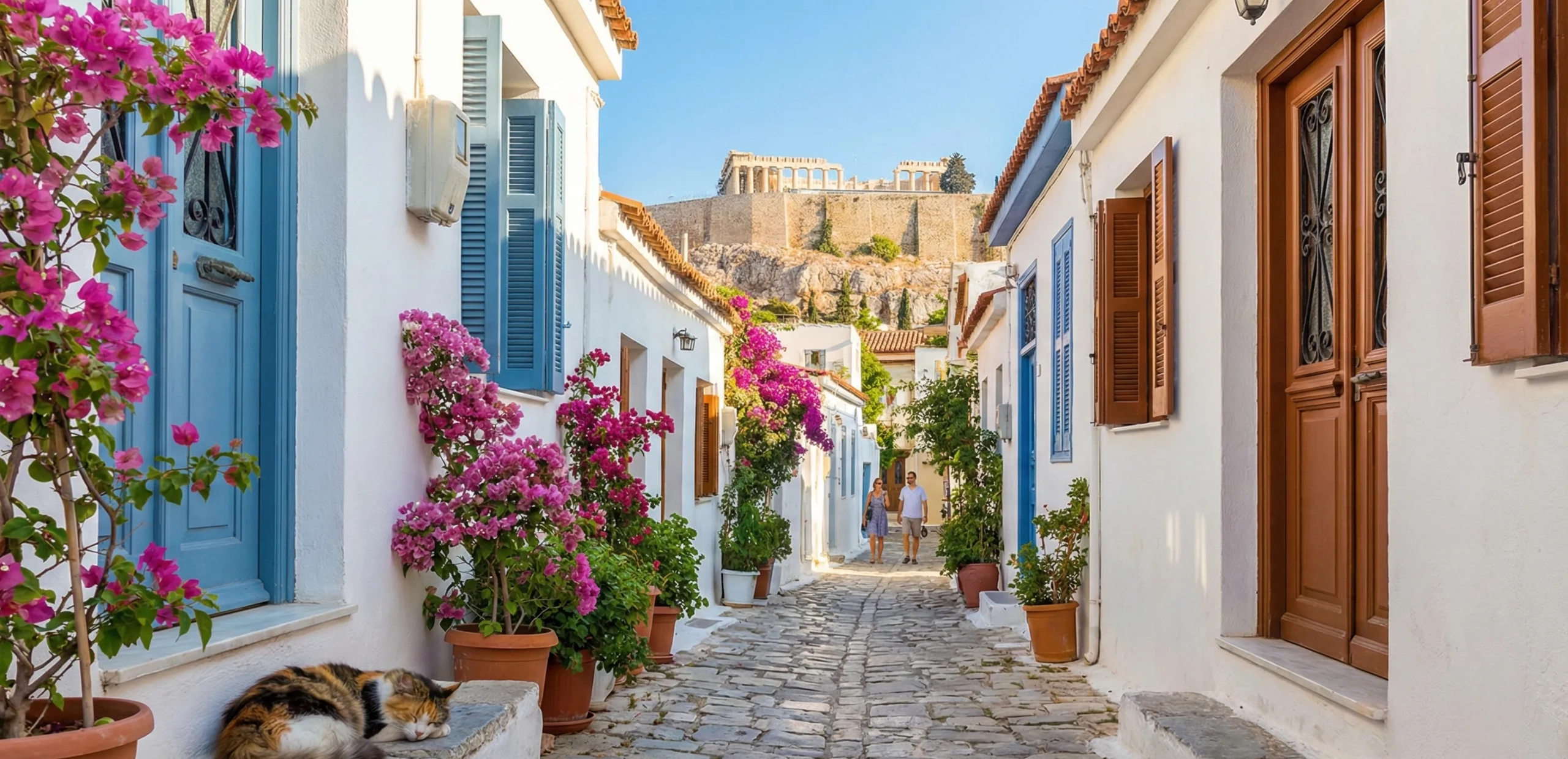
Colloquially called the “Neighborhood of the Gods” due to its position beneath the Acropolis’ north slope, Plaka represents most visitors’ first Athens neighborhood encounter. Its labyrinthine cobblestone streets, some following paths unchanged since classical antiquity, wind past tavernas where proprietors still negotiate with delivery drivers blocking narrow lanes with produce trucks. The tourist infrastructure is undeniable, yet authentic moments persist: elderly residents chatting on doorsteps, neighborhood cats claiming specific café territories, small grocers selling produce to locals who’ve shopped there for decades. Quality Athens tours use Plaka as an orientation point before venturing into less-traveled districts, establishing historical context through its visible archaeological layers.
2. Monastiraki: Where Commerce Meets History
This bustling square functions as Athens’ unofficial crossroads, where three metro lines converge beneath an Ottoman-era mosque facing the Ancient Agora’s columns. Sunday’s flea market transforms surrounding streets into organized chaos, antique dealers displaying Byzantine icons beside vendors hawking knockoff sunglasses, record collectors flipping through vinyl crates while tourists photograph the Acropolis rising behind stalls. The neighborhood embodies Athens’ talent for historical layering: you can examine ancient pottery shards in the Agora’s archaeological site, then ascend one level to a rooftop bar where DJs spin electronic music as sunset illuminates the Parthenon. Experienced all about athens tour operators schedule Monastiraki visits strategically, avoiding Saturday afternoon crush while ensuring markets remain active.
3. Psyrri: Industrial Heritage Meets Creative Energy
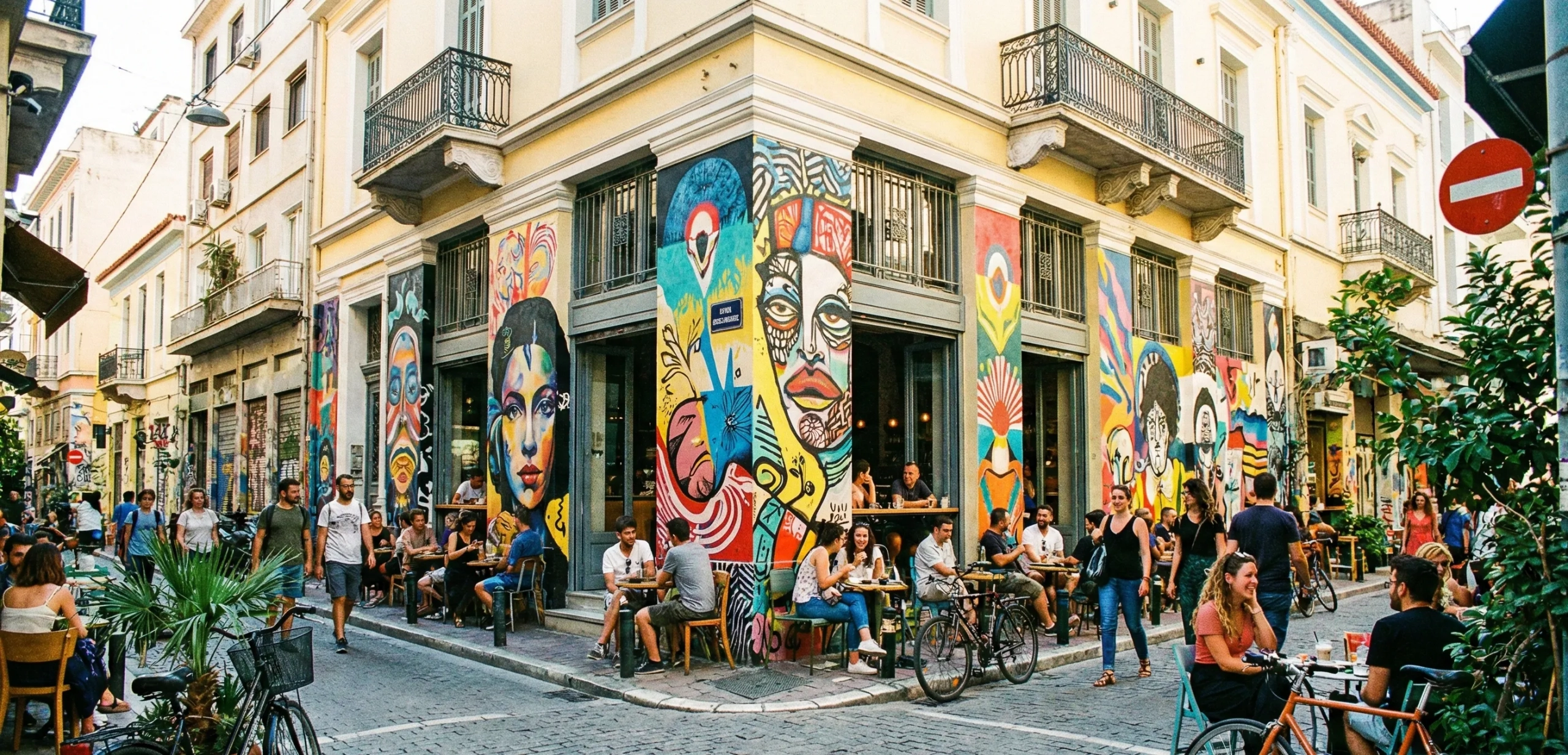
Twenty years ago, Psyrri remained Athens’ manufacturing heart, leather workshops, metal fabricators, printing presses occupying neoclassical buildings city planners considered demolishing. Then artists discovered cheap rent, galleries colonized former warehouses, and restaurateurs transformed ground-floor workshops into intimate dining rooms. Today’s Psyrri represents Athens’ most successful organic gentrification: yes, trendy cocktail bars replaced traditional tavernas, but metalworkers still operate among the clubs, elderly residents coexist with young creatives, and street art covering every available surface chronicles neighborhood transformation rather than concealing it.
4. Syntagma: Modern Athens’ Political Center
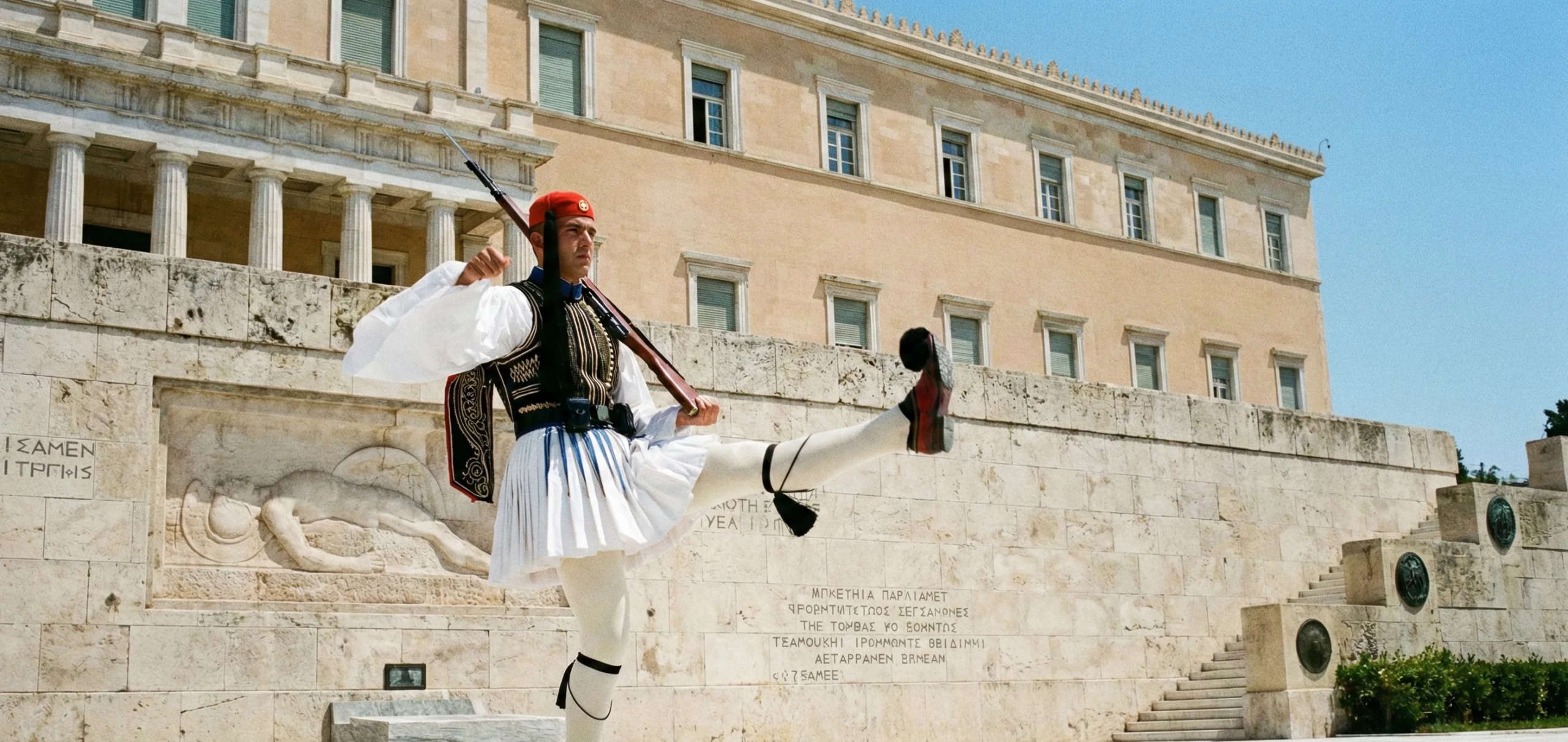
Syntagma Square functions as the beating heart of contemporary Athens, parliament guards perform hourly ceremonial changes before crowds photographing their pompom shoes, while protests periodically fill the square with demonstrators whose chants echo against neoclassical facades. The surrounding Commercial Triangle comprises Athens’ primary business district, where office workers flood cafés during breaks and luxury hotels occupy buildings overlooking the square. Behind parliament’s imposing marble, the National Garden provides unexpected green refuge, its 15.5 hectares of botanical gardens and shaded pathways offering respite from urban intensity.
5. Kolonaki: Elegance and Cultural Institutions
Athens’ wealthiest central neighborhood climbs the slopes of Lycabettus Hill, its tree-lined streets hosting designer boutiques, art galleries, and cafés where cappuccinos cost triple Monastiraki prices. But Kolonaki offers substance beyond conspicuous consumption: the Benaki Museum’s extensive Greek cultural collection, Cycladic Art Museum’s minimalist galleries, and Byzantine & Christian Museum justify exploration even if luxury shopping doesn’t appeal. The neighborhood also demonstrates Athens’ class geography, Kolonaki residents historically wielded political influence disproportionate to the district’s small size, and that legacy persists in its manicured streets and diplomatic residences. Combining Kolonaki exploration with sunset Cape Sounion tour extensions creates full-day itineraries balancing urban sophistication with coastal antiquities.
6. Thissio: Living Among Ancient Ruins
Few neighborhoods integrate archaeological sites into daily life as seamlessly as Thissio, where residents walk dogs past the Temple of Hephaestus, mainland Greece’s best-preserved ancient temple, and cafés line pedestrianized streets offering direct Acropolis views. The Apostolou Pavlou walkway connecting Thissio to Plaka represents Athens’ most successful recent urban planning: this car-free promenade encourages evening strolls where locals outnumber tourists, musicians busk at strategic viewpoints, and elderly couples claim specific benches nightly. When planning comprehensive Delphi day trips from Athens, operators often incorporate Thissio walks as city-based archaeological context before venturing to rural sanctuaries.
7. Koukaki: Local Life Beneath the Acropolis
This residential neighborhood south of the Acropolis demonstrates Athens at its most authentically livable, not preserved as historic district nor transformed by tourism, but functioning as actual neighborhood where families raise children, elderly residents maintain decades-long café allegiances, and corner stores sell produce rather than souvenirs. Koukaki’s recent renaissance follows the Acropolis Museum’s 2009 opening, attracting quality restaurants and wine bars that cater equally to residents and culture-seeking visitors. The pedestrianized Olympiou Street epitomizes this balance: summer evenings bring crowds that feel convivial rather than overwhelming, and recommendations from Meteora day tour guides often include Koukaki restaurants for pre-departure dinners showcasing contemporary Greek cuisine.
8. Exarchia: Athens’ Alternative Heart
This politically charged student district surrounding Athens’ universities maintains its reputation as leftist stronghold and anarchist haven, graffiti covers every available surface, squats occupy abandoned buildings, and residents maintain fierce independence from both tourism and gentrification. While recent years brought increased police presence and some short-term rentals, Exarchia retains authentic edge: bookstores stock radical political theory, cafés host impromptu debates about Greek economic policy, and the weekly Saturday laïki agora (farmers market) demonstrates community-supported agriculture before such concepts became fashionable.
9. Anafiotika: Cycladic Village in the City
Tucked beneath the Acropolis’ northeast slope, this tiny neighborhood of whitewashed houses and narrow staircases was built by stonemasons from Anafi island who came to construct King Otto’s palace in the 1840s. They replicated their island’s Cycladic architecture, cube-shaped houses with blue shutters, tiny gardens bursting with jasmine and bougainvillea, cats sleeping on sunny doorsteps. With only about 40 houses and minimal commercial presence, Anafiotika functions more as photogenic detour than destination, but its village atmosphere provides surreal contrast to urban Athens surrounding it.
10. Gazi: Industrial Transformation
Named for the gasworks that dominated this industrial zone until 1984, Gazi epitomizes Athens’ post-Olympic reinvention. The restored gasworks now house Technopolis, a cultural center hosting exhibitions and concerts, while surrounding streets transformed into clubbing district where venues don’t get crowded until after midnight. Unlike Psyrri’s organic evolution, Gazi’s development followed more planned trajectory, attracting LGBTQ+ venues and contemporary restaurants alongside mainstream clubs. The neighborhood demonstrates both Athens’ capacity for architectural recycling and tensions between nightlife economies and residential quality of life.
11. Pangrati: Residential Authenticity
East of the Panathenaic Stadium, Pangrati remains refreshingly unaffected by tourism despite proximity to major sites. This middle-class residential district maintains neighborhood rhythms largely unchanged for decades: elderly men occupy specific café tables daily, playing tavli (backgammon) for hours; local shops know customers by name; and evening volta (promenade) tradition persists along main streets. Varnava Square anchors neighborhood life, its surrounding tavernas and bars attracting locals who appreciate quality without pretension.
12. Mets: Quiet Sophistication
Bordering Pangrati and tucked between the Panathenaic Stadium and First Cemetery, Mets combines residential calm with proximity to central Athens. This small neighborhood attracts professionals seeking quieter alternatives to Kolonaki’s bustle, artists priced out of Psyrri, and families wanting walkable access to parks and schools. Arditos Hill’s pine-covered slopes provide neighborhood green space, while main streets host cafés and small restaurants that fill with locals rather than tourists, even during high season.
How to Plan Your Athens City Tour
Effective athens daily tours balance ambition with reality, attempting all 12 neighborhoods in one day produces superficial impressions rather than meaningful understanding. First-time visitors should prioritize the Plaka-Monastiraki-Psyrri-Syntagma quartet, spending 4-6 hours exploring these interconnected central districts with breaks for coffee and lunch. This core provides essential context: ancient sites establish historical foundation, Ottoman heritage demonstrates later occupations, 19th-century neoclassicism reveals modern Greece’s origins, and contemporary layers show current evolution.
Return visitors or those with multiple days can expand systematically: add Kolonaki and Thissio for cultural depth, include Koukaki or Pangrati for authentic residential perspectives, venture to Exarchia for alternative viewpoints. Many operators combine Athens neighborhood exploration with regional excursions like Argolis day trips, creating itineraries that contextualize Athens within broader Greek cultural geography.
Athens City Tour Logistics
The walkability that makes Athens neighborhood tours possible also creates practical challenges, summer heat makes afternoon exploration genuinely uncomfortable, while winter rains transform marble-paved streets into slippery hazards. Successful day tours athens itineraries adapt to seasonal realities: May-September tours should start early (8-9am) to complete Acropolis climbing before midday heat, break for long lunches during peak temperature hours (2-5pm), then resume with evening neighborhood walks. October-April allows more flexible scheduling but requires backup plans for weather.
Transportation strategy depends on neighborhood combinations. The central quartet (Plaka, Monastiraki, Psyrri, Syntagma) connects entirely on foot, while reaching Gazi, Exarchia, or Pangrati efficiently requires short metro rides. Athens airport transfers often include brief city orientations, helping visitors understand metro lines and neighborhood geography before independent exploration. Private tours solve logistics through dedicated vehicles but sacrifice the street-level perspective that makes neighborhood exploration compelling.
Frequently Asked Questions
How long does an Athens city tour take?
Duration varies significantly based on depth and neighborhoods covered: Half-day tours (4 hours) typically explore 4-6 central neighborhoods with brief stops for overview and photos. Full-day experiences (7-8 hours) allow deeper exploration of 8-10 districts including lunch breaks and museum visits. For comprehensive coverage of all 12 neighborhoods with meaningful time in each, plan 2-3 days of structured exploration combined with independent wandering.
What’s included in typical Athens city tours?
Comprehensive tours encompass major archaeological sites (Acropolis, Ancient Agora), key squares (Syntagma, Monastiraki), characteristic neighborhoods (Plaka, Psyrri), and cultural context explaining Athens’ evolution. Quality operators provide licensed guides with archaeological or historical backgrounds, skip-the-line access to major monuments during peak season, and strategic breaks at neighborhood cafés demonstrating local life. Some include traditional lunch in family-run tavernas, while others focus purely on walking exploration.
Are Athens city tours suitable for families?
Yes, though neighborhood selection matters significantly for family engagement. Plaka’s pedestrianized streets and ice cream shops appeal to children, Monastiraki’s flea market provides treasure-hunt atmosphere, and Thissio’s park areas offer playing space. Exarchia’s political edge and Gazi’s nightlife focus suit adults better. Heat management becomes critical, families should prioritize morning exploration, plan frequent water and shade breaks, and consider splitting multi-day visits between neighborhood walks and museum time.
Can I customize my Athens city tour?
Absolutely, customization represents private tours’ primary advantage over group alternatives. Communicate specific interests during booking: archaeological focus, contemporary art and street culture, food and markets, or residential authenticity each suggest different neighborhood priorities. Operators experienced with Corinth and Nafplion tour combinations can also design itineraries balancing Athens neighborhoods with nearby archaeological sites for visitors wanting urban and ancient diversity.
Which neighborhoods should first-time visitors prioritize?
The Plaka-Monastiraki-Syntagma-Psyrri quartet provides essential foundation covering historical, commercial, political, and contemporary facets. This central cluster demonstrates Athens’ layered character, ancient ruins integrated into modern city, Ottoman heritage visible in architecture, 19th-century neoclassicism revealing national identity formation, and current creative energy in revitalized districts. First-timers with extra time should add Kolonaki (cultural institutions) or Koukaki (authentic residential life) before exploring more peripheral neighborhoods.
Do I need a guide for Athens city tours?
Professional guides substantially enhance neighborhood exploration, particularly for districts where history isn’t immediately visible. Knowledgeable athens guided tours leaders explain why certain buildings survived while others fell, identify architectural details revealing construction periods, share stories about neighborhoods’ social evolution, and provide contemporary context for political graffiti or urban development debates. Independent exploration works well for atmospheric neighborhoods like Anafiotika or Pangrati where simply wandering suffices, but historical districts benefit enormously from expert interpretation.
What’s the best time of day for Athens city tours?
Early morning (8-11am) or late afternoon (5-8pm) provide optimal conditions May through September, avoiding midday heat that makes extended walking uncomfortable and photographing ancient sites challenging due to harsh light. October-April offers more flexibility with pleasant midday temperatures, though occasional rain requires contingency planning. Evening neighborhood walks showcase different atmosphere, Psyrri and Gazi come alive after dark, Thissio’s pedestrian zone fills with strolling locals, and rooftop bars provide illuminated Acropolis views impossible during daylight.
Conclusion
Athens’ neighborhood diversity transforms what could be monument-focused tourism into genuine urban exploration, where each district reveals distinct aspects of this ancient capital’s ongoing evolution. From Plaka’s tourist-friendly charm establishing historical context to Exarchia’s defiant independence challenging comfortable narratives, these 12 neighborhoods demonstrate Athens’ refusal to be reduced to ancient ruins surrounded by modern mediocrity. The compact geography that allows exploring multiple districts within single days rewards curious travelers willing to venture beyond Acropolis-centric itineraries.
Smart visitors combine iconic sites with neighborhood immersion, understanding that Athens’ authentic character emerges more clearly in Koukaki’s evening café culture or Pangrati’s Sunday markets than tourist-saturated zones. Whether starting with comprehensive athens tours providing professional structure or independently mapping personalized routes based on specific interests, neighborhood-based exploration unlocks perspectives impossible through conventional sightseeing. Athens isn’t just Europe’s oldest capital, it’s a living city where ancient foundations support contemporary creativity, and understanding that dynamic requires walking its diverse streets rather than simply photographing monuments.


Leave a Reply
Want to join the discussion?Feel free to contribute!