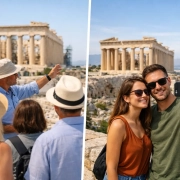
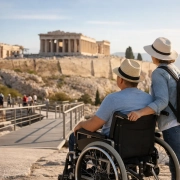
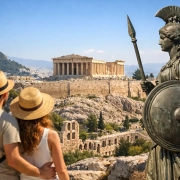
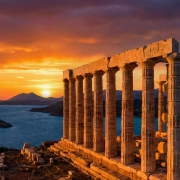
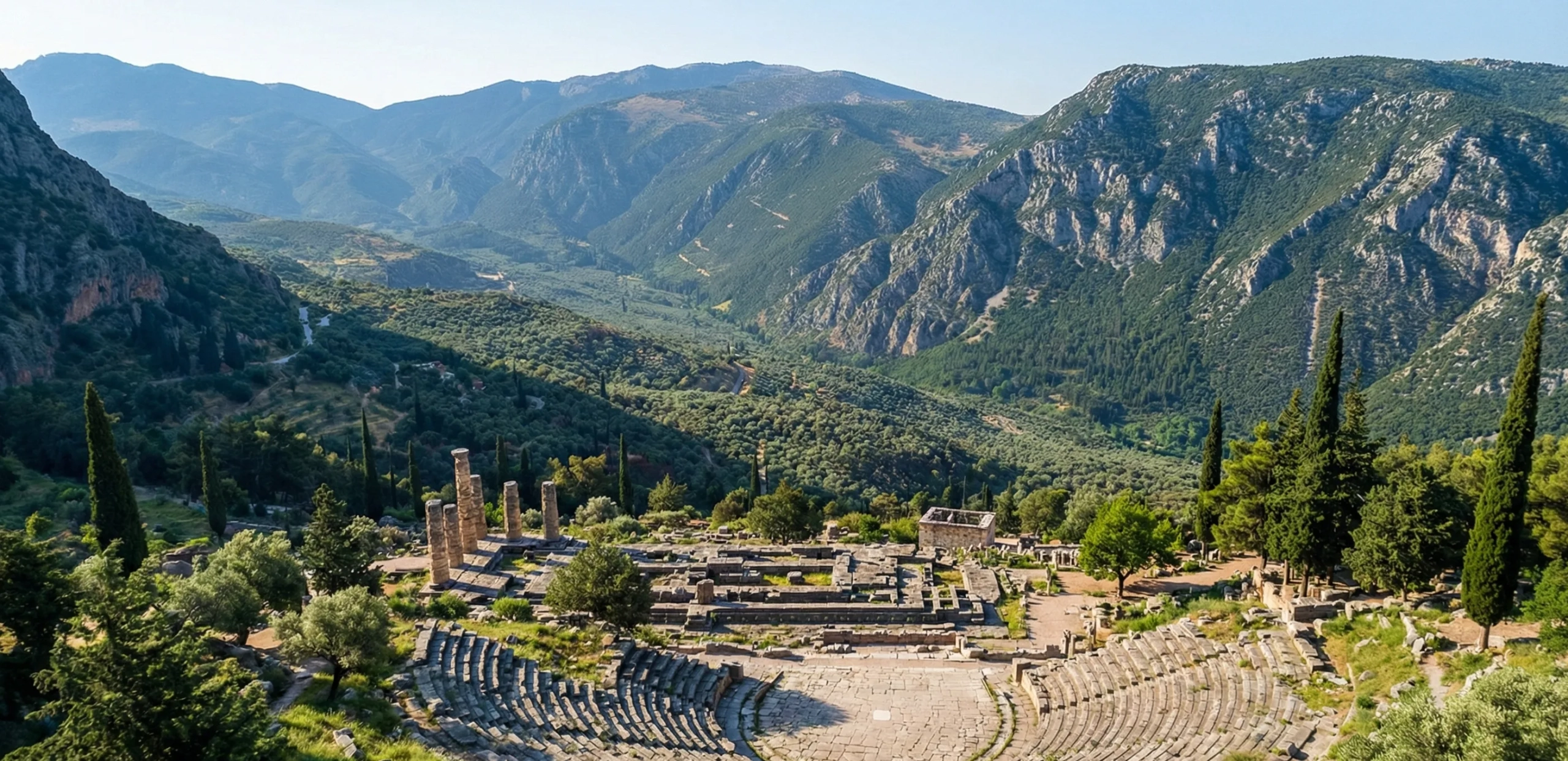
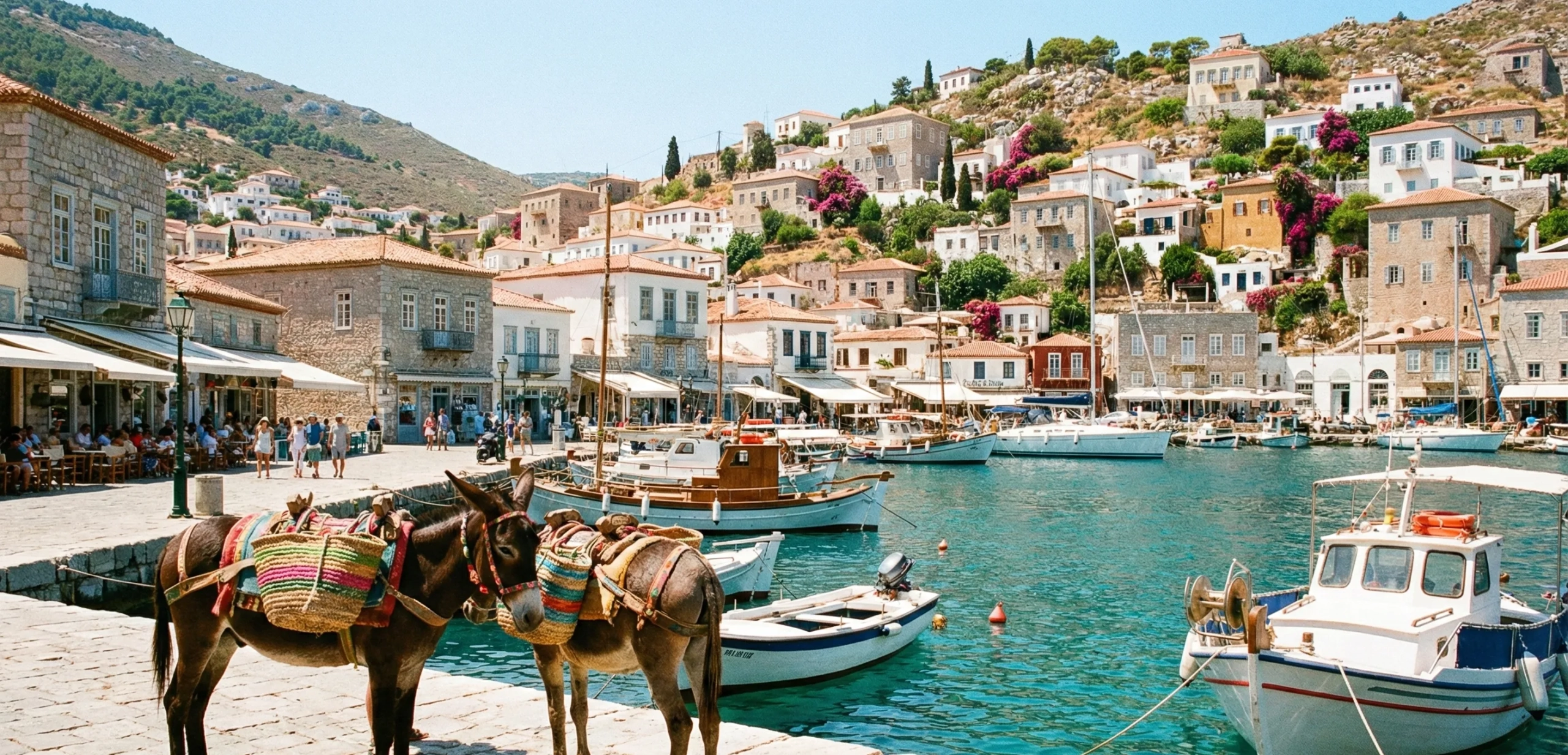
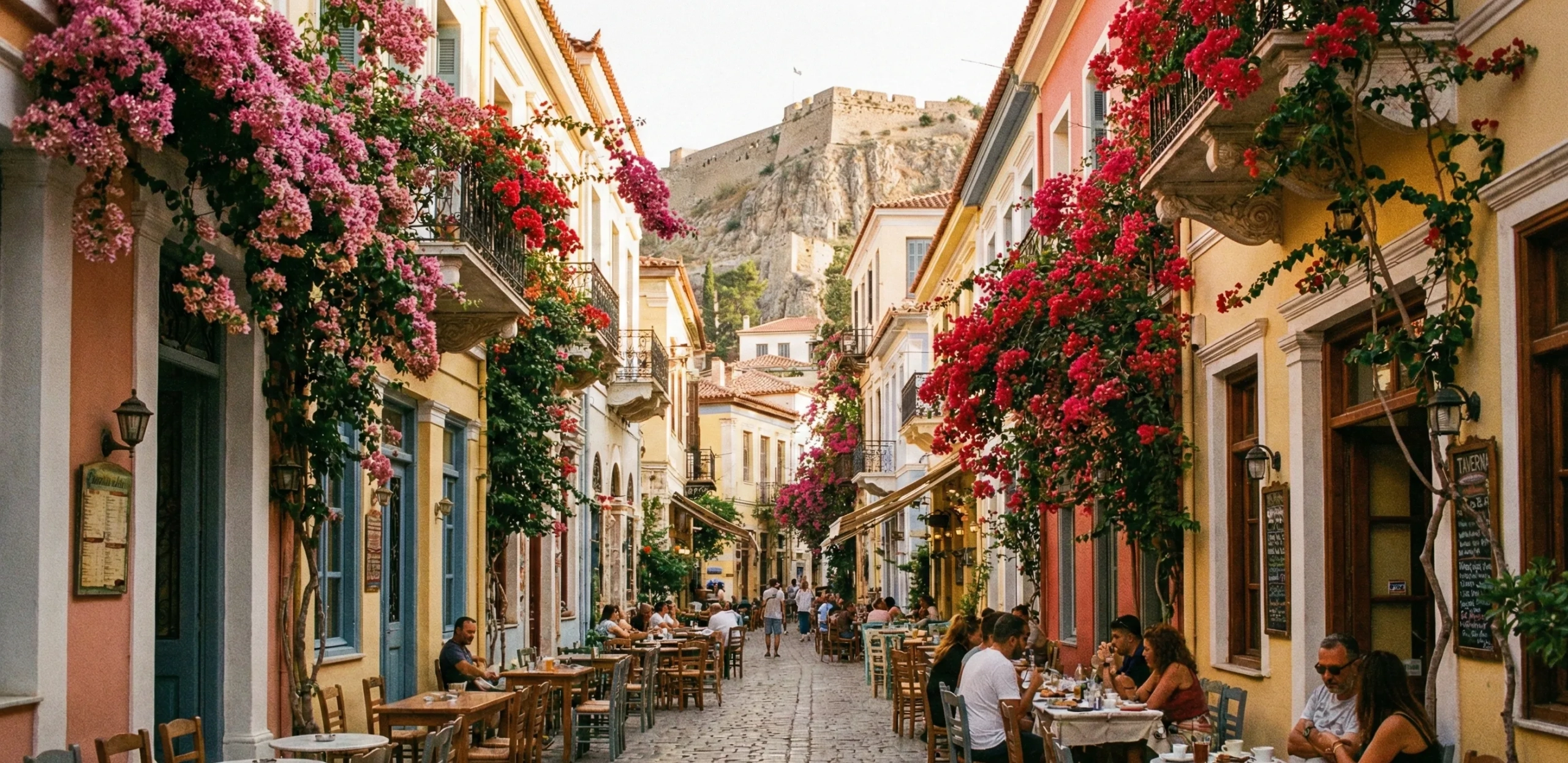
Athens rewards travelers who stay alert without becoming anxious. The city is energetic, walkable, deeply welcoming, and filled with extraordinary moments – from a quiet neighborhood café beneath the Acropolis to the changing of the guard at Syntagma Square. Knowing how to travel Athens safely means handling a few practical details well, so your attention stays where it belongs: on Greece’s history, food, and people.
For most visitors, Athens is a comfortable and rewarding destination. Violent crime affecting tourists is uncommon, but, as in any major European capital, crowded places can attract pickpockets and unfamiliar streets can feel confusing after dark. A little local awareness goes a long way.
How to Travel Athens Safely in the City Center
The historic center is generally the easiest place for first-time visitors to explore. Plaka, Monastiraki, Syntagma, Koukaki, Makrygianni, Kolonaki, and the areas around the Acropolis are popular with travelers and active throughout the day and evening. They offer restaurants, hotels, museums, and convenient access to major sights.
Use the same judgment you would in Rome, Paris, or New York. Stay on well-lit streets at night, particularly when walking back to your hotel. If a route feels deserted, poorly lit, or simply unfamiliar, choose a taxi or arranged transfer instead. This is especially sensible after a late dinner, when traveling with young children, or when you are carrying shopping bags or luggage.
Athens is a real working city, not an open-air museum. Some streets change character quickly from one block to the next, particularly around large transport hubs. Omonia and the areas immediately around some central squares can be busy, rougher around the edges, and less appealing late at night. They are not places most visitors need to seek out after dark. Plan your hotel location carefully, and ask your host or driver for the best walking route before heading out.
Protect Valuables Where Crowds Are Densest
The most common issue visitors encounter in Athens is petty theft, particularly on the Metro, at crowded stations, in busy markets, and around headline attractions. Pickpockets rely on distraction and close proximity, not confrontation.
Keep your passport, excess cash, and backup bank card secured at your hotel whenever possible. Carry only what you expect to use that day. A crossbody bag worn in front of your body, a zippered bag, or an interior jacket pocket is far better than an open tote, loose backpack pocket, or back pants pocket.
Be especially attentive when boarding or leaving Metro trains, standing near ticket machines, and moving through Monastiraki’s busiest lanes. If someone bumps into you, creates an unnecessary commotion, or offers unsolicited help with a ticket machine, pause and check your belongings. There is no need to be suspicious of everyone; simply do not let a stranger rush or distract you.
When dining outdoors, keep your phone and wallet off the edge of the table. A phone placed casually beside a coffee can disappear faster than many travelers expect in any busy city. It is a small habit that prevents an avoidable problem.
Choose Transportation With Care
Athens has an efficient Metro, trams, buses, taxis, and extensive walkable areas. Each option can be safe and useful, depending on the time of day, your group, and your itinerary.
The Metro is usually the quickest way to cover longer distances, including the connection between Athens International Airport and central Athens. During rush hour, though, trains can become crowded. Keep bags close, avoid displaying expensive electronics, and know the name of your destination station before boarding.
Official taxis are plentiful, and licensed drivers use meters for city rides. Before setting off, confirm that the meter is running and make sure you understand the approximate route. For airport transfers, cruise port transportation, or a full day of sightseeing, pre-arranged private transportation offers greater peace of mind. You know who is meeting you, where you are going, and what your transportation costs before the journey begins.
For families, couples, cruise guests with a limited schedule, and travelers arriving after a long flight, this can be more than a luxury. It removes the stress of finding transport while managing luggage, unfamiliar streets, and arrival-day fatigue. A professional private driver can also advise you on current traffic conditions, practical drop-off points, and areas where vehicles cannot enter.
Be Cautious as a Pedestrian
Traffic is one of the most underestimated safety considerations in Athens. Scooters, motorcycles, taxis, and cars move quickly, and drivers may not always yield in the way American visitors expect. Cross only at designated crossings when possible, wait for the signal, and look carefully in both directions – including for motorcycles passing through gaps in traffic.
Athens also has uneven pavement, marble surfaces, and steep cobbled lanes around the Acropolis and Plaka. Supportive shoes with good grip are essential. Smooth-soled sandals can be uncomfortable and slippery, particularly on polished stone after rain.
Stay Comfortable in the Greek Heat
From late spring through early fall, heat can become the day’s biggest challenge. The Acropolis has limited shade, reflective stone surfaces, and uphill walking. During a summer heat wave, even travelers in excellent health can feel unwell if they try to see everything at midday.
Start major outdoor visits early. Carry water, wear a hat, use sunscreen, and schedule a shaded lunch or museum visit during the hottest hours. If you are traveling with children, older relatives, or anyone sensitive to heat, build in more breaks than you think you need. The best itinerary is not the one that checks every box; it is the one that leaves you enough energy to enjoy dinner in Plaka.
Pay attention to official weather alerts and be flexible. On very hot days, a private itinerary can be adjusted around air-conditioned transport, shorter walks, and better-timed monument visits. That flexibility is particularly valuable for shore excursions, where guests want to make the most of limited time without feeling rushed.
Avoid Tourist Scams Without Losing Your Openness
Most Athenians are genuinely hospitable, and visitors should feel comfortable asking for directions or restaurant suggestions. Still, avoid offers that seem unusually urgent, overly personal, or too good to be true.
A few simple habits help. Use ATMs attached to reputable banks rather than isolated machines. Review restaurant menus and prices before ordering in heavily touristy areas. Decline unsolicited offers for bracelets, flowers, unofficial tours, or help with your bags unless you have requested assistance. If someone pressures you to visit a specific bar or restaurant, politely continue on your way.
For tours, transportation, and guides, choose established providers with clear inclusions, confirmed meeting details, and transparent pricing. A licensed guide or experienced local driver does more than explain history. They help you move through the city confidently, avoid wasted time, and make decisions based on current local conditions.
Be Smart Around Demonstrations and Large Events
Athens is Greece’s political capital, and public demonstrations occasionally take place, most often around Syntagma Square and the Parliament. The vast majority are peaceful, but they can disrupt traffic, close Metro stations, and create crowds that are inconvenient for sightseeing.
If you see a gathering forming, do not push through it for a closer look. Take an alternate route and allow extra time for your plans. Your hotel, driver, or guide can advise on practical changes that day. The same approach applies to football matches, holiday celebrations, and major public events: enjoy the atmosphere from a sensible distance, but do not let a crowd dictate your movements.
Plan Arrivals, Departures, and Cruise Days Well
The moments when travelers feel most vulnerable are often the least glamorous: arriving at the airport, looking for a ship transfer at Piraeus, or trying to reach a hotel with luggage in midday traffic. Confirm your transportation before you land or disembark. Keep your hotel address saved offline, along with a contact number and a copy of your travel documents.
For cruise passengers, timing matters as much as safety. Piraeus is a busy working port, and independent transportation delays can quickly shorten a day in Athens. A private shore excursion with a dedicated driver allows for a more controlled schedule, secure vehicle storage for personal items, and a reliable return to the ship. Timeless Athens Tours can tailor private transportation and sightseeing around your arrival time, interests, walking pace, and departure deadline.
A Few Practical Habits That Make a Big Difference
Before leaving your hotel each day, charge your phone, carry a portable battery if you have one, and take a photo of your passport rather than carrying it everywhere. Share your day’s plan with someone in your group, particularly if you plan to separate for shopping or independent sightseeing.
Keep emergency needs simple: know your hotel’s name, have travel insurance details accessible, and call 112 for urgent emergencies in Greece. Pharmacies are common and can be helpful for minor needs, but serious concerns should be handled through your insurance provider or a medical professional.
Athens is best experienced with curiosity and a calm plan. Walk its historic lanes, accept the occasional detour, and leave room for an unplanned coffee with an Acropolis view. When your transportation, valuables, and daily pace are thoughtfully managed, the city feels less like a logistical challenge and more like the unforgettable beginning of your Greek journey.
https://www.athenstours.gr/wp-content/uploads/2026/10/how-to-travel-athens-safely-with-confidence-featured.webp10241536Timeless Athens Tourshttps://www.athenstours.gr/wp-content/uploads/2018/01/Timeless-2018.pngTimeless Athens Tours2026-10-15 04:53:452026-10-19 12:43:13How to Travel Athens Safely With Confidence
Athens rewards travelers who look beyond the postcard view of the Parthenon. One moment you are standing above the city on the Acropolis; the next, you are tracing the ancient marketplace where Socrates debated, then ordering coffee in a neighborhood that feels entirely modern. The choice between guided versus self guided Athens travel shapes how much of that story you actually experience, especially when your time is limited.
There is no single right answer. Independent travelers may enjoy setting their own pace, while first-time visitors, families, cruise guests, and small groups often gain far more from a private guide and comfortable transportation. The best choice comes down to your schedule, confidence with logistics, interests, and the kind of Athens memory you want to bring home.
Guided versus self guided Athens: Start with your time
Athens is compact in some ways, but it is not a city that always behaves like a simple walking map. The major sights may appear close together, yet summer heat, hills, crowds, timed entry rules, traffic, and the distance between neighborhoods can quickly change the day. A self-guided plan works well when you have several unhurried days and are comfortable adjusting as you go.
If you have one full day, a short layover, or only a few cruise-port hours, guided travel is usually the stronger investment. A private itinerary can organize the Acropolis, Parthenon, Acropolis Museum, Panathenaic Stadium, Temple of Olympian Zeus, Plaka, and viewpoints in an order that makes sense for traffic and opening hours. Instead of spending valuable time deciding whether a taxi, metro, or walk is practical, you can focus on the experience itself.
This matters even more for shore excursions from Piraeus. Returning to the ship on time is not a detail to leave to chance. A professional driver who understands port procedures and Athens traffic adds reassurance, while a private guide can keep the day meaningful rather than rushed.
What a guided Athens experience adds
A guided tour is not simply transportation from monument to monument. Its value is context. The Acropolis is remarkable on its own, but its details become more compelling when a licensed guide explains why the Parthenon’s proportions feel so balanced, how the buildings served ancient Athens, and what restoration work reveals about their construction.
At the Ancient Agora, the ruins can seem quieter and less immediately dramatic than the Acropolis. With expert interpretation, however, it becomes the civic heart of the ancient city: the place of commerce, law, politics, and philosophy. A knowledgeable guide helps connect the temples, stoas, statues, and open spaces to the people who used them. That is the difference between seeing stones and understanding a civilization.
A private guide also brings flexibility that large group tours rarely offer. Art lovers may want additional time at the Acropolis Museum. Families may prefer shorter stops and a relaxed lunch. Travelers fascinated by mythology can build a day around Athena, Zeus, and the heroes of Greek legend, while history enthusiasts may focus on democracy, Roman Athens, or the Ottoman-era city. Your questions can shape the conversation.
Comfort is another practical benefit. Premium private vehicles provide air conditioning, room for luggage, and an easier way to move between scattered landmarks. This can be particularly valuable for multigenerational families, travelers with mobility concerns, or anyone visiting during the warmer months. A carefully planned private tour can include walking where it adds value without turning the day into an endurance test.
When self-guided Athens is the better fit
Self-guided travel has real advantages, particularly for travelers who enjoy research and spontaneous discovery. If your ideal afternoon involves lingering in a bookstore, stopping for meze whenever a restaurant looks inviting, or changing plans because a side street catches your attention, independence gives you that freedom.
It can also be a sensible choice if you are returning to Athens and have already seen the headline monuments. You might spend a day wandering Anafiotika, browsing the Monastiraki flea market, visiting a smaller museum, or exploring neighborhoods such as Koukaki and Pangrati. These experiences do not always need a tightly structured itinerary.
Budget is part of the equation as well. Public transportation, walking, and individual attraction tickets can cost less upfront than private touring. Travelers who are confident navigating maps, managing reservations, and dealing with changing conditions can create a rewarding day independently.
Still, self-guided does not have to mean unplanned. Reserve major attractions ahead when required, begin early during peak season, carry water, and group nearby sights together. The Acropolis and Acropolis Museum pair naturally, as do the Roman Agora, Ancient Agora, Monastiraki, and Plaka. Avoid trying to cross the city repeatedly just because every landmark looks close on a map.
The trade-offs travelers often miss
The guided versus self guided Athens decision is not only about price. It is also about what your time is worth. A lower-cost independent day can become expensive in a different way if you lose an hour in a ticket line, take the wrong route, or miss the historical significance of the places you came to see.
On the other hand, not every moment needs narration. Some travelers find that a full day of scheduled touring leaves too little room for the atmosphere of Athens: the evening light on the Acropolis, a long lunch in Plaka, or the pleasure of walking until a neighborhood feels familiar. A good private itinerary should leave breathing room, not fill every minute.
Language and confidence matter, too. Athens is welcoming and widely navigable for English-speaking visitors, but local knowledge can remove small frictions. A guide or experienced driver can recommend the right place for a traditional meal, suggest a quieter route, explain local customs, and adapt when crowds or weather change the plan. For travelers who prefer certainty, that support is valuable.
A smart middle path: private structure, personal freedom
Many visitors do not need to choose one approach for their entire stay. One of the most rewarding ways to experience Athens is to reserve a guided private tour for the essential sights, then keep another day open for independent wandering. You receive historical depth where it matters most and still have time to make discoveries at your own pace.
For example, a first morning with a licensed guide can give you a strong foundation at the Acropolis, Parthenon, Acropolis Museum, and Ancient Agora. The next day, you can return to a favorite district with more confidence, recognize the layers of history around you, and choose your own cafés, shops, and smaller sites.
This approach works especially well for couples and families. It reduces the pressure of making every decision on arrival, yet it preserves the unscripted moments that often become the most personal part of a trip. It is also ideal for travelers extending their Athens visit with a private day trip to Delphi, Meteora, Corinth, Mycenae, Epidaurus, or Nafplion, where transportation and timing become more complex.
Choosing the right guided experience
If you choose a guided day, look beyond a generic checklist. Ask whether the experience is private, whether your guide is licensed, how much walking is involved, what type of vehicle is used, and whether the itinerary can be adjusted to your arrival time and interests. Fixed, transparent pricing is also worth confirming before the day begins.
A private Athens tour should feel personal rather than prepackaged. At Timeless Athens Tours, that means pairing local knowledge with comfortable premium Mercedes transportation and an itinerary shaped around your group, whether you are arriving from Piraeus, staying in central Athens, or connecting from the airport.
For self-guided travelers, the same principle applies: choose fewer priorities and experience them well. Athens is not a city to race through for proof that you have checked every landmark off a list. Give yourself time to look up, listen to the city, and let its ancient and everyday life meet in the same afternoon.
https://www.athenstours.gr/wp-content/uploads/2026/09/guided-versus-self-guided-athens-for-your-trip-featured.webp10241536Timeless Athens Tourshttps://www.athenstours.gr/wp-content/uploads/2018/01/Timeless-2018.pngTimeless Athens Tours2026-09-01 06:27:542026-10-17 11:57:06Guided Versus Self Guided Athens for Your Trip
Athens rewards travelers who plan for comfort as carefully as they plan for the Acropolis. Accessible Athens travel is entirely possible, but it should be approached realistically: this is a living ancient city with marble paths, steep hills, narrow sidewalks, and centuries-old landmarks. The right route, vehicle, timing, and local support can turn potential obstacles into a meaningful, well-paced Greek experience.
For travelers with reduced mobility, wheelchair users, seniors, families with young children, or anyone who simply prefers to avoid long walks in the heat, a private itinerary offers a major advantage. Instead of following the pace and fixed stops of a large coach group, you can shape the day around what feels comfortable, worthwhile, and practical.
Why Accessible Athens Travel Requires a Personal Plan
Athens is not difficult because it lacks hospitality. On the contrary, Greeks are famously generous with assistance. The challenge is the city itself. Modern neighborhoods sit beside archaeological areas designed long before ramps, elevators, accessible restrooms, and level paving were standard.
That means accessibility varies sharply from one stop to the next. A scenic drive past the Panathenaic Stadium, the Temple of Olympian Zeus, Syntagma Square, and the elegant neoclassical buildings of central Athens can be enjoyed with minimal walking. The Acropolis, however, remains a hilltop monument with uneven ground and outdoor exposure, even though accessible routes and an elevator may be available under suitable operating conditions.
A good plan does not promise that every ancient surface will be easy. It identifies the experiences that matter most, allows extra time, and builds in alternatives. For some guests, reaching the Parthenon itself is the priority. For others, a carefully chosen viewpoint, the Acropolis Museum, and an expert explanation of the site create a more relaxed and equally memorable day.
Start With Comfortable, Flexible Transportation
The most useful decision for accessible travel in Athens is arranging private transportation. Taxis can be helpful for short rides, but availability, vehicle size, luggage space, and pickup logistics are inconsistent. Public transportation may work for confident independent travelers, yet stations, crowds, heat, and changing elevator conditions can make it less appealing when time is limited.
A private driver and premium vehicle give you a controlled starting point. You can be collected from Athens International Airport, your hotel, or Piraeus Port, with luggage handled and the route adjusted around your needs. For cruise guests especially, this matters. A shore excursion should leave room for traffic, ship timing, comfort breaks, and a timely return to the port.
When booking, be specific about mobility equipment. Share whether you use a folding wheelchair, a mobility scooter, a walker, or need help with vehicle entry. Not every vehicle can safely accommodate every device, and an honest conversation before arrival prevents disappointment. Travelers who can transfer into a vehicle may have different options than those who need a fully adapted wheelchair-accessible van.
At Timeless Athens Tours, tailored private touring makes it possible to match vehicle arrangements, sightseeing priorities, and walking tolerance before the day begins. That personal preparation is often more valuable than trying to solve accessibility questions on the sidewalk.
Visiting the Acropolis With Mobility Needs
The Acropolis deserves careful planning because it is both Athens’ essential landmark and its most physically demanding visit. The climb, bright sun, polished stone, and crowds can challenge even active travelers. Still, many visitors with reduced mobility can enjoy it with advance preparation and appropriate expectations.
Ask About the Accessible Entrance and Elevator
The Acropolis has an accessible route and elevator intended for visitors with mobility impairments. Access procedures, operating hours, weather restrictions, and maintenance conditions can change, so confirm the current arrangement close to your visit. Do not assume that a published accessibility feature will be available at every moment of every day.
Even when elevator access is operating, the summit includes uneven surfaces and some distances over ancient paving. A companion may be useful, particularly for wheelchair users or guests who need steady support. Bringing water, sun protection, and a hat is essential from late spring through early fall.
Choose the Right Time of Day
Early morning is usually the most comfortable window, especially during the summer. Temperatures are lower, crowds are lighter, and drivers can position you closer to the most practical access point. Midday visits can be rewarding in cooler months, but the summer sun on the rock is intense and shade is limited.
If the Acropolis is not feasible on the day, do not treat that as a lost Athens experience. A licensed guide can bring the monument to life from surrounding viewpoints and inside the Acropolis Museum, where the galleries offer a detailed, climate-controlled encounter with the sculptures, architecture, and history of the sacred hill.
Prioritize Athens Sights That Are Easier to Enjoy
A well-designed accessible Athens itinerary is not a shortened version of the city. It is a smarter version. The following experiences can combine naturally into a satisfying private day, depending on your pace and interests.
The Acropolis Museum is one of the best choices for visitors seeking accessible cultural depth. Its broad galleries, elevators, seating opportunities, and clear interpretation make it far easier to navigate than many open-air archaeological sites. It also gives context to the Parthenon that few visitors gain from a quick hilltop visit alone.
The changing of the guard at Syntagma Square can be viewed with relatively little walking when drop-off is planned well. The Panathenaic Stadium offers an impressive exterior stop, while Lycabettus Hill and selected city viewpoints can provide sweeping views without committing to a long pedestrian route.
The National Archaeological Museum is another strong option for travelers who prefer masterpieces over uneven terrain. Its collection reveals the scale of Greek civilization, from Bronze Age gold to monumental sculpture. Allow time for seating and avoid trying to combine too many museums in one day.
Plaka and Monastiraki are charming but require judgment. Their pedestrian lanes can be uneven, busy, and occasionally steep. Rather than committing to a long walking route, choose one accessible café, a short section of neighborhood atmosphere, or a scenic drive through the historic center. The pleasure is in the details, not in checking off every street.
Plan Beyond Athens Without Overextending the Day
Private day trips can be excellent for travelers who want to see more of Greece while reducing the stress of transfers and unfamiliar transport. The key is choosing destinations where the drive itself adds value and where the walking demands are understood in advance.
Corinth is often a practical option from Athens. The Corinth Canal provides an easy photo stop, and the ancient site can be adapted to focus on areas that are more manageable. Nafplion adds seaside beauty, Venetian architecture, and a gentler rhythm, though parts of the old town have cobblestones.
Delphi and Meteora are extraordinary, but they involve longer drives and, at the core sites, more challenging terrain or steps. They may suit travelers who are comfortable remaining in the vehicle for scenic touring, stopping at accessible viewpoints, and selecting only the most practical monuments. They are less suitable when a traveler needs fully step-free access at every stop.
For families and multigenerational groups, balance is especially important. One guest may dream of the ancient ruins while another needs frequent rest. A custom itinerary can include scenic drives, museum time, a leisurely Greek lunch, and selected archaeological stops so no one spends the day waiting or struggling to keep up.
Small Details That Make a Big Difference
Accessible travel is often won in the details. Reserve timed entry where available, particularly in peak season. Keep your daily schedule light enough to allow for traffic, restroom stops, photos, and an unhurried lunch. Athens is best experienced with room to pause.
Wear supportive shoes with good grip, even if you do not expect a demanding walk. Marble and polished stone can be slippery. Carry any necessary medication, a portable phone charger, water, and a light layer for air-conditioned museums or vehicles. If heat sensitivity is a concern, schedule outdoor stops early and save indoor attractions for the afternoon.
Most importantly, communicate your priorities clearly. Tell your guide or driver whether you want to minimize stairs, avoid crowds, spend more time seated, or see one landmark at any cost. There is no single definition of accessible travel. The best itinerary is the one that respects your energy, independence, and reasons for coming to Greece.
Athens has endured for thousands of years because every generation finds its own way to meet the city. Travel at your own pace, ask for the support you need, and leave enough space in the day for the moments that make Greece feel personal.
https://www.athenstours.gr/wp-content/uploads/2026/08/accessible-athens-travel-for-a-better-visit-featured.webp10241536Timeless Athens Tourshttps://www.athenstours.gr/wp-content/uploads/2018/01/Timeless-2018.pngTimeless Athens Tours2026-08-04 10:01:482026-10-19 12:44:06Accessible Athens Travel for a Better Visit
The Acropolis is more than marble rising above Athens. It is Athena’s city, the place where gods, heroes, rivalries, and rituals shaped the way ancient Athenians understood their world. A mythology tour Athens experience gives those stories their proper setting, turning familiar names such as Zeus, Athena, Poseidon, and Dionysus into a living thread that runs through the city’s monuments, neighborhoods, and landscapes.
For travelers with limited time, mythology is often the missing context between taking a photograph of the Parthenon and truly understanding why it was built. With a private guide and comfortable transportation, the day can be shaped around the stories that interest you most, without being tied to a large group’s schedule.
What Makes a Mythology Tour Athens Experience Different?
A standard Athens sightseeing tour may introduce the Acropolis, the Ancient Agora, and the Temple of Olympian Zeus. A mythology-focused experience goes further by asking why these places mattered to the people who built them. Rather than treating myths as decorative tales, a knowledgeable guide connects them to civic identity, religious practice, architecture, and politics.
At the Acropolis, for example, the story is not only that Athena won her contest with Poseidon. It is also about what that contest represented. Poseidon offered saltwater, while Athena offered the olive tree – a source of food, oil, timber, and trade. The myth reflects Athens’ relationship with its land, its economy, and the goddess the city chose as its protector.
This approach is especially rewarding for first-time visitors who want to make sense of the landmarks, as well as returning travelers who have already seen the major sights and want a more focused perspective. Families often find it a practical way to keep younger travelers engaged, since the stories of heroic quests, jealous gods, and strange creatures give ancient ruins a human pulse.
The Mythological Places That Matter Most
The Acropolis and the Parthenon
No mythology itinerary in Athens should rush the Acropolis. The Parthenon was dedicated to Athena Parthenos, Athena the Virgin, and its sculptural decoration once presented a carefully chosen world of gods, giants, heroes, and civic ceremony. A guide can point out how myth and public life were inseparable here.
The Erechtheion adds another layer. This elegant temple is linked to the contest between Athena and Poseidon, the sacred olive tree, and the city’s early legendary kings. It is one of the best places to understand that Greek mythology was not a single, fixed collection of stories. Local traditions mattered, and Athenians had their own versions of the divine past.
Because the Acropolis can be crowded, timing makes a real difference. An early private visit is often the best choice in warmer months, offering cooler temperatures, clearer light, and a calmer atmosphere before the busiest arrival period.
The Ancient Agora and the Gods of Daily Life
Below the Acropolis, the Ancient Agora shows a different side of mythological Athens. This was a marketplace, political center, and gathering place, but it was also a sacred landscape. The well-preserved Temple of Hephaestus honors the god of fire, craftsmanship, and metalworking.
Hephaestus is an especially fitting presence in this part of the city. The surrounding area was associated with artisans and workshops, making the temple a reminder that the gods were connected not only to epic adventures but also to the work that sustained daily life. Here, mythology becomes tangible in the practical world of ancient Athenians.
The Temple of Olympian Zeus
The immense columns of the Temple of Olympian Zeus offer a powerful contrast to the Acropolis. Dedicated to the king of the gods, this ambitious sanctuary was built over centuries and completed under the Roman emperor Hadrian. Its scale tells visitors something important about Zeus: he was not simply a character in a story, but a divine authority whose worship carried prestige across the Greek and Roman worlds.
A mythology tour can also connect this stop with nearby Hadrian’s Arch and the larger question of how later rulers used Greek religious traditions to establish their own status. The best tours do not separate myth from history. They show where the two meet.
Dionysus, Theater, and the Art of Storytelling
The Theater of Dionysus, on the southern slope of the Acropolis, deserves more than a passing glance. Dionysus was the god of wine, celebration, transformation, and theater. The tragedies and comedies performed here brought myth before the public in a form that could be moving, political, funny, and deeply unsettling.
This is where stories of Oedipus, Medea, Agamemnon, and Antigone became shared cultural experiences. A guide who understands both mythology and classical history can explain why these tales still feel immediate. They confront family loyalty, power, grief, justice, and the consequences of human pride – subjects that have never become outdated.
Why a Private Tour Adds Real Value
Athens is compact in parts, but its terrain, heat, crowds, and traffic can make a self-guided mythology day more demanding than it appears on a map. Private transportation removes the uncertainty between sites, while an expert guide makes better use of the time at each stop.
The strongest advantage is flexibility. A couple interested in Athena and ancient religion may spend longer at the Acropolis and Agora. A family may prefer a livelier route built around Hercules, the Minotaur, Perseus, and the Olympian gods. Cruise passengers arriving at Piraeus may need an itinerary planned precisely around their ship’s schedule. There is no single perfect mythology tour because the ideal pace depends on your interests, mobility, available hours, and travel season.
A private experience also allows for thoughtful adjustments on the day. If midday heat is intense, outdoor sites can be scheduled early and a museum stop or a leisurely Greek lunch can provide a welcome break. If an unexpected closure affects one monument, a local team can adapt the route without leaving you to solve the problem on your own.
At Timeless Athens Tours, private travel is designed around that kind of personal attention: licensed local professionals, premium Mercedes vehicles, clear fixed pricing, and an itinerary that respects both the stories you want to hear and the pace you want to keep.
How to Plan the Right Mythology-Focused Day
Start by deciding whether mythology is the main purpose of your day or a richer lens for seeing Athens’ essential landmarks. For most first-time visitors, a half-day or full-day route centered on the Acropolis, the Ancient Agora, the Theater of Dionysus, and the Temple of Olympian Zeus provides an excellent foundation. A longer stay can add the National Archaeological Museum or a thematic visit to Cape Sounion, where the Temple of Poseidon stands above the Aegean Sea.
Cape Sounion is a particularly memorable option for travelers who want mythology paired with scenery. The temple’s association with Poseidon and the legend of King Aegeus add meaning to its dramatic coastal location. It does require more driving time than central Athens, so it works best as a separate afternoon or day trip rather than a rushed addition to an Acropolis morning.
When booking, ask what is included in the guiding service, whether site admission is separate, how much walking is expected, and whether the itinerary can be adjusted for children, seniors, or guests with mobility concerns. Transparent answers matter. Premium service should feel relaxed, not complicated.
The Stories You Will Remember After the Ruins
The best mythology tours leave room for uncertainty as well as wonder. Greek myths have multiple versions, and ancient sources often disagree. That is part of their appeal. A skilled guide can explain the variations without flattening them into one simple script, helping you appreciate mythology as a tradition that changed across centuries.
You may arrive hoping to see the Parthenon and leave thinking about Athena’s olive tree. You may expect grand tales of Zeus and remember instead the quiet temple of Hephaestus, where a god of craft stood close to the working life of the city. These are the details that turn Athens from a checklist of ancient sites into a place with character, memory, and meaning.
Choose a tour that gives the stories enough time to breathe. When the guide, route, and pace are right, the gods of Athens feel less distant – and the city stays with you long after the journey home.
https://www.athenstours.gr/wp-content/uploads/2026/07/is-a-mythology-tour-athens-experience-worth-it-featured.webp10241536Timeless Athens Tourshttps://www.athenstours.gr/wp-content/uploads/2018/01/Timeless-2018.pngTimeless Athens Tours2026-07-29 08:24:362026-10-19 12:44:02Is a Mythology Tour Athens Experience Worth It?
The Acropolis may be Athens’ signature sight, but the experience of reaching it can shape the entire day. With Athens sightseeing with driver service, you leave the crowded coach schedules, unfamiliar streets, and parking worries behind. Instead, a private vehicle is ready when you are, connecting the city’s great landmarks with the places and stories that make Athens feel alive.
For cruise guests with limited hours, families traveling in summer heat, couples celebrating a special trip, or first-time visitors who want to make every hour count, a private driver offers something that group sightseeing rarely can: control over the pace. You decide where to linger, where to stop for photos, and when to trade another monument for a quiet coffee with an Acropolis view.
Why Athens Is Better Seen by Private Vehicle
Athens is a city of remarkable contrasts. Ancient temples rise above busy avenues, elegant neoclassical neighborhoods sit beside lively markets, and a short drive can take you from the center to the coast. Many important sights are within walking distance of one another, but the city as a whole is not best understood from one district alone.
A private driver makes it practical to combine the Acropolis and Acropolis Museum with the Panathenaic Stadium, Temple of Olympian Zeus, Syntagma Square, the changing of the guards, and Lycabettus Hill in one well-paced day. You can continue through Plaka and Monastiraki, then head toward the Athens Riviera for lunch by the sea if that is what suits your interests.
The advantage is not simply speed. It is the freedom to see the city in a logical order, with air-conditioned comfort between stops and a local professional handling traffic, drop-off points, and route changes. Athens can be hot, especially from late spring through early fall. A premium Mercedes vehicle offers a welcome place to cool down, recharge, and travel comfortably between sites.
Athens Sightseeing With Driver or a Guided Tour?
These services work beautifully together, but they serve different purposes. A private driver provides transportation, local orientation, timing expertise, and the flexibility to adapt the day as it unfolds. An expert licensed guide brings the detailed historical interpretation that turns marble ruins into a vivid story of democracy, mythology, warfare, and daily life.
For many guests, the ideal arrangement is a private driver and a licensed guide at key archaeological sites. At the Acropolis, for example, a guide can explain why the Parthenon’s proportions continue to fascinate architects and why the hill became the symbolic heart of ancient Athens. Your driver then remains available to take you efficiently to the next stop.
If your priority is a relaxed overview, photography, shopping, dining, or a custom route that includes less-visited neighborhoods, a driver-led private experience may be the better fit. There is no single right choice. It depends on how deeply you want to explore ancient history and how much flexibility you want throughout the day.
A Private Route Built Around Your Time
A thoughtfully planned Athens day usually begins with the Acropolis because morning light is beautiful and the site is generally more comfortable before midday temperatures rise. From there, the itinerary can follow your preferences rather than a fixed bus-tour script.
History lovers may pair the Acropolis with the Ancient Agora, Roman Agora, Hadrian’s Library, and the Kerameikos cemetery. Guests interested in modern Greek life may enjoy a drive through Kolonaki, the embassy district, and the city’s central squares, followed by time in Plaka for local crafts or a traditional meal.
For families, the route can include shorter visits, convenient restroom breaks, and time for a relaxed lunch. For travelers celebrating a honeymoon or anniversary, a sunset drive to Lycabettus Hill or Cape Sounion can create a memorable finish. A private itinerary should feel personal, not rushed.
Essential Athens Highlights
Most first-time visitors want to see the Acropolis and Parthenon, the Acropolis Museum, the Panathenaic Stadium, Syntagma Square, and the Temple of Olympian Zeus. These landmarks offer a strong introduction to the city’s ancient and modern identity.
The less obvious moments often become the most memorable. Watching the Evzones perform the changing of the guards, finding a family-run taverna away from the busiest streets, or seeing the city spread below you from a hillside viewpoint adds texture to a day of famous sites.
Add Piraeus, the Riviera, or Cape Sounion
A driver also makes Athens more flexible for guests arriving or departing through Piraeus. Cruise passengers can be collected at the port, taken directly to the city’s principal sights, and returned with time to spare. Luggage can remain securely stored in the vehicle while you visit, subject to the tour arrangements.
If you have a full day or more, consider extending your route along the Athens Riviera. The drive toward Cape Sounion reveals a different side of Attica: coastal villages, blue water, and the Temple of Poseidon standing high above the Aegean. It is a wonderful choice for travelers who have already seen central Athens or want to balance archaeology with scenery.
What Private Transportation Changes on the Day
The greatest luxury in private travel is often not the vehicle itself. It is the absence of small problems. You do not need to decipher transit routes, find a taxi large enough for your group, or worry whether a tour bus will wait if you need an extra few minutes at a viewpoint.
A professional local driver understands which routes make sense at different times of day and where access restrictions may affect your plans. They can adjust the order of visits when traffic, weather, cruise schedules, or opening times require it. This is particularly valuable on a short stay, when an avoidable delay can cost a meaningful part of your visit.
Private transportation also gives your group privacy. You are not sharing the day with strangers, following someone else’s shopping stop, or trying to hear commentary over a crowd. Whether you are traveling as a couple, a multigenerational family, or a small group of friends, the experience stays centered on your interests.
Choosing the Right Athens Driver Service
Not every transportation option offers the same level of care. When comparing private sightseeing services, look beyond the lowest price. Clear, fixed pricing matters because it allows you to plan confidently without surprise charges. Well-maintained premium vehicles, professional chauffeurs, and reliable communication before arrival matter just as much.
Ask whether the itinerary can be tailored around your hotel, cruise schedule, mobility needs, and preferred pace. If historical explanation is a priority, confirm whether a licensed guide can be arranged for archaeological sites. A responsible operator will be clear about what is included, what requires advance booking, and how long each visit realistically takes.
It is also wise to share practical details early: your flight or ship arrival time, the number of passengers, children’s ages if car seats are needed, luggage requirements, and any must-see sights. The more your driver service knows before the day begins, the more smoothly your time can be organized.
Make the Most of Your Private Athens Experience
A few choices can improve an already excellent day. Start early when possible, particularly in summer, and wear comfortable shoes for uneven archaeological ground. Keep the schedule realistic. Trying to visit every museum, monument, and neighborhood in a few hours can turn a private tour into a checklist.
Leave room for the Athens you did not plan for: a view from a quiet street in Anafiotika, the scent of grilled seafood near the coast, or a conversation about daily life with a local professional who knows the city beyond its postcards. Those are the moments that give a carefully planned visit its character.
Timeless Athens Tours creates private experiences around exactly this balance: iconic sites, local knowledge, premium transportation, and the freedom to make the day your own. Travel with the Best, don’t Guess. Choose the landmarks that matter most, allow time to enjoy them, and let Athens unfold at a pace that feels like yours.
https://www.athenstours.gr/wp-content/uploads/2026/07/athens-sightseeing-with-driver-made-personal-featured.webp10241536Timeless Athens Tourshttps://www.athenstours.gr/wp-content/uploads/2018/01/Timeless-2018.pngTimeless Athens Tours2026-07-25 09:03:402026-10-17 11:57:49Athens Sightseeing With Driver Made Personal
The Acropolis opens early, Piraeus ships arrive on a schedule, and Athens traffic does not wait for anyone. When your time in Greece is limited, the choice between an Athens private tour vs bus experience can shape far more than your transportation. It determines how much you see, how rushed you feel, and whether the stories behind the Parthenon, Plaka, and ancient Agora stay with you after the day ends.
A bus tour can be a sensible option for travelers who want a straightforward overview at a lower per-person price. A private tour is designed for guests who value flexibility, comfort, personal attention, and the ability to make their time in Athens truly their own. Neither choice is automatically right for every visitor. The best fit depends on your group, schedule, interests, and travel style.
Athens Private Tour vs Bus Tour: The Real Difference
The central difference is simple: bus tours follow a shared schedule, while private tours follow your priorities. On a large coach, the route, timing, photo stops, and pace are set for the entire group. You may visit the city’s major highlights, but you experience them alongside dozens of other guests with different needs and expectations.
With a private Athens tour, your day begins where it makes sense for you – at your hotel, the airport, Piraeus Port, or another agreed location. Your driver and, where requested, licensed guide can shape the route around your available time and interests. A family traveling with children may prefer shorter walks and a relaxed lunch. A couple passionate about archaeology may want more time at the Acropolis Museum and Ancient Agora. Cruise guests may need a carefully timed return to the ship.
This is not about trying to see everything. Athens deserves better than a race between monuments. It is about seeing the places that matter to you with enough time to appreciate them.
Timing and Flexibility Matter in Athens
Athens is a living capital built around an ancient city. That makes timing especially valuable. The most popular sites can become crowded quickly, and road conditions can change during the day. A fixed bus itinerary has limited room to respond. If your group is delayed at a stop, the entire schedule can be affected. If you fall in love with a view over the city from Lycabettus Hill, the bus may still need to depart.
Private touring gives you more control. You can start earlier to reach the Acropolis before the busiest period, pause for coffee in Plaka, or adjust the route when heat, crowds, or energy levels call for a different plan. Your private driver knows the city’s roads and can help make the most practical choices throughout the day.
For Piraeus shore excursions, this flexibility can be particularly reassuring. Cruise travelers often have only a few hours ashore and cannot risk a long delay or confusion over meeting points. A private vehicle and pre-arranged itinerary offer direct pickup and a clear plan for returning to the port on time.
Of course, flexibility has limits. Archaeological sites have operating hours, traffic is real, and no responsible provider should promise impossible timing. The advantage is not magic. It is having a knowledgeable local professional who can make smart adjustments when the day changes.
Comfort Is More Than a Luxury Detail
A bus tour usually involves walking to a central meeting point, waiting for the group to assemble, climbing on and off a coach, and sharing space with travelers you have just met. For some visitors, that is part of the group-tour atmosphere. For others, especially families, older travelers, or guests arriving after a long flight, it can feel tiring before the sightseeing has properly begun.
Private transportation offers a more comfortable rhythm. Premium Mercedes vehicles provide climate-controlled space, room for personal belongings, and direct travel between stops. You can leave a light jacket, water, or shopping bags in the vehicle instead of carrying them across the city. You can also take a short break between monuments without separating from the group or losing your place in a large crowd.
Comfort is not only about leather seats or air conditioning, though both are welcome during an Athens summer. It is also about privacy. Your conversations remain your own. You can ask questions freely, take family photos without feeling hurried, and travel at a pace that suits your group.
The Quality of the Story Changes the Experience
The Acropolis is extraordinary on its own. But it becomes more meaningful when you understand why the Parthenon was built, how Athenian democracy worked, and why the city’s ancient legacy still shapes the modern world. This is where the difference between a general commentary and personal interpretation becomes clear.
On a bus tour, guides often need to speak to the broadest possible audience. Their commentary must fit a fixed schedule and a large group. You may hear a useful introduction, but there is rarely time to follow every question, explore a special interest, or connect the history to the places you are seeing next.
A private experience creates room for conversation. Interested in Greek mythology? Your guide can bring Athena, Poseidon, and the great myths of Attica into the day. Curious about modern Greek life, food, architecture, or the country’s recent history? Ask. Traveling with teenagers who need the story to feel vivid rather than academic? The experience can be adapted accordingly.
For meaningful visits inside archaeological sites and museums, a licensed guide adds important depth. A professional driver handles the road, parking, and logistics; an expert guide brings the monuments to life. Together, they allow you to focus on Athens rather than maps, tickets, traffic, and directions.
Price: Compare Value, Not Just the Ticket
Bus tours often look less expensive because the cost is divided among many guests. If you are a solo traveler with a flexible schedule and simply want an introductory city overview, that lower entry price can be appealing.
But the comparison changes for couples, families, and small groups. A private tour is priced per vehicle or group in many cases, which means the cost per person can become more competitive than expected. It also includes benefits that are easy to overlook when comparing a basic ticket price: direct pickup, private transport, tailored timing, personal attention, and no time spent collecting or waiting for a large group.
The most useful question is not, “Which is cheapest?” It is, “What will this day cost me in time, energy, and missed opportunities?” If you have one day in Athens before a cruise departure or a flight home, spending hours on transfers, waiting, or a route that does not match your interests may not feel like a bargain.
Ask what is included before booking any tour. Confirm the duration, pickup point, vehicle type, guide arrangements, entrance fees, and whether the price is fixed. Transparent pricing lets you decide with confidence and avoids unwelcome surprises during your trip.
When a Bus Tour Can Be the Better Choice
A bus tour is not a poor choice by definition. It can work well for independent travelers on a very tight budget, visitors who enjoy meeting other travelers, or guests who want a quick panoramic introduction to Athens without many custom requests. Hop-on, hop-off buses can also be practical for those who prefer to explore at their own pace over a full day or two.
The trade-off is that you must be comfortable with a shared timetable, limited personal interaction, and less control over your day. If those conditions sound fine, a bus may serve you well.
Who Benefits Most From a Private Athens Tour?
Private touring is especially valuable for cruise passengers, families, couples, small groups, first-time visitors with limited time, and travelers who want to combine Athens highlights with a more personal local experience. It is also ideal when your interests go beyond the standard route.
Perhaps you want to pair the Acropolis with the Temple of Poseidon at Cape Sounion, add a food-focused stop, or create a day trip to Corinth, Mycenae, Epidaurus, and Nafplion. A shared bus itinerary cannot easily make room for those choices. A tailor-made tour can.
Timeless Athens Tours approaches private travel as a service, not simply a ride between landmarks. With experienced local drivers, expert guides, premium vehicles, and fixed transparent pricing, the focus remains on making your time in Greece comfortable, informed, and personal.
Your Athens day should reflect the reason you came: to stand where history happened, enjoy the city’s energy, and return home with more than photographs. Choose the format that gives you the freedom to experience that day the way you will remember it.
https://www.athenstours.gr/wp-content/uploads/2026/07/athens-private-tour-vs-bus-tour-make-the-right-cho-featured.webp10241536Timeless Athens Tourshttps://www.athenstours.gr/wp-content/uploads/2018/01/Timeless-2018.pngTimeless Athens Tours2026-07-17 07:06:412026-10-17 11:57:55Athens Private Tour vs Bus Tour: Make the Right Choice
Athens can change character block by block. One moment you are standing below the Acropolis, looking at the Parthenon where democracy, drama, and philosophy still feel close enough to touch. Ten minutes later, you are in a lively neighborhood café, watching local life unfold over strong coffee and fresh pastries. A private Athens city tour makes that contrast easy to enjoy, because you are not wasting valuable vacation time figuring out routes, waiting on a large group, or rushing through places that deserve context.
For many travelers, the real question is not whether Athens is worth seeing. It is whether seeing it privately gives you a better experience than a standard bus tour or trying to piece everything together on your own. In most cases, the answer is yes – especially if your time is limited, you are arriving from a cruise ship, traveling with family, or simply want your day to feel smooth from start to finish.
Why choose a private Athens city tour?
Athens is one of those cities where logistics matter more than people expect. The major landmarks may look close on a map, but traffic, timing, entry lines, heat, and walking distances can shape your whole day. A private tour solves that problem before it starts.
Instead of following a fixed route built for a bus full of strangers, you travel at your own pace. If you want more time at the Acropolis Museum, that can be arranged. If your priority is seeing the Acropolis, Temple of Olympian Zeus, Panathenaic Stadium, and a scenic drive through the city before lunch, that can be done efficiently. If you are traveling with children or older family members, comfort matters even more, and private transportation changes the experience completely.
There is also the question of context. Athens is not just a collection of ruins. It is a living capital where ancient history, Byzantine heritage, neoclassical architecture, and modern Greek culture sit side by side. With the right local driver or licensed guide, the city becomes easier to understand. You stop seeing isolated monuments and start seeing the story that connects them.
What a private Athens city tour usually includes
A well-designed private city tour typically combines the landmarks first-time visitors should not miss with the flexibility to personalize the day. That balance is what makes it valuable.
Most travelers want to include the Acropolis and Parthenon, because they are the defining sights of Athens. From there, many itineraries continue to the Acropolis Museum, the Temple of Olympian Zeus, Hadrian’s Arch, Syntagma Square, the Hellenic Parliament and changing of the guard, the Panathenaic Stadium, Lycabettus Hill for panoramic views, and historic districts such as Plaka and Monastiraki.
The best tours do not feel like a checklist. They are paced intelligently. You might begin early to avoid crowds at the Acropolis, then move through central Athens by premium vehicle, stopping where it makes sense rather than spending the day in traffic or on foot. That is especially useful in summer, when heat can turn a poorly planned itinerary into a tiring one.
Some travelers also want a themed experience. That could mean focusing more heavily on classical history, mythology, architecture, photography, food, or even combining Athens highlights with coastal stops. A private format allows for those choices in a way group tours rarely can.
Who benefits most from a private Athens city tour?
The short answer is almost everyone, but for some travelers the difference is especially noticeable.
Cruise passengers arriving at Piraeus often have a narrow window to see Athens properly. They need reliable pickup, efficient routing, and confidence that they will return to the port on time. A private tour is ideal here because every hour counts, and the itinerary can be built around the ship schedule rather than a generic departure time.
Families also gain a lot from going private. Young children may need shorter walking stretches, older travelers may prefer fewer stairs, and mixed-interest groups often need flexibility. One family member may be fascinated by mythology, while another cares most about views, shopping, or local food. A private tour gives everyone a better chance of enjoying the day.
Couples and small groups usually choose this option because they want the day to feel more personal and less transactional. Athens has enough depth to reward curiosity, and it is easier to ask questions, pause for photos, or change the order of stops when the experience is built around your group.
Business travelers and layover visitors are another strong fit. If you only have a few hours, efficiency matters as much as content. Private transportation and local planning let you see meaningful parts of the city without turning the day into a stressful race.
Private tour vs. group tour vs. doing it yourself
A group tour can be a reasonable budget option, and for some travelers that is enough. But group touring comes with trade-offs. The pace is fixed, pickup points may be inconvenient, and time at each stop is dictated by the needs of the whole group. You may also spend much of the day waiting – for departures, for late arrivals, for head counts, for people with different priorities than your own.
Doing Athens independently offers freedom, but it also shifts all the planning onto you. You need to manage transportation, time slots, routes, traffic, and ticket strategy while trying to enjoy the city. That works well for experienced travelers who enjoy logistics and have enough time to absorb mistakes. It is less appealing if this is your first visit or if your schedule is tight.
A private Athens city tour sits in the middle in the best possible way. You keep the flexibility of independent travel, but you gain local expertise, comfortable transportation, and a plan that has already been thought through. You are not paying only for a vehicle or a guide. You are paying for time saved, stress avoided, and a stronger overall experience.
What to look for when booking
Not every private tour delivers the same quality, so the details matter. Licensed operators and experienced local drivers make a real difference, especially in a city where historical interpretation, traffic patterns, and timing all affect the day.
Look for clear, fixed pricing and a company that explains what is included. Travelers value transparency, particularly when comparing private services with lower-priced mass-market options that may add costs later. Vehicle quality matters too. A premium, air-conditioned Mercedes is not a small luxury in Athens – it can be the difference between ending your tour refreshed or exhausted.
It is also worth checking how customizable the itinerary is. Some private tours are private in name only, with very limited changes allowed. Others are truly flexible and built around your interests, mobility needs, arrival point, and available time. That is where a service-oriented operator stands out.
Timing matters more than most travelers expect
Athens rewards good timing. Starting early can mean a quieter Acropolis, cooler temperatures, and better city flow before traffic builds. Afternoon touring can work well for visitors arriving from the airport or port, but the route may need adjusting to fit the rhythm of the city.
Season matters too. In peak summer, comfort and pacing become central to the experience. In spring and fall, a broader walking component may be enjoyable. In winter, Athens can feel more relaxed, and private touring gives you the freedom to adapt if weather shifts.
This is one reason many travelers choose companies like Timeless Athens Tours. The service is not simply about transportation from one monument to the next. It is about shaping the day around real conditions, personal interests, and the kind of experience you actually came to Greece for.
The value goes beyond sightseeing
The strongest private tours do more than show you Athens. They help you connect with it. That might happen through a guide who explains how mythology, politics, and religion shaped the city. It might come through a stop for an authentic local meal in a neighborhood you would never have found on your own. It might be the relief of stepping into a comfortable vehicle after a warm morning on the Acropolis and realizing the rest of your day is already handled.
That is the real value. You are not just seeing famous places. You are seeing them with less friction, more understanding, and more room to enjoy the moment.
If Athens is on your itinerary, it deserves more than a hurried glance from a bus window or a day spent staring at maps on your phone. The city has lasted for thousands of years for a reason. Give it the time, comfort, and expert attention it deserves, and it will stay with you long after the trip ends.
https://www.athenstours.gr/wp-content/uploads/2026/07/private-athens-city-tour-is-it-worth-it-featured.webp10241536Timeless Athens Tourshttps://www.athenstours.gr/wp-content/uploads/2018/01/Timeless-2018.pngTimeless Athens Tours2026-07-09 08:21:372026-10-17 11:58:01Private Athens City Tour: Is It Worth It?
You can see Athens in a rush, standing in ticket lines, following a flag through crowded streets, and leaving with a few photos and very little context. Or you can experience it properly. Athens private guided tours give you something group travel rarely can – time used well, real historical insight, and a day built around your pace rather than someone else’s schedule.
For many travelers, that difference matters more than they expect. Athens is not a city you fully appreciate by simply checking off the Acropolis and moving on. It is layered, busy, ancient, modern, and full of details that are easy to miss without the right guide. A private tour turns the city from a list of monuments into a connected story.
Why Athens private guided tours make a better trip
The biggest advantage is flexibility. If you are a couple visiting for two days, your priorities may be different from those of a family with kids, a cruise passenger arriving at Piraeus, or a traveler with a long airport layover. A private experience allows the day to fit your interests, timing, and energy level.
That flexibility is not only about comfort. It is also about quality. When your guide or driver can adjust the route, pace, and stops, you spend less time waiting and more time actually seeing Athens. If you want to focus on the Acropolis, Parthenon, and Acropolis Museum, that can shape the day. If you want to combine major landmarks with neighborhoods, food stops, panoramic viewpoints, and local culture, that can be arranged too.
The second major benefit is depth. Athens is one of the most historically significant cities in the world, but history here is not always obvious at first glance. The value of an expert guide is not just facts and dates. It is interpretation. Why was the Parthenon designed the way it was? How did democracy develop here? What changed under Roman, Byzantine, and Ottoman rule? How does modern Athens live alongside its ancient foundations? Those are the questions that make a visit memorable.
What a private tour can include
Most visitors want a strong balance between iconic landmarks and the city’s everyday character. A well-designed private tour often begins with the essential sites: the Acropolis, the Parthenon, the Temple of Olympian Zeus, the Panathenaic Stadium, Syntagma Square, and the changing of the guard. These are the places first-time visitors should absolutely see.
But a better day usually goes beyond the obvious. That may mean driving through elegant city avenues, stopping at Lycabettus Hill for a panoramic view, walking through Plaka’s narrow streets, or adding Monastiraki and the Central Market for a more local side of Athens. Some travelers want mythology and archaeology. Others want architecture, photography, religious sites, or modern city life. Private touring makes space for those preferences.
There is also a practical side that often gets overlooked. In a city like Athens, transportation matters. Premium private vehicles, especially for families, older travelers, or small groups, make a real difference in summer heat and busy traffic. A licensed local driver who knows the city well can save significant time between stops and reduce the fatigue that often comes with trying to manage taxis, directions, and timing on your own.
Who benefits most from private touring
Athens private guided tours are especially valuable for travelers with limited time. Cruise passengers coming from Piraeus are a good example. When your window in the city is short, every delay matters. A private shore excursion helps you avoid losing precious hours on rigid group schedules and gives you the confidence of returning to port on time.
Families also benefit. Children rarely enjoy long lectures or slow-moving groups, and parents usually need more flexibility with breaks, food, and pacing. A private itinerary can adjust around your family rather than forcing your family to adjust around the tour.
Couples often choose private tours because they want a more personal and comfortable experience. Instead of sharing the day with strangers, they can travel at their own rhythm and spend more time at the places that interest them most. For small groups of friends, private touring also tends to feel more efficient and more enjoyable, especially when the cost is shared.
Even experienced travelers who normally prefer independent travel often find private guiding worthwhile in Athens. This is a city where context adds enormous value. You can certainly walk through ancient ruins alone, but understanding what you are looking at changes the experience completely.
Private tour or group tour?
The answer depends on what kind of trip you want. Group tours usually work best when price is the only priority and flexibility does not matter much. They can be fine for travelers who are comfortable with fixed routes, larger groups, and limited time at each stop.
Private tours cost more, but they offer stronger value for many visitors because the experience is more efficient, more comfortable, and more personal. You are not waiting for late arrivals, moving at someone else’s pace, or skipping places that matter to you. If your vacation time in Greece is limited, the ability to use that time well is often worth the difference.
There is also a quality difference in how the city is presented. A private guide can answer your questions, adapt explanations to your interests, and make the day feel less like a script and more like a conversation. That matters in Athens, where the meaning behind each site is often what stays with you.
How to choose the right Athens private guided tours
Not all private tours are equal, even when the itinerary looks similar on paper. The first thing to check is expertise. A knowledgeable local team with licensed operators and experienced guides can offer far more than transportation between monuments. They can explain the city clearly, recommend the right timing for each site, and adjust plans intelligently if traffic, weather, or crowds require changes.
The second factor is transparency. Fixed pricing, clear inclusions, and direct communication make planning much easier, especially for international travelers. You should know what kind of vehicle is provided, how long the tour lasts, whether the itinerary can be customized, and what level of guiding is included.
Comfort also matters more than many people realize. In Athens, especially from late spring through early fall, quality transportation is not a luxury for its own sake. It improves the whole day. Clean premium vehicles, professional drivers, and easy pickup from hotels, ports, or the airport remove a lot of friction from the travel experience.
Finally, look for personalization. The best private operators understand that no two groups are exactly alike. Some guests want a classic Athens highlights tour. Others want to combine the city with Cape Sounion, Corinth, Delphi, or another mainland destination. A company such as Timeless Athens Tours stands out when it treats the itinerary as something to shape around the traveler, not the other way around.
When a custom itinerary is the smartest choice
Many visitors begin by searching for a standard city tour, then realize they need something more specific. Maybe your ship docks late and you need a shore excursion that works around port timing. Maybe you want to see the Acropolis but avoid an overly long walking schedule. Maybe you are arriving on a layover and want a short but meaningful introduction to Athens before your next flight.
That is where custom planning becomes especially useful. A tailored itinerary can combine landmark visits with realistic timing, dining preferences, mobility needs, or special interests. For some travelers, that means a slower cultural day. For others, it means covering more ground efficiently with a private driver and strategic stops.
Custom tours are also ideal if Athens is only one part of a wider Greece itinerary. A trusted private operator can help create continuity between city touring, day trips, and transfer services, which makes the entire journey feel more organized and less stressful.
What you remember after the tour
Most people remember Athens not only for what they saw, but for how clearly it all began to make sense. The Acropolis becomes more than a postcard view. The ancient Agora becomes more than broken stone. The modern city becomes more than traffic around famous ruins. With the right guide, Athens feels alive, connected, and deeply human.
That is the real advantage of choosing private. You are not simply transported from site to site. You are given the space, comfort, and insight to experience Athens in a way that feels personal and lasting.
If your goal is to make the most of your time in Greece, choose a tour that respects both the importance of the destination and the value of your trip. Athens rewards travelers who look beyond the surface, and the right private experience helps you do exactly that.
Best day trips from athens reach Delphi, Meteora, Nafplio, Cape Sounion, and Corinthwithin 1-3 hours, offering UNESCO World Heritage Sites, coastal temples, and wine regions with same-day return convenience that eliminates packing hassles while maintaining single hotel base throughout your Athens stay.
While multi-day tours require luggage coordination and frequent accommodation changes, day tours from athens provide exploration flexibility with guaranteed return to familiar beds each evening. This guide reveals fifteen exceptional destinations organized by distance from Athens, providing exact drive times, optimal departure schedules, and insider logistics enabling confident planning whether self-driving or booking organized experiences.
From ancient oracle sanctuaries perched on mountain slopes to Byzantine monasteries suspended impossibly on rock pillars, these carefully selected best day trips from athens demonstrate Greece’s extraordinary archaeological and natural diversity accessible within morning departures and evening returns.
Why Day Trips from Athens Beat Multi-Day Tours
Strategic day excursions deliver specific advantages making them ideal for certain travel styles and timeframes:
Single hotel base eliminates constant packing and unpacking, allows leaving luggage securely rather than carrying everything, and maintains familiar accommodation throughout your stay, particularly valuable for families with children or travelers preferring routine.
Cost efficiency reduces expenses by avoiding multiple hotel bookings, minimizes restaurant meals through picnic options, and concentrates spending on experiences rather than accommodation logistics across different regions.
Maximum flexibility permits last-minute weather adjustments, enables spontaneous itinerary changes based on energy levels, and allows mixing organized tours with independent exploration days depending on destination complexity.
Lower exhaustion from returning to familiar surroundings each evening, avoiding navigation stress in unfamiliar towns after dark, and maintaining consistent sleep schedules rather than adjusting to new beds nightly.
When planning day excursions from athens, these benefits make day-trip strategies particularly effective for visitors staying 4-7 days who want archaeological depth without constant relocation logistics.
15 Best Day Trips from Athens (By Distance)
Here are fifteen exceptional destinations organized from nearest to farthest, helping you match available time with optimal experiences:
1. Cape Sounion & Temple of Poseidon (65 km, 1.5 hours)
This closest major archaeological site delivers spectacular clifftop temple ruins overlooking the Aegean where ancient mariners made offerings to Poseidon before voyages, perfect for afternoon departures timed to catch golden hour photography at the marble columns.
The scenic coastal route winds past Athens Riviera beaches and seaside villages, making the journey itself rewarding rather than merely transportation. Most visitors coordinate timing for sunset cape sounion tourexperiences when late afternoon light paints weathered marble gold against deep blue sea backdrop. Lord Byron carved his name into columns here in 1810, following centuries of visitors drawn to this dramatic setting where mythology meets geography.
Best for: Photography enthusiasts, romantic couples, first-time visitors wanting quick archaeological taste without marathon drives.
2. Ancient Corinth & Corinth Canal (80 km, 1 hour)
Ancient Corinth’s remarkably preserved Temple of Apollo predates the Parthenon by a century, while the adjacent archaeological museum houses extraordinary finds from when this commercial powerhouse rivaled Athens in wealth. The Corinth Canal, that audacious 19th-century engineering feat slicing through solid rock, makes spectacular photo stop en route.
When exploring corinth tourhighlights, morning departures allow beating tour bus crowds at the temple, examining intricate museum collections thoroughly, then ascending Acrocorinth fortress for panoramic Isthmus views before afternoon return. The proximity makes this excellent introduction to Peloponnese archaeology without requiring full-day commitment.
Best for: History buffs, travelers wanting substantial archaeological content with minimal drive time, photography opportunities at canal and fortress viewpoints.
3. Nafplio & Epidaurus (140 km, 2 hours)
Greece’s most charming coastal town combines Venetian architecture, waterfront dining elegance, and proximity to Epidaurus’ acoustically perfect ancient theater where performances still occur summer evenings, all accessible within comfortable two-hour drive through Peloponnese countryside.
Comprehensive argolis day tripstypically combine Epidaurus theater (where whispers from orchestra floor carry clearly to highest seats) with Nafplio’s Palamidi Fortress, Bourtzi island castle, and old town wandering. The theater’s preservation allows experiencing ancient Greek theatrical space as architects intended, while Nafplio provides perfect lunch setting with harbourfront tavernas serving fresh-caught seafood.
Best for: Culture enthusiasts, couples seeking romantic coastal atmosphere, travelers wanting balanced archaeology and contemporary charm, theater lovers during summer performance season.
4. Mycenae & Nemea Wine Region (120 km, 1.5 hours)
Bronze Age power center Mycenae reveals Agamemnon’s legendary kingdom through Cyclopean walls, Lion Gate entrance, and beehive tombs, followed by afternoon wine tastings at nearby Nemea family vineyards cultivating indigenous Agiorgitiko grapes in valleys where Hercules supposedly slayed the Nemean Lion.
This combination demonstrates athens day trips versatility by merging substantial archaeological immersion with authentic wine experiences. When combining corinth nemea wine experiences with Mycenae exploration, you’re experiencing continuity, Greeks have cultivated grapes here for 3,500+ years, as evidenced by wine vessels discovered during tomb excavations.
Best for: Wine enthusiasts, archaeology lovers, travelers wanting cultural depth beyond standard sightseeing, epicurean explorers seeking authentic tastings.
5. Delphi Oracle Sanctuary (180 km, 2.5 hours)
Ancient Greece’s spiritual center where priestess Pythia channeled Apollo’s prophecies that shaped Mediterranean politics sits dramatically on Mount Parnassus slopes, a UNESCO site delivering extraordinary mountain scenery alongside archaeological significance justifying the 2.5-hour drive each direction.
Early departure essential for organized delphi day trips experiences, as delphi day trip from athens itineraries require 10-12 hours total including drive time, sanctuary exploration, museum visits, and mountain village lunch stops. The Sacred Way ascending toward Apollo’s temple, the theater carved into hillside, and the museum’s bronze Charioteer create experiences worth the extended hours despite making this among the more ambitious delphi tour from athens same-day options.
Best for: Dedicated archaeology enthusiasts, mythology fans, travelers prioritizing quality over convenience, those comfortable with long drive days, UNESCO World Heritage collectors.
6. Meteora Monasteries (350 km, 4.5 hours ONE WAY)
Clifftop Byzantine monasteries suspended impossibly on vertical rock formations create Greece’s most surreal landscape, but the 4.5-hour drive each direction makes meteora day trip from athens among the most exhausting day excursions, with 16-18 hour total days common for organized tours.
Honest assessment: While possible as meteora day tour same-day return from Athens, the experience suffers from marathon drives leaving minimal actual site time. Most meteora tour from athens participants report exhaustion overwhelming the spectacular monastery and landscape beauty. Consider overnight stays in Kalambaka village for sunrise visits and relaxed exploration, or save Meteora for future trip focusing on Central Greece.
Best for: Travelers with limited time who must see Meteora same-trip despite long drives, those comfortable with 4:30 AM departures and 10 PM returns, visitors who’ve seen everything else and want completion.
Honest recommendation: Skip as day trip, overnight instead or choose closer destinations.
7. Hydra Island (Ferry 1.5 hours from Piraeus)
This car-free Saronic Gulf island where donkeys provide uphill transport and 18th-century stone mansions cascade toward yacht-filled harbor offers perfect Athens escape combining beach swimming, waterfront dining, and authentic island atmosphere within comfortable ferry distance.
The greek island tours from athens category makes Hydra particularly accessible, ferries depart Piraeus port (30 minutes from Athens center) hourly during summer, with 90-minute crossings delivering you to cobblestone waterfront where time moves to pre-industrial rhythms. No vehicles means peaceful wandering, while crystal-clear swimming coves hide beyond harbor bustle. Return ferries operate until evening, allowing full island days.
Best for: Island atmosphere seekers, beach lovers, travelers wanting vehicle-free tranquility, photography enthusiasts, day-trip island sampling before committing to multi-day stays.
8. Aegina Island (Ferry 1 hour from Piraeus)
Greece’s pistachio capital combines Temple of Aphaia’s hilltop Doric columns with beach towns, fishing village charm, and agricultural landscapes producing nuts, figs, and ceramics, all within closest ferry distance from Athens among Saronic islands.
The day tours in athens greece category expands when including island options, and Aegina’s proximity makes it exceptionally practical. Temple of Aphaia delivers archaeological substance while avoiding mainland site crowds, beaches provide swimming opportunities, and the working-island atmosphere (tourism exists but doesn’t dominate) reveals authentic Greek coastal life.
Best for: Families with children, travelers wanting easy island introduction, pistachio enthusiasts, beach seekers avoiding Cycladic ferry distances, budget-conscious explorers (Aegina costs less than Hydra).
9. Marathon Battlefield & Museum (42 km, 45 minutes)
History’s most famous battlefield where 10,000 Athenians defeated 25,000 Persian invaders in 490 BC, spawning the marathon race tradition when Pheidippides ran to Athens announcing victory, sits close enough for comfortable half-day excursions combining ancient site, excellent modern museum, and coastal scenery.
The proximity makes Marathon ideal for one day tour from athens combining with other northeastern Attica sites, or as relaxed morning departure allowing afternoon Athens activities. The burial mound (tumulus) where 192 fallen Athenian soldiers rest creates surprisingly moving experience, while museum’s interactive displays explain battle tactics and Persian War context.
Best for: Military history enthusiasts, marathon runners making pilgrimage, families (relatively quick visit maintains children’s attention), travelers wanting significant history without major drive commitment.
10. Loutraki Thermal Springs (80 km, 1 hour)
This spa town perched on Corinthian Gulf combines thermal springs, waterfront promenade, casino entertainment, and proximity to Corinth Canal, creating relaxation-focused alternative to archaeology-heavy destinations when temple fatigue strikes.
The thermal springs’ therapeutic properties have drawn visitors since ancient times, though modern facilities provide considerably more comfort than Classical-era bathing. Loutraki works well as day excursions from athens when prioritizing wellness over sightseeing, or combined with morning Corinth Canal stop and Ancient Corinth visit for balanced culture-relaxation days.
Best for: Spa enthusiasts, travelers recovering from Acropolis climbing fatigue, couples wanting romantic thermal experiences, casino visitors, those seeking beach atmosphere with thermal bathing.
11. Athens Riviera Coastal Drive (30-50 km, varies)
The 70-kilometer coastal route stretching south from Athens passes dozens of beaches, seaside tavernas, yacht clubs, and upscale suburbs where Athenians escape summer heat, perfect for relaxed driving days when major archaeological sites feel overwhelming.
This flexible tours from athens option works as actual route rather than single destination, stop at Vouliagmeni Lake (thermal springs mixing with seawater), lunch at Varkiza fish tavernas, swim at Lagonisi beaches, continue to Cape Sounion temple for afternoon culmination. The beauty lies in spontaneity impossible on rigid tours.
Best for: Self-drive explorers, beach lovers, seafood enthusiasts, photographers capturing coastal landscapes, families wanting swimming breaks between culture.
12. Ancient Olympia (300 km, 3.5 hours)
Birthplace of Olympic Games where ancient athletes competed naked for olive wreath crowns sits far enough to make same-day returns exhausting, similar to Meteora in requiring pre-dawn departures and late-night returns for organized day tours squeezing maximum into minimum time.
While possible as extended day trips from athens, Olympia deserves overnight stays allowing relaxed sanctuary exploration, excellent museum time, and surrounding Peloponnese coverage. The Temple of Zeus that housed one of antiquity’s Seven Wonders, the stadium where races began, and athlete training facilities create experiences diminished by rushed schedules and marathon drives.
Honest recommendation: Save for multi-day Peloponnese circuit or skip entirely if time-limited.
13. Corinth + Nafplio Combo (140 km to Nafplio, 2 hours)
This ambitious combination packs Ancient Corinth’s temple, Corinth Canal photos, and Nafplio’s Venetian charm into single long day, demonstrating maximum achievable through efficient corinth nafplion tour routing that minimizes backtracking.
Early departure essential for visiting Corinth archaeological site, ascending Acrocorinth fortress, photographing canal, then reaching Nafplio with afternoon hours for waterfront lunch, Palamidi Fortress climbing, and old town wandering before evening Athens return. Ambitious but achievable with disciplined timing.
Best for: Efficient planners, travelers maximizing limited time, those wanting substantial archaeology plus coastal charm combination, organized tour participants with professional scheduling.
14. Delphi + Arachova Mountain Village (180 km, 2.5 hours)
Extended Delphi visits incorporating lunch at alpine-style Arachova village, famous for handwoven textiles, local cheeses, and winter skiing, add cultural dimension beyond pure archaeology while maintaining focus on Central Greece’s mountain beauty.
This represents typical tours from athens to delphi and meteora first component when splitting UNESCO sites across multiple days rather than attempting impossible same-day combinations. Arachova’s stone-built architecture, craft workshops, and mountain tavernas serving hearty stews provide authentic village atmosphere contrasting with Delphi’s ancient grandeur.
Best for: Slow travel advocates, craft shoppers, foodies seeking mountain cuisine, winter sports enthusiasts (Arachova has nearby skiing), couples wanting romantic mountain village atmosphere.
15. Athens Airport Area Tours (20-30 km, 30 minutes)
Long layovers transform from tedious waits into productive sightseeing through specialized tours designed specifically for transit passengers, combining convenient athens airport transfers with express Acropolis visits, Plaka walks, or coastal drives timed precisely around flight schedules.
These ultra-convenient athens layover tours require minimum 6-hour layovers for comfortable experiences, with operators providing guaranteed airport returns minimum 1.5 hours before departures. The tours from athens airport category serves travelers who’d otherwise waste half-days in terminals when Athens’ highlights sit just 35 kilometers away.
Best for: Layover passengers, late arrivals with next-day early flights, airport hotel guests wanting evening activities, transit travelers sampling Athens for future longer visits.
6-8 hours: Nafplio, Delphi, Mycenae-Nemea combinations allow substantial site time without exhaustion.
10+ hours: Meteora and Olympia become possible but exhausting, honest assessment questions whether marathon drives justify reduced site time versus overnight alternatives.
By Interest Type
Match destinations to passions: Archaeological enthusiasts prioritize Delphi, Mycenae, Epidaurus, Ancient Corinth for substantial ruins and museums. Beach and coastal lovers choose Sounion, Hydra, Aegina, Athens Riviera for swimming and seaside atmosphere. Wine connoisseurs select Nemea wine trail. Nature seekers target Meteora despite distance challenges.
Day Trips from Athens Logistics Guide
Best Departure Times
Early starts (7-8 AM) essential for distant destinations like Delphi and Meteora, allowing maximum site time before return drives through traffic.
Mid-morning (9-10 AM) works perfectly for nearby Corinth, Sounion (unless doing sunset timing), and island ferries.
Afternoon departures suit Sounion sunset tours specifically timed for golden hour temple photography as sun descends into Aegean.
Organized Tours vs Self-Drive
Organized tours include skip-the-line access, licensed archaeological guides explaining complex sites, comfortable transportation with knowledgeable drivers, and hassle-free logistics, particularly valuable at Delphi, Meteora, and multi-site combinations. Professional athens day toursoperators handle timing, parking, ticket coordination, and restaurant recommendations developed over years guiding visitors.
Self-drive provides route flexibility, spontaneous stop freedom, personal pacing control, and potential cost savings for groups of 3-4+ travelers splitting rental expenses, best suited for simpler destinations like Sounion, Corinth, and coastal routes where navigation doesn’t overwhelm and archaeological context isn’t essential for enjoyment.
Frequently Asked Questions About Day Trips from Athens
What’s the best day trip from Athens?
Delphi ranks as the single best day trip from Athens for travelers prioritizing archaeological significance, UNESCO World Heritage status, and dramatic mountain scenery, despite the 2.5-hour drive each direction. The oracle sanctuary’s historical importance as ancient Greece’s spiritual center, combined with excellent museum collections and mountain village atmosphere, justifies the extended travel time for dedicated culture enthusiasts.
Can you do Meteora as a day trip from Athens?
Technically yes, practically questionable. The 4.5-hour drive each direction creates 16-18 hour days with pre-dawn departures and late-night returns, leaving minimal actual monastery and landscape enjoyment time. Most travelers report exhaustion overwhelming experience quality. Strong recommendation: Overnight in Kalambaka village for sunrise visits, relaxed exploration, and proper appreciation of this extraordinary UNESCO site, or skip entirely if unable to dedicate two days.
How many day trips from Athens should I plan?
Two to three maximum during typical week-long Athens stays, balancing day excursions with Athens city exploration, rest days, and flexibility for spontaneous discoveries. Attempting daily trips creates exhaustion preventing proper appreciation of either Athens or destinations visited. Strategic selection, perhaps one archaeological focus (Delphi), one coastal experience (Sounion or island), one wine/food trail (Nemea), delivers better memories than rushed daily departures.
Are organized tours better than self-drive for day trips from Athens?
Depends entirely on destination complexity and personal preferences. Organized tours excel for Delphi and Meteora where licensed archaeological guides transform marble ruins into vivid narratives, skip-the-line access saves hours during peak seasons, and professional drivers navigate challenging mountain roads. Self-drive works beautifully for straightforward destinations like Sounion, Corinth, and coastal routes where enjoyment doesn’t require expert interpretation and spontaneous stops enhance rather than complicate experiences.
Which day trips from Athens are kid-friendly?
Cape Sounion, Aegina Island, Athens Riviera, and Marathon Battlefield work best for families with children under 12. These destinations combine reasonable drive times maintaining attention spans, swimming opportunities burning excess energy, relatively compact archaeological sites preventing temple fatigue, and flexibility for spontaneous breaks when needs arise. Avoid exhausting Meteora or Olympia marathons with young children unless they demonstrate exceptional patience for long car rides.
Can I visit Greek islands as day trips from Athens?
Yes, Hydra and Aegina work excellently as day trips via ferry from Piraeus port with hourly departures, 60-90 minute crossings, and evening return options allowing full island days. More distant Cycladic islands (Mykonos, Santorini) require overnight stays given 4-5 hour ferry distances or flight logistics. The cruise in greece from athens and cruises from athens category also provides multi-island day sampling through organized boat tours visiting 3-4 Saronic islands with swimming stops.
Conclusion
Day trips from athens unlock Greece’s extraordinary archaeological, coastal, and island diversity while maintaining convenient single-base logistics eliminating constant packing. These fifteen destinations, from nearby Cape Sounion’s clifftop temple to distant Meteora’s clifftop monasteries, demonstrate options spanning every interest, fitness level, and available timeframe through strategic route planning and honest distance assessments.
The winning approach combines 2-3 thoughtfully selected excursions with dedicated Athens city exploration, allowing proper appreciation of both capital highlights and regional treasures without exhausting daily departures. Professional operators handle complex logistics for distant UNESCO sites, while self-drive works beautifully for straightforward coastal and nearby archaeological destinations.
Ready to venture beyond Athens while returning to familiar beds each evening? Explore athens tours serving as perfect complement to these day excursions, creating comprehensive Greece experiences without multi-city accommodation juggling.
The promise of escaping Athens’ urban intensity for sun-drenched Greek islands via convenient day cruise sounds idyllic, board a boat at Piraeus port, sail turquoise Saronic Gulf waters while live musicians perform traditional melodies, explore three picturesque islands, return by evening. Athens day cruise operators market this exact fantasy through glossy brochures featuring empty cobblestone streets in Hydra’s harbor, peaceful Poros pine forests, and Aegina’s ancient temples. Reality operates differently: 500+ passengers competing for deck space and photo angles, strictly enforced 50-120 minute island stops barely allowing bathroom breaks and hurried lunches, rigid schedules that abandon stragglers who linger too long in shops, and 12-hour commitments delivering only 3.5 hours actual sightseeing time. While niche scenarios exist where mass cruises make sense, most travelers discover exponentially better value throughday tours from athens visiting UNESCO World Heritage Sites with expert guides, flexible timing, and authentic experiences.
What is Athens day cruise? Athens day cruise operates large boats (500+ passengers) from Piraeus port to Saronic Gulf islands, Hydra, Poros, Aegina, with buffet lunch and live entertainment, spending 50-120 minutes per island across 11-hour fixed schedules, though private boat charters and customized mainland day tours offer superior value through flexible timing, smaller groups, and authentic experiences.
What is Athens Day Cruise?
Athens day cruises operate daily from Marina Kallithea in Piraeus, deploying large cruise ships carrying 500-700 passengers to three Saronic Gulf islands approximately 25-40 nautical miles from the mainland. These organized tours follow predetermined itineraries visiting Hydra, Poros, and Aegina with fixed durations at each stop, onboard buffet meals, and live entertainment during sailing segments. The concept targets travelers wanting island experiences without overnight stays or ferry logistics, essentially package tourism condensing Greek island culture into digestible day-trip format.
The standard experience begins with hotel pickups across Athens 6:30-7:00am, bus transfers to Piraeus port arriving by 8:00am for boarding, and mandatory 8:15am departure regardless of late arrivals. Ships sail first to either Poros or Hydra (order varies by operator and season), spend allocated time at each island allowing passengers to disembark and explore independently, serve buffet lunch during inter-island sailing, and return to Piraeus by 7:00pm for bus transfers back to Athens hotels arriving around 8:00pm. The entire operation runs like clockwork, which passengers initially appreciate until they discover that clock’s inflexibility creates more constraints than freedoms.
Many first-time visitors book these cruises assuming they represent optimal ways to experience Greek islands from Athens. The marketing certainly suggests this through images of intimate island exploration and leisurely Mediterranean sailing. What brochures omit: the industrial scale required to profit from these operations necessitates packing hundreds of passengers onto vessels where personal space becomes scarce commodity, rushing island visits to maintain schedules serving volume over quality, and standardizing experiences to lowest common denominator that satisfies no one exceptionally. Those seeking authentic Greek exploration increasingly recognize thatathens tours offering genuine personalization, cultural depth, and flexible pacing deliver fundamentally different value propositions worth serious consideration before committing to mass cruise formulas.
Athens Day Cruise Islands Breakdown
Hydra Island: Car-Free Artists’ Colony
The cruise’s longest stop, approximately 90 minutes, occurs at Hydra, the most photographed of the three islands due to its amphitheater-shaped harbor lined with traditional stone mansions climbing hillsides above azure waters. Hydra’s complete vehicle ban (only donkeys and mules for transport) creates pedestrian atmosphere that initially enchants visitors stepping off cruise ships into seemingly timeless Greek village. The narrow cobblestone streets, authentic architecture, and artistic community that settled here during 1960s bohemian movements all contribute to Hydra’s designation as protected heritage zone.
However, 90 minutes proves simultaneously too long and not nearly enough. Too long because Hydra’s harbor area, where most tourists remain due to time constraints, gets fully explored in 30-40 minutes of walking shops selling overpriced jewelry and examining tavernas whose menus duplicate one another. Not enough because the island’s genuine character emerges beyond the tourist waterfront through hiking trails to monasteries, swimming at secluded coves accessible via donkey paths, and conversations with resident artists whose galleries occupy converted 18th-century mansions in upper neighborhoods. The cruise schedule allows experiencing Hydra’s postcard-perfect harbor while missing everything making the island actually interesting, a pattern repeated across all three stops.
Poros Island: Brief Pine-Forested Interlude
The shortest stop, merely 50 minutes, occurs at Poros, an island so close to Peloponnese mainland that narrow straits separate it by mere hundreds of meters in places. Poros Town cascades down hillsides covered in pine forests that extend to rocky shorelines, with a distinctive clock tower crowning the highest point serving as navigation landmark visible from sea. The compact harbor’s neoclassical buildings and waterfront cafés create pleasant Mediterranean atmosphere that cruise passengers barely get to sample.
Fifty minutes functions as cruel tease rather than meaningful visit. By the time passengers disembark, orient themselves geographically, find bathrooms, and perhaps grab quick coffee, the boat horn signals return boarding. Those attempting to reach the famous clock tower via steep streets discover they must turn back halfway or risk missing departure, and cruise operators show zero leniency for stragglers, as subsequent sailing schedules and dinner reservations for hundreds depend on punctual departures. This rushed format transforms Poros from potential destination into mere photo opportunity, explaining why experienced travelers increasingly question whether fleeting glimpses of multiple islands provide more satisfaction than deeper exploration of fewer carefully chosen sites throughmeteora day tour ordelphi day trips alternatives offering UNESCO World Heritage substance.
Aegina Island: Largest Stop With Optional Extras
The final visit, approximately 2 hours, occurs at Aegina, largest of the Saronic islands and closest to Athens at 27 nautical miles from Piraeus. Aegina served briefly as Greece’s first capital in the 1820s during independence wars, and today maintains working harbor economy beyond tourism including fishing fleets and pistachio cultivation that made the island agriculturally famous. The Temple of Aphaia, a remarkably preserved Doric structure rivaling Athens’ Parthenon in architectural significance, sits atop pine-covered hills overlooking both Saronic Gulf and, on clear days, the Acropolis itself.
Two hours initially seems generous compared to previous stops until you realize cruise operators structure Aegina time around selling optional bus tour upgrades to reach Temple of Aphaia and St. Nectarios Monastery. Without these add-ons, passengers remain confined to harbor area buying pistachios, examining trinket shops, and photographing colorful fishing boats, pleasant enough but hardly justifying the cruise expenditure. Those purchasing temple tours discover they’re herded onto buses for 40-minute round-trip drives consuming half their Aegina time, rushed through archaeological sites in 25-30 minutes with minimal interpretation, then delivered back to harbor with barely enough remaining minutes for bathroom stops before mandatory ship boarding.
This upselling structure reveals Athens day cruise’s true business model: base ticket gets you transport and minimal island access, while anything substantive requires extra payments. Smart travelers comparing actual total costs against comprehensive private tours that would have included everything initially recognize the mathematics favorsunset cape sounion tour alternatives delivering superior archaeological access and far better overall value.
How Athens Day Cruise Actually Works: The Reality
Morning: Early Start and Port Logistics
Athens day cruise begins far earlier than marketing materials emphasize, with hotel pickups commencing 6:30-7:00am across central Athens neighborhoods. Bus transfers navigate morning traffic to Piraeus port, Greece’s largest harbor where commercial ferries, cargo ships, and cruise vessels create chaotic scenes of maritime activity. The 30-45 minute drive from central Athens hotels means passengers arrive port-side still groggy, facing boarding procedures requiring ticket validation, security screening, and navigating crowded gangways as hundreds of fellow passengers simultaneously converge on the same vessel.
The mandatory 8:15am departure operates with military precision, show up at 8:16am and you’re watching your investment literally sail away without refund or rescheduling options. This rigid timing creates unnecessary morning stress entirely absent fromathens day tours that coordinate pickup timing around your preferences rather than cruise ship schedules serving operational efficiency over passenger convenience.
During: Controlled Schedule and Crowded Conditions
Once sailing commences, passengers quickly discover the boat’s 500-700 capacity means competition for everything: good seats with shade, optimal photo positions on decks, buffet line access during designated meal times, and bathroom facilities that develop lengthy queues by mid-voyage. The open-top deck areas marketed in promotional photos fill immediately with passengers claiming territory, while indoor lounges accommodate overflow crowds in air-conditioned but atmospherically sterile environments where recorded Greek music competes with crying children and loud conversations in a dozen languages.
The buffet lunch served between island stops exemplifies lowest-common-denominator catering: institutional steam trays offering moussaka, Greek salad, pasta, and grilled meats targeting inoffensive mediocrity rather than culinary excellence. Drinks cost extra beyond basic water or coffee included with meals, and the cash bar pricing mirrors airport concessions rather than Greek taverna values. Entertainment attempts, Greek folk music performances, traditional dance demonstrations, feel manufactured for tourist consumption rather than authentic cultural experiences, particularly when musicians encourage awkward audience participation from passengers who’d rather simply eat their lukewarm lunch in peace.
Evening: Long Return and Traffic Uncertainty
The 7:00pm Piraeus arrival initiates another logistical sequence: disembarkation queues, locating correct return buses among dozens serving different hotel routes, and navigating evening Athens traffic that can extend 30-minute morning transfers into 60-minute slogs during rush hour congestion. Hotel arrivals around 8:00pm mean passengers have been under cruise company control for 13+ hours, during which actual autonomous island exploration totaled 3.5 hours, a 27% efficiency ratio that explains why many describe the experience as exhausting rather than rejuvenating.
This return timing also eliminates dinner options beyond hotel restaurants or late fast food, as Athens’ quality tavernas serving from 8:30pm onwards remain inaccessible to exhausted cruise passengers wanting only showers and sleep. The entire day structure prioritizes cruise operator logistics over passenger experience quality, a fundamental flaw thatcorinth tour alternatives andargolis day trips solve through flexible timing respecting travelers’ energy levels and dining preferences.
Athens Day Cruise vs Superior Alternatives: The Definitive Comparison
Complete Value Analysis: Athens Day Tour Options
Feature
Mass Day Cruise
Private Boat Charter
Mainland UNESCO Tours
Passengers on experience
500-700 people
4-12 exclusive
6-10 small group
Schedule flexibility
0%—completely rigid
100%—your choice
High—customizable
Time at each destination
50-120 min fixed
As long as desired
2-3 hours minimum
Departure time control
8:15am mandatory
Any time you choose
8:00-10:00am flexible
Food quality
Institutional buffet
Restaurant of your choice
Authentic tavernas
Can customize stops?
Impossible
Completely
Highly adaptable
Miss departure consequence
Stranded—no refund
Impossible scenario
No issue—private vehicle
Archaeological interpretation
Basic recorded audio
You hire expert if desired
PhD-level guides included
Weather flexibility
Sail regardless—no refund
Reschedule possible
Adjust itinerary
UNESCO World Heritage access
None (0/3 islands)
None (islands lack status)
Multiple sites available
Photo stop flexibility
Crowded—rush for positions
Unlimited privacy
Ample time—no crowds
Actual sightseeing time
3.5 hours (27% of day)
Entire charter duration
5-6 hours (60% of day)
Value proposition
Budget mass tourism
Exclusive island access
Superior cultural depth
Winner: Mainland tours for value and substance, Private boats for exclusive island access, Mass cruise limited to very specific edge cases.
Why Mainland Tours Dominate: UNESCO Heritage Significance
Archaeological Value: Islands vs Mainland Treasures
This comparison reveals uncomfortable truth cruise operators won’t advertise: Hydra, Poros, and Aegina, while possessing undeniable aesthetic charm, offer virtually zero archaeological significance compared to Greece’s genuine ancient treasures. When Americans or Europeans invest thousands in flights and accommodations reaching Greece specifically to experience classical antiquity’s birthplace, do rushed shopping excursions on pretty islands deliver the cultural depth they traveled 5,000 miles seeking? Or doUNESCO World Heritage Sites like Mycenae’s Bronze Age citadels, Delphi’s Oracle sanctuary, and Meteora’s gravity-defying monasteries provide the transformative historical encounters justifying international travel?
Time Efficiency: How Your Day Actually Gets Spent
Athens Day Cruise Reality Breakdown:
Hotel pickup to port arrival: 45 minutes
Port check-in and boarding: 30 minutes
Sailing to first island: 90-120 minutes
Hydra island time: 90 minutes
Sailing Hydra to Poros: 75 minutes
Poros island time: 50 minutes
Sailing Poros to Aegina: 60 minutes
Aegina island time: 120 minutes
Return sailing to Piraeus: 120 minutes
Disembarkation and bus return: 60 minutes
Total: 12-13 hours | Actual sightseeing: 3.5 hours (27%)
Mainland Private Tour Example (Delphi):
Hotel pickup to first stop: 45 minutes
Coffee break en route: 15 minutes
Delphi archaeological site: 2.5 hours
Delphi museum: 1 hour
Lunch at mountain taverna: 1.5 hours
Delphi village exploration: 45 minutes
Return to Athens: 45 minutes with photo stop
Total: 7.5-8 hours | Actual sightseeing: 5 hours (63%)
The efficiency comparison proves devastating for cruise proponents: dedicating only 27% of your day to actual cultural exploration while 73% disappears into logistics, meals, and transport versus dedicating 63% to archaeological immersion represents fundamentally different value propositions. When you calculate time spent on genuine sightseeing versus transport and waiting, mainland tours deliver more than double the cultural content per day invested.
Best Alternatives to Athens Day Cruise
Option 1: UNESCO Mainland Day Tours (Superior Value)
Greece’s genuine ancient treasures, those sites that shaped Western civilization and justify UNESCO World Heritage designation, sit within comfortable day-trip radius from Athens offering exponentially greater cultural significance than tourist islands.Meteora day tour visits Byzantine monasteries perched atop sandstone pillars where monks sought divine connection through dramatic isolation, creating architectural marvels that defy logical construction.Delphi day trips explore the Oracle sanctuary where ancient Greeks consulted prophecies that influenced wars, colonizations, and political decisions across Mediterranean civilizations for over 1,000 years.
Argolis day trips tour Mycenae’s citadel where Bronze Age kings ruled territories described in Homer’s epics, Epidaurus’ acoustically perfect ancient theater still hosting performances 2,300 years after construction, and charming Nafplio’s Venetian architecture representing later cultural layers.Corinth tour visits both ancient Corinth where St. Paul preached Christianity and the dramatic canal connecting Aegean and Ionian seas through 6km channel slicing through solid rock.
These alternatives provide full-day experiences with expert guides, comfortable transport, authentic taverna meals, and flexible timing, delivering genuine archaeological education rather than tourist atmosphere. The choice becomes obvious once travelers understand they’re not comparing apples to apples: island cruises sell pleasant environments, mainland tours provide genuine cultural immersion.
Option 2: Coastal Mainland Alternatives (Same Beauty, Zero Crowds)
Travelers attracted to cruises specifically for coastal Mediterranean atmosphere rather than ancient history discover thatsunset cape sounion tour delivers identical seaside beauty without the crowds. Cape Sounion’s Temple of Poseidon occupies a dramatic clifftop overlooking Aegean waters where sunset transforms white marble columns golden while waves crash against rocks 60 meters below, rivaling anything Hydra’s harbor offers while providing archaeological substance and solitary appreciation impossible on islands packed with cruise passengers.
Thecorinth nemea wine route combines coastal drives along Saronic Gulf with vineyard visits where boutique wineries produce exceptional wines explained by sommeliers passionate about indigenous Greek grape varieties. These tours provide Mediterranean coastal aesthetics cruise passengers seek while adding oenological education and personalized attention that mass tourism cannot accommodate. Athens Riviera beaches between city and Sounion offer swimming opportunities cruise ships promise but rarely deliver, with tavernas serving fresh seafood instead of institutional buffets.
Option 3: Private Boat Charters (For Determined Island Seekers)
Those absolutely committed to island experiences despite compelling mainland alternatives should consider private boat charters rather than mass cruises. Small operators throughout Piraeus and Athens Riviera offer half-day or full-day charters for 4-12 passengers visiting Saronic islands on YOUR schedule with YOUR chosen activities. These charters provide exclusive vessel access, flexible timing allowing swimming stops, snorkeling equipment, and itinerary control letting you skip islands that don’t interest you while spending extended time at favorites.
Private charters transform island visiting from rushed photo-gathering into actual exploration: spend three hours in Hydra hiking to monasteries and swimming at secluded coves rather than 90 minutes trapped in harbor shops, or skip Poros entirely dedicating that time to Aegina’s Temple of Aphaia without optional tour upsells. The personalized attention, timing flexibility, and ability to avoid crowds even at popular destinations create fundamentally superior experiences for groups valuing quality over mass market formulas.
When Athens Day Cruise Actually Makes Sense
Intellectual honesty requires acknowledging scenarios where mass cruises serve legitimate purposes, though these represent minority use cases rather than general recommendations. Cruise ship passengers docking at Piraeus with single days before continuing voyages face logistical realities making organized island tours practical, though even these travelers might consider whether rushed three-island circuits provide better memories than focusedmeteora tour delphi visits to sites they’ll actually remember years later.
Travelers who specifically prioritize island aesthetics over archaeological depth, don’t mind crowds, and accept entertainment value from live music and Greek dance shows may find cruise formulas satisfactory despite limitations identified throughout this analysis. Solo travelers who’ve exhausted other group tour options and genuinely prefer predetermined packaged experiences discover that cruises provide structured itineraries without requiring independent planning.
However, even acknowledging these edge cases requires noting that small grouptours from athens accommodating solo participants exist, delivering intimate experiences through flexible itineraries. The cruise companies excel at one thing: efficient logistics moving hundreds of tourists through predetermined circuits maximizing passenger volume. If that operational efficiency represents your primary vacation priority, mass cruises deliver it excellently. For everyone else seeking cultural depth, authentic experiences, flexible timing, and maximum actual sightseeing time, mainland alternatives prove overwhelmingly superior.
Frequently Asked Questions
Is Athens day cruise worth it?
Worth depends entirely on priorities and circumstances. For the narrow demographic of travelers who specifically want island aesthetics despite limited archaeological substance, who don’t mind crowds, and who value live entertainment, cruises provide functional service. However, groups discover thatmainland day tours deliver far superior value with 5-6 hours actual sightseeing versus 3.5 hours, expert archaeological guides versus recorded audio, and UNESCO World Heritage significance versus tourist islands. When you calculate sightseeing time efficiency (cruise 27%, mainland 60%+) and archaeological substance (cruise zero UNESCO sites, mainland multiple options), the comparison favors alternatives overwhelmingly. Most travelers who book cruises without researching alternatives report satisfaction with the experience itself but wish they’d known aboutmeteora day tour ordelphi day trips options offering substantially greater cultural content.
How long is Athens day cruise?
Total duration spans 12-14 hours from first hotel pickup (6:30-7:00am) to final drop-off (8:00-8:30pm). However, actual island sightseeing time totals only 3.5 hours distributed across three stops: Hydra 90 minutes, Poros 50 minutes, Aegina 120 minutes. The remaining 8.5-10 hours disappear into logistics, 45 minutes hotel-to-port transfer, 30 minutes boarding, 4-5 hours sailing between islands and return, 2 hours buffet meals and entertainment, 60 minutes disembarkation and return transfer. This 27% sightseeing efficiency explains why many passengers report exhaustion rather than rejuvenation: spending 73% of a 13-hour day sitting on buses or boats while actual cultural exploration gets compressed into rushed fragments. Compare mainland tours’ 60-65% sightseeing efficiency, dedicating majority of day to actual archaeological sites rather than transport, and the superior time value becomes obvious.
What islands does Athens day cruise visit?
Three Saronic Gulf islands in fixed order: Hydra (car-free artistic community with amphitheater harbor, stone mansions, and pedestrian streets), Poros (pine-forested small island separated from Peloponnese by narrow strait, featuring iconic clock tower), and Aegina (largest island with Temple of Aphaia, St. Nectarios Monastery, and famous pistachio cultivation). While undeniably picturesque, none possess UNESCO World Heritage status or world-class archaeological significance. Hydra offers zero ancient sites beyond atmosphere, Poros contains minimal ruins, and Aegina’s Temple of Aphaia, while architecturally impressive, receives far fewer expert-guided visits than it deserves since cruise passengers must pay extra optional tours. Compare these to mainland alternatives:Delphi served as THE ancient Oracle sanctuary influencing Mediterranean politics for 1,000+ years,Meteora contains Byzantine monasteries on sandstone pillars considered architectural miracles,Mycenae preserves Bronze Age citadels described in Homer’s epics, all UNESCO-designated sites offering exponentially greater historical substance than pleasant island shopping.
Can you swim during Athens day cruise?
No, standard mass cruises include zero swimming stops or beach access. The rigid schedule’s tight timing and large vessel’s draft prevent pulling into shallow coves or secluded beaches where swimming becomes feasible. This limitation frustrates many passengers who assumed “Greek island cruise” would naturally include swimming opportunities, after all, isn’t that what islands offer? Cruise operators prioritize schedule maintenance over spontaneous pleasures, and deviating for swimming would cascade delays affecting subsequent ports and final Piraeus arrival timing coordinating hundreds of hotel returns. Passengers wanting swimming must either book significantly more expensive private boat charters allowing flexible stops, or recognize thatathens day tours to coastal destinations like Cape Sounion or Corinth Canal often include beach time alongside archaeological visits, combining cultural substance with Mediterranean swimming impossible on mass market cruises prioritizing volume efficiency.
What’s included in Athens day cruise?
Base fare includes: Round-trip hotel transfers via coach bus, cruise ship ticket, buffet lunch with basic water/coffee, live music entertainment, and traditional Greek folk dance show. NOT included, requiring additional payment: Temple of Aphaia guided excursion in Aegina, alcoholic beverages or specialty drinks, gratuities for crew and entertainers, VIP lounge upgrades, photographs by ship photographers. This pricing structure exemplifies cruise industry tactics: advertise base rates attracting bookings, then extract additional revenue through optional extras and convenience purchases. When families total actual final costs after adding necessary extras, the initially attractive base rates increase substantially, sometimes exceeding what comprehensive private mainland tours would have charged initially while delivering less archaeological substance, rushed timing, and zero flexibility.
How crowded is Athens day cruise?
Extremely crowded, vessels carry 500-700 passengers depending on operator, ship, and season. Summer high season (June-September) sees boats operating at full capacity with every seat claimed, decks packed with tourists competing for photo angles and shade, buffet lines extending 30+ minutes during designated meal times, and bathroom facilities developing lengthy queues by afternoon. The crowding contradicts romantic island escape fantasies that attracted most passengers initially: instead of intimate Mediterranean cruising, you’re navigating masses of tourists speaking dozens of languages while fighting for personal space on decks or retreating to stuffy interior lounges. Passengers frequently report frustration photographing “empty” harbor views as hundreds of fellow cruisers cram identical angles, or discovering good outdoor seating occupied before 9:00am requiring sitting indoors despite beautiful weather. Small groupmainland tours limiting participants to 8-12 people maximum provide the intimate exploration mass cruises market but operationally cannot deliver at industrial scale required for profitability.
What time does Athens day cruise depart?
Strict 8:15am departure from Piraeus port with zero flexibility or grace periods, arrive late and watch your investment sail away without refund, rescheduling, or sympathy from operators whose subsequent timing depends on punctual departures. Hotel pickups begin 6:30-7:00am depending on your Athens neighborhood’s distance from Piraeus, requiring waking 6:00am or earlier for showers and breakfast. This early mandatory timing creates rushing morning stress entirely absent from private tours coordinating pickups around YOUR preferences: want to start at 9:00am after leisurely hotel breakfast? Private operators accommodate gladly. Need 10:00am departure because you’re not morning people? No problem. Prefer afternoon timing? They’ll adjust. Mass cruise operators serve ships, not passengers, schedules prioritize operational efficiency moving maximum people through predetermined circuits rather than respecting individual preferences. That fundamental philosophy clash explains why travelers increasingly choosecustomizable day tours from athens offering flexibility reflecting modern expectations rather than accepting industrial tourism’s rigid structures.
Conclusion
Athens day cruise occupies a peculiar niche in Greek tourism: providing functional service for narrowly defined scenarios, cruise ship passengers with single port days, tourists prioritizing live entertainment over archaeological substance, while representing questionable value for most visitors seeking meaningful cultural experiences. The tickets buy rushed glimpses of three pleasant islands possessing minimal archaeological significance, delivered via crowded 500+ passenger vessels following rigid schedules maximizing operational efficiency rather than passenger satisfaction, consuming 12+ hours while providing only 3.5 hours actual sightseeing.
Meanwhile, Greece’s genuine treasures, UNESCO World Heritage Sites like Meteora monasteries, Delphi Oracle sanctuary, and Mycenae citadels, sit within comfortable day-trip distance offering expert-guided archaeological education, flexible timing, and authentic experiences. The efficiency proves compelling: cruise passengers experience 27% sightseeing time at zero UNESCO sites, mainland tour participants enjoy 60%+ sightseeing time visiting world-class antiquity with PhD-level guides. That efficiency difference doesn’t account for intangible benefits, personalized attention, flexible pacing, authentic taverna meals, intimate group sizes, making the choice even more one-sided.
Smart travelers recognize that committing limited Greek vacation days to lowest-common-denominator mass tourism represents missed opportunities for transformative experiences. When you’ve invested thousands reaching Greece specifically to connect with classical antiquity’s birthplace, why accept superficial island shopping when standing in Delphi’s ancient stadium where Pythian Games occurred, or exploring Meteora’s monasteries defying architectural logic, or walking Mycenae’s Lion Gate that Bronze Age warriors defended remains available?
Ready to experience Greece’s authentic treasures instead of tourist-packed island circuits?Discover genuine day tours from Athens visiting UNESCO World Heritage Sites with expert archaeological guides, comfortable climate-controlled vehicles, and flexible timing respecting your interests rather than cruise schedules serving operational efficiency. Book today and understand why travelers consistently rate Meteora, Delphi, and Mycenae as life-changing trip highlights while describing island cruises as pleasant-but-forgettable diversions. Transform your Greek vacation from checkbox tourism into authentic exploration creating stories worth retelling for decades.
https://www.athenstours.gr/wp-content/uploads/2025/12/hydra-island-port-scenic-view-saronic.jpg-scaled.webp12702560Timeless Athens Tourshttps://www.athenstours.gr/wp-content/uploads/2018/01/Timeless-2018.pngTimeless Athens Tours2025-12-10 13:33:402026-10-19 12:56:29Athens Day Cruise: Complete Island Guide & Superior Private Alternatives