Athens Escorted Tours 2025: Complete Guide + Why Small-Group Private Tours Win
Traditional Athens escorted tours promise hassle-free sightseeing through organized group experiences where professional tour directors coordinate logistics, licensed local guides provide monument interpretation, and pre-arranged transportation eliminates navigation confusion across the ancient city’s sprawling archaeological zones. The format appeals to travelers seeking structured itineraries without independent planning burdens, offering comprehensive site coverage through established routes connecting the Acropolis’ Parthenon and Propylaea gateway, Ancient Agora’s democratic institutions, Temple of Olympian Zeus’ colossal Corinthian columns, and Panathenaic Stadium’s marble Olympic legacy. However, traditional escorted tour formats typically accommodate thirty to fifty participants traveling together on large tour buses with rotating local guides at each destination, creating impersonal dynamics where hearing guide commentary becomes challenging in crowded conditions, asking questions competes with dozens of fellow tourists seeking attention, and flexible pacing disappears beneath rigid schedules serving operational efficiency rather than educational quality. Smart travelers increasingly recognize that Athens day tours through small-group private formats, limiting participants to six to ten maximum, deliver escorted tours’ organizational benefits WITHOUT large-group downsides, providing stress-free logistics and expert interpretation through intimate sizes ensuring personal attention, flexible pacing, and authentic encounters impossible when herding fifty tourists through predetermined circuits.
What are Athens escorted tours? Athens escorted tours provide organized group experiences where professional tour directors coordinate logistics and licensed local guides interpret major archaeological sites including Acropolis, Ancient Agora, and Temple of Zeus across four to five hour itineraries, though traditional formats accommodating thirty to fifty participants sacrifice personal attention and flexibility that small-group private tours (six to ten participants) preserve while delivering identical organizational benefits through stress-free planning, comprehensive coverage, and expert guides.
What Are Athens Escorted Tours?
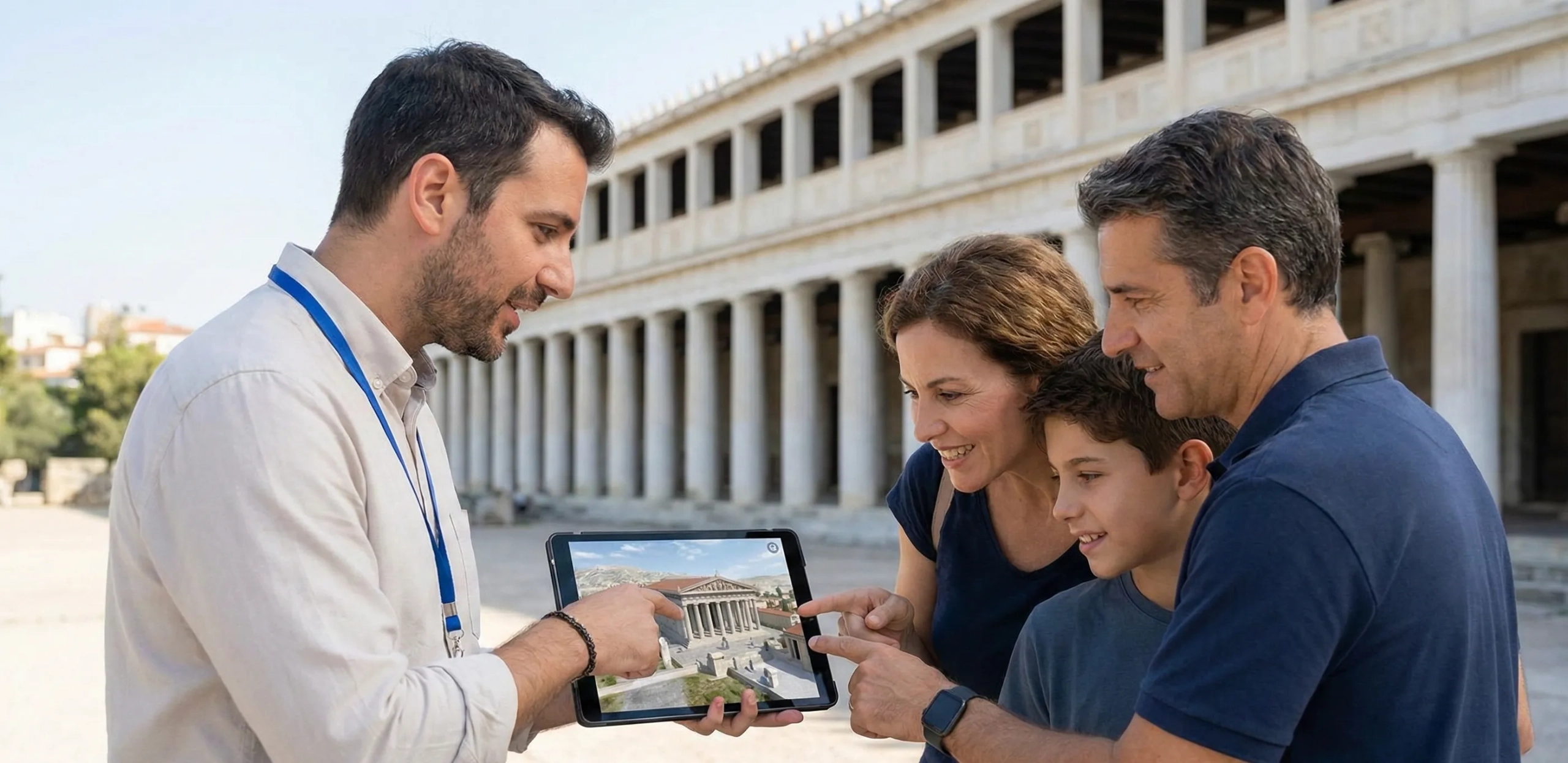
Athens escorted tours represent organized group travel experiences where professional tour directors accompany participants throughout their journey, coordinating all logistical elements, transportation, entrance tickets, scheduled departures, restaurant reservations, hotel pickups, eliminating independent planning burdens that sometimes overwhelm travelers unfamiliar with Athens’ sprawling metropolitan layout or Greek language barriers. The “escorted” designation indicates continuous professional oversight beyond mere guided site visits, with tour directors managing group dynamics, troubleshooting unexpected challenges like traffic delays or weather changes, and ensuring every participant remains accounted for throughout the day’s activities. Unlike independent touring requiring travelers to navigate unfamiliar transit systems, purchase tickets at archaeological sites potentially facing lengthy queues, and coordinate timing between dispersed monuments, escorted formats provide turnkey experiences where every element gets pre-arranged by professionals.
The standard structure combines group transportation via comfortable air-conditioned buses or coaches accommodating the full participant roster, hotel pickups eliminating early morning navigation confusion, and rotating local guides at each major site providing specialized interpretation of the Acropolis’ classical monuments, Ancient Agora’s democratic history, and supplementary stops depending on tour duration and scope. Tour directors typically hold general tourism knowledge but aren’t necessarily licensed archaeological experts for specific monuments, instead coordinating with professional local guides who join at each destination to provide detailed historical and architectural interpretation. This division allows tour directors focusing on logistics and group management while site-specific guides deliver specialized expertise about Parthenon construction techniques, Socratic philosophy practiced in Agora colonnades, or Olympic traditions preserved at Panathenaic Stadium.
Group sizes for traditional escorted tours commonly range from thirty to fifty participants traveling together as cohesive units, with some premium operators limiting groups to twenty-five while budget-oriented companies occasionally exceed fifty when demand justifies deploying larger coaches. The large-group format creates economies of scale allowing operators offering comprehensive coverage at competitive rates since fixed costs like transportation and guide fees distribute across numerous paying participants, explaining why escorted tours sometimes appear attractively priced compared to private alternatives. However, the volume approach necessitates trade-offs in personal attention, flexibility, and pace that many travelers only recognize after experiencing the impersonal dynamics that thirty-person groups inevitably create regardless of tour director competence or guide expertise. Those seeking organized logistics without large-group compromises discover that Athens tours through small-group private formats deliver superior experiences by preserving escorted benefits while eliminating volume-driven downsides through intimate participant numbers.
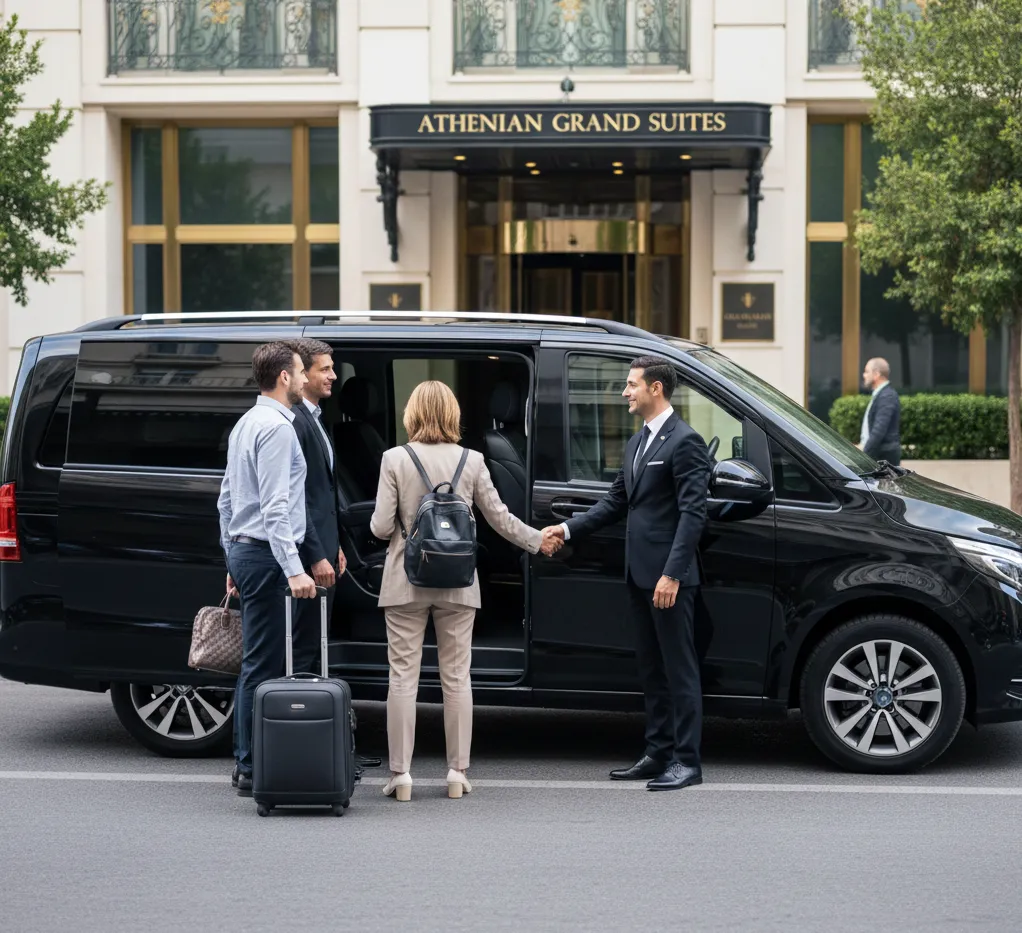
How Athens Escorted Tours Operate: The Complete Process
Understanding traditional escorted tour mechanics reveals both their organizational strengths and inherent limitations that stem from large-group operational requirements prioritizing efficiency over personalized experiences.
Morning: Centralized Hotel Pickups and Group Assembly
Escorted tours begin with coordinated hotel pickups across central Athens neighborhoods between 8:00am and 9:00am, with tour directors or assistant guides collecting participants from multiple accommodations following predetermined routes optimizing driving efficiency. Travelers receive specific pickup times typically ranging across thirty to sixty minute windows as buses navigate morning traffic collecting passengers sequentially, meaning those picked up early experience extended waiting aboard the vehicle while the route completes. The final assembly point, often a major hotel or central landmark, becomes the staging area where tour directors conduct headcounts, distribute wireless audio receivers allowing participants hearing guide commentary despite crowd noise, and deliver orientation briefings explaining day schedules, designated meeting times at each stop, and emergency contact procedures.
The large coach departure creates immediate group dynamics as thirty to fifty strangers navigate seat selection, luggage storage, and initial social interactions that characterize any large-group travel experience. Tour directors typically encourage introductions and facilitate ice-breaking conversations during the initial driving segments, creating friendly atmospheres that appeal to solo travelers or couples seeking social experiences beyond isolated independent sightseeing. However, the volume inherently prevents meaningful personal connections developing beyond superficial pleasantries, and shy or introverted participants sometimes feel overwhelmed by enforced socialization in confined coach environments where opting out proves difficult.
Site Visits: Rotating Guides and Timed Rotations
Upon arriving at major archaeological sites like the Acropolis, groups disembark while tour directors coordinate with licensed local guides who join specifically for that location’s interpretation. The rotating guide system allows operators employing specialists with deep knowledge of particular monuments rather than expecting single guides maintaining expertise across Athens’ diverse historical periods and architectural styles spanning classical Greek through Byzantine and Ottoman eras. However, the rotation means participants experience varying guide quality, presentation styles, and personality types across the day, preventing the relationship building and interpretive continuity that develops when single expert guides accompany groups throughout complete experiences.
The timed rotation structure becomes apparent as guides deliver standardized ninety-minute presentations covering predetermined content while tour directors monitor schedules ensuring timely departures maintaining overall itinerary integrity. Groups move together as cohesive units through monuments, with stragglers receiving reminders about designated meeting times and departure locations that cannot accommodate individual desires for extended exploration at particularly fascinating features. Photography opportunities occur at designated viewpoints where guides pause briefly allowing participants capturing images, though the collective thirty to fifty people simultaneously photographing identical angles creates crowding that undermines the intimate archaeological appreciation many travelers envision when booking Athens tours.
Lunch: Pre-Arranged Group Restaurant Experiences
Midday meals occur at restaurants holding pre-negotiated contracts with tour operators, typically large establishments capable of accommodating thirty to fifty simultaneous diners through dedicated sections or entire floors reserved for tour groups. The pre-set menus offer limited selections, usually three to four main course options, prepared in advance allowing efficient service for large numbers but rarely representing authentic Greek cuisine’s quality and diversity that family-owned tavernas provide. Pricing structures favor tour operators through bulk arrangements rather than diners receiving value, and the segregated tourist sections eliminate cultural immersion opportunities that independent travelers experience when dining alongside local Athenians in neighborhood establishments.
The group dining format does facilitate social bonding as participants share tables, exchange travel stories, and develop camaraderie through shared experiences. For solo travelers particularly, the guaranteed social interaction represents genuine value that compensates somewhat for culinary mediocrity and tourist-trap atmospheres. However, travelers prioritizing authentic food experiences and cultural encounters beyond archaeology find pre-arranged group meals disappointing compared to athens walking tours through small-group formats where guides recommend family-owned tavernas serving traditional recipes in atmospheres where locals actually dine rather than tourist-exclusive establishments optimized for volume processing.
Afternoon: Continued Sites and Scheduled Conclusions
Post-lunch itineraries follow similar patterns through additional archaeological zones, museums, or supplementary attractions depending on tour scope and duration. The afternoon segments sometimes feel rushed as tour directors monitor timing ensuring return schedules align with hotel drop-off commitments and traffic patterns that worsen during evening rush hours. Fatigue begins affecting group dynamics as participants tire from extended walking, Mediterranean heat, and information overload from continuous guide commentary across multiple hours, with some members disengaging while others remain energized creating pacing tensions that tour directors navigate through enforced schedules favoring median energy levels rather than accommodating individual variations.
The concluding hotel drop-offs reverse morning pickup routes, delivering participants to respective accommodations between 2:00pm and 4:00pm for half-day tours or 5:00pm to 7:00pm for full-day experiences. Tour directors bid farewells, collect audio receivers, and sometimes solicit tips through subtle social pressure created when thirty participants witness others contributing gratuities in visible envelopes passed through coach aisles. The experience concludes functionally with participants having covered major sites efficiently but often feeling they’ve experienced Athens through tourist-filtered lenses rather than authentic cultural immersion that athens city tour alternatives through small intimate groups more readily facilitate.

Limitations of Traditional Escorted Tours: What They Won’t Advertise
Marketing materials emphasize escorted tours’ organizational strengths while understating inherent limitations that stem from large-group operational requirements fundamentally incompatible with personalized, flexible, authentic archaeological exploration.
Challenge #1: Impersonal Large-Group Dynamics
Thirty to fifty participants traveling together create inevitable anonymity where tour directors cannot possibly remember everyone’s names, preferences, or questions, reducing individuals to numbered headcount units rather than valued clients deserving personal attention. Guide commentary gets delivered to masses rather than individuals, with explanations targeting median knowledge levels frustrating both archaeology enthusiasts seeking depth and casual tourists wanting simplified overviews. The volume makes asking questions awkward since thirty people cannot all receive detailed personalized answers without derailing schedules, forcing participants swallowing curiosity or settling for brief generic responses that don’t satisfy genuine interest. Photography becomes competitive exercise as dozens simultaneously compete for identical Parthenon angles at designated viewpoints, eliminating intimate moments of archaeological appreciation in favor of rushed selfie-gathering beneath herding pressure.
Challenge #2: Rigid Inflexible Schedules
Fixed itineraries cannot accommodate individual interests when thirty participants hold divergent priorities, some wanting extended Acropolis time while others prefer rushing to next stop, some fascinated by architectural details while others prioritize photography, some energized for extended exploration while others tire and desire rest breaks. Tour directors must maintain predetermined timing ensuring overall schedule integrity regardless of whether specific stops captivate or bore particular participants, creating situations where groups get rushed through fascinating sites to maintain timing while spending excessive duration at locations holding minimal interest for certain members. The inflexibility extends to weather adjustments, traffic delays, or spontaneous opportunities that private experiences readily accommodate but large-group operations cannot without cascading schedule disruptions affecting subsequent bookings, restaurant reservations, and driver shift schedules.
Challenge #3: Inconsistent Rotating Guide Quality
Employing different local guides at each major site means experiencing variable interpretation quality, personality types, presentation styles, and English language proficiency across the day. Some guides prove engaging storytellers bringing ancient Athens alive through vivid narratives, while others deliver dry fact recitation inducing participant disengagement. The inconsistency prevents relationship building that develops when single expert guides accompany groups throughout complete experiences, learning participant interests and adjusting interpretation depth and topics accordingly. Tour directors cannot ensure every rotating guide maintains consistent excellence, and participants drawing poor guides at particular stops simply endure subpar interpretation since escorted formats provide no mechanism for requesting guide changes or extended time with particularly excellent guides encountered earlier.
Challenge #4: Tourist-Trap Restaurant Experiences
Pre-arranged group dining contracts favor establishments prioritizing volume capacity and tour operator commission structures over authentic cuisine quality or cultural atmosphere. The segregated tourist sections eliminate opportunities for cultural immersion through dining alongside local Athenians, while limited pre-set menus rarely showcase Greek culinary diversity and regional specialties that define authentic Mediterranean dining. Food quality targets inoffensive mediocrity satisfying no one exceptionally rather than risking dishes some participants might dislike, resulting in forgettable meals that become trip lowlights rather than highlights. The pricing structures rarely deliver value despite bulk arrangements, as operators extract margins through inflated costs passed to captive dining audiences lacking alternatives when tour buses deposit groups at predetermined restaurants.
Challenge #5: One-Size-Fits-All Generic Programming
Standard itineraries covering “greatest hits” archaeological sites serve broad audiences but cannot accommodate specialized interests in Byzantine churches, Ottoman architecture, modern Greek art, specific historical periods, or niche topics that passionate travelers want exploring. The generic programming assumes median knowledge levels and universal appeal of famous monuments while ignoring that sophisticated travelers might prefer lesser-known sites offering greater authenticity and fewer crowds than obligatory Acropolis stops attracting thousands daily. Tour formats make no accommodation for physical fitness variations, mobility limitations, or accessibility needs beyond basic wheelchair provisions, forcing participants conforming to operational convenience rather than operators adapting experiences to client capabilities and preferences. Those recognizing these limitations discover that small-group tours in Athens formats deliver escorted benefits WITHOUT volume-driven compromises that undermine the intimate, flexible, authentic archaeological exploration most travelers actually desire.
Why Small-Group Private Tours Outperform Traditional Escorted Formats
Comprehensive comparison reveals that intimate small-group experiences preserve organizational benefits attracting travelers to escorted tours while eliminating large-group downsides that compromise personal attention, flexible pacing, and authentic cultural immersion.
Complete Athens Tour Comparison: Group Dynamics and Experience Quality
| Feature | Traditional Escorted Tours | Small-Group Private Tours | Advantage Margin |
| Group size | 30-50 participants | 6-10 participants maximum | 80% reduction |
| Guide consistency | Rotating local guides | Same expert guide all day | 100% improvement |
| Audio clarity | Struggle hearing in crowds | Crystal clear always | Perfect communication |
| Question opportunities | Limited (50 people!) | Unlimited personal attention | Infinite improvement |
| Pacing flexibility | 0% – rigid fixed schedule | High – adaptable to group | Complete control |
| Restaurant quality | Tourist-trap pre-arrangements | Authentic taverna recommendations | Genuine cuisine |
| Transportation | Large 50-seat tour bus | Comfortable premium van | Superior comfort |
| Personal recognition | Anonymous headcount unit | Guide knows your name/interests | Individual treatment |
| Photography | Compete with 50 others | Intimate unrushed moments | Exclusive access |
| Spontaneity | Impossible – fixed routes | Weather/traffic adaptations | Real flexibility |
Winner: Small-group private tours deliver escorted organization WITHOUT compromising personal attention, flexibility, or authentic experiences
Advantage #1: Intimate Personal Attention Through Small Participant Numbers
Limiting groups to six to ten participants maximum transforms guide-traveler dynamics from impersonal mass lecture delivery into genuine educational conversations where every participant receives recognition as individual rather than anonymous unit. Guides learn names, remember questions from earlier discussions, and adjust interpretation depth based on observed interest levels and background knowledge that become apparent through ongoing dialogue impossible in thirty-person crowds. The intimate size means every participant hears commentary clearly without wireless audio receivers that sometimes malfunction or create tinny artificial listening experiences, and asking questions never creates awkwardness since six to ten people can all receive thorough personalized answers without derailing schedules or monopolizing guide attention. Photography opportunities become intimate moments rather than competitive exercises, with guides identifying optimal angles, providing historical context for meaningful images, and allowing extended time at personally significant features without pressure from dozens of fellow tourists awaiting turns.
Advantage #2: Expert Guide Consistency Building Interpretive Continuity
Employing single licensed archaeological experts accompanying groups throughout complete experiences rather than rotating different guides at each site creates interpretive continuity where narratives build coherently across Athens’ interconnected monuments. Guides reference earlier discussions when explaining how Acropolis religious sanctuaries related to Ancient Agora’s democratic institutions, connecting Panathenaic Stadium’s athletic traditions to festival processions depicted on Parthenon friezes, and weaving Temple of Olympian Zeus’ Roman-period construction into broader narratives about Athens’ transformation from classical Greek city-state to provincial Roman capital. The consistency allows relationship development where guides learn participant interests, some fascinated by architecture, others by mythology, some by democratic history, and emphasize relevant topics while condensing less interesting material. Quality control proves absolute since operators employ only their most excellent guides rather than relying on external local guides whose variable expertise and personality types create inconsistent experiences that traditional escorted formats cannot prevent.
Advantage #3: Flexible Adaptive Pacing Respecting Group Energy and Interests
Small intimate groups allow guides reading collective mood and adjusting pacing accordingly, extending time when particular sites fascinate participants, condensing visits to monuments generating less enthusiasm, adding spontaneous stops when interesting opportunities arise, or modifying routes when weather, crowds, or traffic suggest better alternatives. If the group wants extended photography time at golden hour lighting on Parthenon columns, guides accommodate without rigid schedule constraints forcing premature departures. When unexpected discovers occur, a Byzantine church hosting traditional service, a neighborhood festival featuring folk music, an archaeological excavation revealing new findings, small groups can spontaneously investigate opportunities that large escorted formats must ignore while maintaining predetermined timing. The flexibility extends to lunch duration, allowing leisurely taverna meals when groups desire extended social bonding or quicker service when participants prefer maximizing archaeological site time over dining experiences, adaptations impossible when tour directors manage thirty to fifty people with divergent preferences requiring enforced median compromises.
Those comparing options recognize that small-group tours in Athens preserve every organizational benefit traditional escorted tours provide, stress-free logistics, comprehensive planning, professional coordination, expert interpretation, while eliminating volume-driven downsides that compromise the intimate, flexible, authentic experiences most travelers envision when booking Athens archaeological exploration rather than industrial tourism processing.
Athens Small-Group Tour Options: Coverage and Duration
Comprehensive small-group alternatives span multiple format options accommodating varying schedule constraints, interest depths, and physical stamina levels while maintaining intimate participant numbers ensuring personal attention and flexible pacing.
Athens Archaeological Coverage: Small-Group Tour Comparison
| Tour Format | Duration | Major Sites | UNESCO Sites | Lunch Included | Best For | Athens Tours Availability |
| Ancient Athens Focus | 5-6 hours | 5-7 major monuments | 2 (Acropolis + Agora) | Authentic taverna | Most travelers | ✅ Recommended |
| Full-Day Comprehensive | 7-8 hours | 7-9+ complete coverage | 2-3 depending on route | Extended meal experience | Archaeology enthusiasts | ✅ Available |
| Half-Day Highlights | 3-4 hours | 2-3 focused sites | 1 (typically Acropolis) | Optional add-on | Limited schedule | ✅ Available |
| Specialized Thematic | 4-6 hours | 3-5 topic-specific | Varies by theme | Depends on format | Niche interests | ✅ Custom arrangements |
Winner: Ancient Athens Focus (5-6 hours) delivers optimal balance between comprehensive coverage and manageable pacing without exhaustion
Option 1: Ancient Athens Focus Tour (5-6 Hours) – RECOMMENDED
The comprehensive yet manageable format combines Athens’ essential archaeological zones into cohesive narratives explaining how classical civilization functioned as integrated society rather than disconnected monument collection. Beyond the UNESCO-designated Acropolis itself, exploring Parthenon’s Doric architectural refinement, Erechtheion’s Porch of Maidens featuring six Caryatides, Propylaea’s monumental gateway, and Temple of Athena Nike’s victory commemoration, athens tour packages visit the Ancient Agora where democracy was practiced through citizen assemblies voting laws, jury courts administering justice, and commercial life flourishing beneath reconstructed Stoa of Attalos colonnades now housing archaeological museum collections. The Temple of Olympian Zeus showcases Roman architectural ambitions through colossal seventeen-meter Corinthian columns exceeding Parthenon scale, while Panathenaic Stadium preserves white marble seating for fifty thousand spectators at ancient athletic competitions honoring Athena every four years.
Additional stops typically include Hadrian’s Arch marking boundaries between classical Greek and Roman Athens, brief explorations through Plaka neighborhood’s Byzantine church-lined streets where Ottoman and modern layers overlay ancient foundations, and authentic taverna lunches providing cultural immersion beyond archaeology through traditional cuisine and neighborhood atmospheres where local Athenians actually dine. The five to six hour duration delivers substantive coverage without the exhaustion that eight-hour marathons sometimes create, maintaining participant engagement through varied pacing alternating between extended site explorations, driving segments offering rest opportunities, and social meal breaks facilitating group bonding. This format represents the optimal sweet spot for most travelers seeking comprehensive Athens understanding without excessive time commitments that compete with island excursions, evening activities, or simply relaxing after intellectually demanding archaeological education.
Option 2: Full-Day Athens Comprehensive (7-8 Hours)
Extended immersions add Acropolis Museum visits showcasing original sculptures, friezes, and Caryatides removed from monuments for preservation, with the museum’s glass floors revealing ongoing excavations of ancient Athenian neighborhoods beneath modern structures. Additional time allows exploring Kerameikos ancient cemetery where elaborate marble tombstones commemorate aristocratic families, or the Lyceum archaeological site where Aristotle founded his philosophical school teaching students including Alexander the Great. Some formats incorporate modern Athens landmarks like Constitution Square’s Evzone guard changes, National Archaeological Museum treasures spanning Bronze Age through Roman periods, or Monastiraki flea market shopping alongside ancient sites. The extended duration suits archaeology enthusiasts wanting maximum depth, families with teenagers whose attention spans handle lengthy educational experiences, or travelers making Athens their primary Greek destination rather than brief stopover between island hopping, though the marathon format requires acknowledging that eight hours of concentrated learning sometimes exceeds participant stamina regardless of interest levels.
Option 3: Half-Day Highlights Focus (3-4 Hours)
Condensed formats concentrate on Athens’ single most iconic site, the Acropolis archaeological zone, providing thorough interpretation of Parthenon, Erechtheion, Propylaea, and Temple of Athena Nike without attempting broader city coverage that compressed timeframes cannot adequately deliver. Some variants add one supplementary stop like Ancient Agora or Acropolis Museum creating dual-focus experiences, while others dedicate complete duration to comprehensive Acropolis exploration including Theater of Dionysus on southern slopes and panoramic Athens viewpoints from summit plateau. This format works excellently for travelers with limited Athens time who prioritize single most famous monument, cruise passengers with brief port calls, or return visitors who’ve previously explored supplementary sites and want focused expertise on specific zones. However, completing by late morning or early afternoon leaves extensive unstructured time, and the isolated Acropolis viewing provides no context for how hilltop sanctuaries related to democratic institutions, commercial life, and athletic traditions flourishing in the city below that comprehensive formats explain through visiting interconnected sites.
Those evaluating options discover that private Athens tour formats through five to six hour ancient Athens focus deliver exponentially better value than traditional three to four hour escorted group experiences by visiting seven sites versus three while maintaining intimate six to ten participant sizes ensuring personal attention, flexible pacing, and authentic encounters that thirty to fifty person herding inevitably compromises regardless of tour director competence or guide expertise.
What to Expect on Athens Small-Group Tours: Complete Experience
Understanding small-group private tour mechanics reveals how organizational excellence combines with intimate participant numbers creating superior experiences that traditional escorted formats cannot replicate despite their logistical competence.
Morning hotel pickups occur from centrally located Athens accommodations in comfortable premium vans or minibuses appropriately sized for six to ten participants rather than oversized fifty-seat coaches creating impersonal bus-tour atmospheres. The compact vehicle size means all participants sit near guides maintaining conversational dynamics rather than requiring wireless audio receivers for hearing commentary rows away, and the routing efficiency visits only your specific hotel rather than circling through fifteen different pickup locations creating extended waiting periods for early-collected passengers. Departure timing flexibility accommodates your schedule preferences, want 8:00am start beating crowds for optimal Acropolis photography in soft morning light? Guides coordinate accordingly. Prefer 9:30am allowing leisurely hotel breakfast? They adapt. This flexibility contrasts sharply with traditional escorted tours departing fixed times regardless of individual preferences.
Skip-the-line access at major archaeological sites bypasses entrance queues that extend sixty to ninety minutes during peak summer season when thousands of daily visitors converge on popular monuments. The time saved waiting gets redirected toward actual site exploration rather than standing in Mediterranean sun, while the priority entry creates immediate premium experience impressions that justify investment in guided tours over independent visiting. Licensed expert guides, typically holding archaeology or history degrees with specialized ancient Athens knowledge, provide interpretation combining academic rigor with engaging storytelling, explaining architectural refinements, mythological narratives, and historical contexts that transform potentially confusing ruins into meaningful civilization narratives. The intimate six to ten participant size ensures every question receives thorough personalized answers rather than brief generic responses that thirty-person groups necessitate, and guides adjust interpretation depth based on observed interest levels rather than targeting median knowledge positions frustrating both experts and novices.
Authentic taverna lunch experiences occur at family-owned establishments serving traditional Greek cuisine where local Athenians actually dine rather than tourist-exclusive restaurants optimized for volume processing through pre-set menus and segregated group sections. Guides recommend dishes showcasing regional specialties and seasonal ingredients, grilled octopus with lemon-oregano dressing, slow-cooked lamb with kritharaki pasta, fresh horiatiki salad featuring tomatoes, cucumbers, olives, feta, and olive oil, explaining culinary traditions and dining customs while facilitating cultural immersion beyond archaeology. The neighborhood taverna atmospheres provide authentic glimpses into contemporary Greek life that sanitized tourist-trap restaurants eliminate, and the flexible meal duration allows leisurely dining when groups desire extended social bonding or quicker service when participants prefer maximizing archaeological site time.
Flexible photography stops accommodate optimal lighting conditions, interesting compositions, or personally significant moments without rigid schedule constraints forcing premature departures. Guides identify best angles for Parthenon columns framing Athenian skyline, explain historical contexts creating meaningful images beyond generic tourist snapshots, and allow extended time at features fascinating particular participants without pressure from dozens of fellow tourists awaiting turns. The intimate group size means photography never becomes competitive exercise with participants respectfully allowing others capturing desired shots rather than simultaneously competing for identical angles at designated viewpoints where traditional escorted tours create congestion.
Return hotel drop-offs complete experiences by mid-afternoon for half-day formats or early evening for full-day tours, with guides providing recommendations for remainder of Athens stays, authentic restaurants beyond touristy Plaka areas, lesser-known archaeological sites worth independent exploration, evening activities showcasing contemporary Greek culture, or logistical advice about transportation to airports, ports, or subsequent destinations. The personalized recommendations reflect actual local knowledge rather than generic guidebook suggestions, and the relationship building throughout the day means guides understand your specific interests and preferences when suggesting activities matching your travel style. Those experiencing Athens half-day tours through small intimate groups consistently describe them as trip highlights that exceeded expectations, while traditional escorted tour participants more commonly report functional satisfaction without the enthusiasm that genuinely excellent experiences inspire.
Frequently Asked Questions
Are escorted tours worth it in Athens?
Escorted tours deliver organizational value through stress-free logistics but sacrifice personal attention and flexibility that many travelers prioritize over convenience alone. Traditional formats accommodating thirty to fifty participants provide comprehensive site coverage, professional coordination eliminating independent planning burdens, and social atmospheres where solo travelers meet like-minded explorers sharing archaeological interests. The pre-arranged transportation, entrance tickets, scheduled departures, and restaurant reservations create turnkey experiences removing navigation confusion, language barriers, and timing coordination challenges that sometimes overwhelm visitors unfamiliar with Athens’ sprawling metropolitan layout.
However, the large-group operational requirements create inevitable trade-offs in intimacy, flexibility, and authenticity that compromise archaeological exploration quality regardless of tour director competence or guide expertise. Small-group private tours preserve every organizational benefit traditional escorted formats provide, stress-free logistics, comprehensive planning, expert interpretation, skip-the-line access, while eliminating volume-driven downsides through six to ten participant maximums ensuring everyone hears clearly, questions receive thorough personalized answers, and pacing adapts to collective interests rather than serving rigid schedules favoring operational efficiency. For comparable investment, small groups deliver exponentially superior experiences through personal recognition, flexible spontaneity, and authentic encounters that thirty to fifty person herding fundamentally cannot replicate.
How many people are in typical Athens escorted tours?
Traditional escorted tours commonly accommodate thirty to fifty participants traveling together on large tour buses or coaches with some premium operators limiting groups to twenty-five while budget-oriented companies occasionally exceed fifty when demand justifies deploying larger vehicles. The volume creates economies of scale allowing operators offering comprehensive coverage at competitive rates since fixed costs like transportation and guide fees distribute across numerous paying participants, explaining why escorted tours sometimes appear attractively priced compared to private alternatives when evaluating per-person costs without accounting for experience quality differences.
However, the large participant numbers inevitably create impersonal dynamics where hearing guide commentary becomes challenging despite wireless audio receivers, asking questions competes with dozens of fellow tourists seeking attention, and photography opportunities transform into competitive exercises as thirty to fifty people simultaneously compete for identical Parthenon angles at designated viewpoints. Athens tours through small-group formats limiting participants to six to ten maximum eliminate these volume-driven compromises while maintaining organizational benefits, ensuring crystal clear audio without wireless equipment, unlimited question opportunities through intimate conversational settings, and photography moments becoming personal experiences rather than rushed selfie-gathering beneath herding pressure from impatient crowds awaiting turns.
What’s typically included in Athens escorted tour packages?
Standard escorted tour inclusions cover transportation via air-conditioned coaches, entrance admission tickets to major archaeological sites, some meals, typically lunches at pre-arranged group restaurants, professional tour director coordinating logistics, rotating licensed local guides at each major monument, hotel pickups and drop-offs from central Athens accommodations, and wireless audio receivers allowing participants hearing commentary despite crowd noise. The comprehensive bundling appeals to travelers wanting turnkey experiences without coordinating individual elements independently, and the group purchasing power sometimes secures skip-the-line access or priority entrance timing that individual tourists cannot arrange.
However, careful examination reveals that inclusions often emphasize quantity over quality, transportation via oversized buses creating impersonal atmospheres rather than comfortable premium vehicles, entrance tickets providing access without necessarily avoiding lengthy entrance queues, meals at tourist-trap restaurants serving mediocre cuisine through pre-set limited menus, and rotating guides creating inconsistent interpretation quality across the day. Comprehensive small-group alternatives include these same logistical elements PLUS guaranteed skip-the-line access eliminating waiting, authentic taverna meals where local Athenians actually dine, same expert guide throughout ensuring interpretive consistency, and flexible timing accommodating group interests rather than rigid schedules serving operational convenience. The modest additional investment delivers exponentially superior experience quality through intimate participant numbers that traditional escorted formats cannot provide while maintaining volume-driven business models requiring thirty to fifty people for profitability.
Can I customize Athens escorted tours?
Traditional escorted tours follow completely fixed pre-set itineraries with zero customization flexibility since accommodating individual preferences among thirty to fifty participants holding divergent interests proves operationally impossible. Departure times, site visit durations, lunch locations, routing sequences, and activity selections remain rigid regardless of whether specific stops captivate or bore particular participants, forcing everyone conforming to predetermined schedules serving median preferences rather than individual desires. Tour directors cannot adjust pacing when certain sites fascinate some members while others want accelerating to next stops, cannot add spontaneous stops when interesting opportunities arise, and cannot modify routes based on weather conditions, traffic patterns, or crowd densities suggesting better alternatives.
Small-group private tours offer substantial customization capabilities that intimate six to ten participant sizes make feasible without sacrificing operational efficiency. Guides adjust pacing when groups want extended time at particularly fascinating monuments, accommodate photography requests at optimal lighting conditions, modify routes avoiding unexpectedly heavy crowds or capitalizing on favorable weather clearing initially overcast conditions, and incorporate spontaneous stops when interesting opportunities arise, neighborhood festivals featuring traditional music, Byzantine churches hosting services, archaeological excavations revealing new findings, or authentic tavernas guides recommend based on observed group culinary preferences. While some structural elements remain consistent ensuring comprehensive major site coverage, the flexible framework allows personalization impossible when managing thirty to fifty people with inevitably divergent priorities requiring enforced median compromises satisfying no one exceptionally.
Are Athens escorted tours good for solo travelers?
Escorted tours provide genuine social benefits for solo travelers seeking community and shared experiences rather than lonely independent sightseeing, making them popular among single visitors wanting guaranteed interaction with like-minded explorers sharing archaeological interests without awkward bar approaches or hostel common room networking efforts. The structured group format facilitates conversation through shared activities, designated meal times creating natural social settings, and tour director ice-breaking efforts encouraging participant interactions. Solo travelers joining escorted tours reliably meet fellow enthusiasts, exchange travel stories and recommendations, and sometimes develop friendships extending beyond the single-day tour through spontaneous dinner plans or subsequent sightseeing coordination.
However, small-group private tours deliver superior social dynamics through six to ten intimate participant sizes where meaningful conversations develop naturally rather than superficial pleasantries among fifty strangers that large escorted formats create despite their social marketing appeals. The smaller numbers mean everyone actually learns fellow participants’ names, backgrounds, and travel motivations rather than anonymous faces forgotten immediately, and the extended time together across five to eight hours creates genuine camaraderie impossible during brief introductions aboard crowded tour buses. Solo travelers joining small groups receive personal attention from expert guides who remember individual questions and interests, share authentic experiences with manageable participant numbers facilitating real connections, and avoid the impersonal herding that thirty to fifty person groups inevitably create regardless of tour director social facilitation competence.
How long do Athens escorted tours typically last?
Standard half-day escorted tours consume approximately four to five hours from initial hotel pickups through final drop-offs, covering three to four major sites including Acropolis, Ancient Agora, and one or two supplementary monuments with fixed timing regardless of whether specific stops particularly fascinate or bore various participants. Full-day formats extend seven to eight hours visiting five to six archaeological zones plus Acropolis Museum or additional attractions, though the extended duration sometimes exceeds participant stamina creating afternoon disengagement as fatigue, information overload, and Mediterranean heat compound across marathon sightseeing sessions.
Comprehensive small-group alternatives consuming five to six hours deliver substantially more archaeological content than traditional four to five hour escorted tours, visiting seven major sites versus three or four, through efficient logistics eliminating large-group waiting and herding delays that waste substantial time despite appearing organizationally professional. The flexible pacing means groups linger at fascinating monuments rather than rushing to maintain predetermined schedules, yet still cover more total ground through intimate sizes allowing quicker transitions, immediate departures without extended headcount procedures, and spontaneous route adjustments avoiding unexpectedly heavy traffic or crowds. The mathematical advantage proves dramatic: small groups deliver approximately seventy percent more actual archaeological exploration time within comparable or slightly extended total duration compared to traditional escorted formats where operational overhead consumes disproportionate percentages of paid tour hours.
Do I need booking Athens escorted tours in advance?
Peak season escorted tours (April through October) require advance booking despite larger participant capacities since operators maintain limited daily departures coordinating with restaurant reservations, rotating local guide availability, and driver shift schedules that cannot simply add tours when demand spikes. Popular departure times, typically 8:00am to 9:00am, fill two to three weeks ahead during summer months when Athens receives maximum international visitors, though afternoon slots maintain slightly more availability since many travelers prefer morning archaeological exploration before Mediterranean heat intensifies.
Small-group private tours require even more advance planning since intimate six to ten participant limits combined with licensed expert guide availability constraints create genuine scarcity impossible to overcome through simply deploying additional vehicles when demand exceeds capacity. The most desirable early morning time slots (8:00am to 9:00am) delivering optimal crowd avoidance, comfortable temperatures, and soft photography lighting book three to four weeks ahead during peak season, with late bookings relegating travelers to less desirable midday timing or alternative dates disrupting broader Athens itineraries. Booking two to four weeks ahead for April through October high season and one to two weeks for November through March low season ensures securing preferred dates and optimal timing rather than accepting whatever availability remains when procrastinating until Athens arrival hoping for same-day or next-day confirmation that rarely materializes during busy periods when tour operators receive far more requests than their licensed guide capacity accommodates.
Conclusion
Athens escorted tours fulfill legitimate traveler needs for organized group experiences where professional tour directors coordinate comprehensive logistics, transportation, entrance tickets, restaurant reservations, scheduled timing, eliminating independent planning burdens that sometimes overwhelm visitors unfamiliar with Athens’ sprawling metropolitan layout, Greek language barriers, or archaeological site navigation complexities. The structured format delivers stress-free turnkey sightseeing covering major monuments through established itineraries connecting Acropolis religious sanctuaries, Ancient Agora democratic institutions, Temple of Olympian Zeus architectural ambitions, and supplementary attractions depending on tour scope and duration. For travelers prioritizing organizational convenience and social atmospheres where solo visitors meet like-minded explorers, traditional escorted formats provide functional satisfaction through professional coordination and guaranteed comprehensive coverage.
However, honest evaluation reveals that large-group operational requirements, typically thirty to fifty participants traveling together on tour buses with rotating local guides, create inevitable compromises in personal attention, flexible pacing, and authentic cultural immersion that many travelers only recognize after experiencing the impersonal dynamics, rigid schedules, and tourist-trap restaurant mediocrity that volume-driven business models necessitate regardless of tour director competence or guide expertise. Small-group private tours preserve every organizational benefit attracting travelers to escorted formats, stress-free logistics, comprehensive planning, expert interpretation, skip-the-line access, while eliminating large-group downsides through intimate six to ten participant maximums ensuring everyone hears clearly without wireless audio receivers, questions receive thorough personalized answers rather than brief generic responses, and pacing adapts to collective interests rather than serving rigid schedules favoring operational efficiency.
The comparative mathematics prove compelling: small groups deliver approximately seventy percent more actual archaeological exploration time, visiting seven major sites versus three or four, within comparable or slightly extended total duration through efficient logistics eliminating large-group waiting and herding delays, while maintaining intimate sizes where guides learn participant names and interests, adjust interpretation depth based on observed knowledge levels, and accommodate spontaneous photography requests or route modifications that thirty to fifty person operations cannot consider without cascading schedule disruptions. For comparable investment, small-group formats provide exponentially superior experiences through personal recognition, flexible spontaneity, authentic taverna meals, and genuine cultural encounters that traditional escorted tours promise through marketing but operationally cannot deliver when prioritizing volume throughput over individual experience quality.
Ready to explore Athens’ ancient treasures through expertly organized experiences that preserve escorted tours’ logistical benefits while delivering personal attention, flexible pacing, and authentic immersion that large groups fundamentally cannot replicate? Book comprehensive small-group day tours from Athens today and discover why travelers consistently rate intimate archaeological exploration as trip-defining highlights that exceed expectations, while traditional escorted tour participants more commonly report functional satisfaction without the enthusiasm that genuinely excellent experiences inspire. The modest investment difference barely registers in total vacation costs, but memory quality and educational depth prove incomparable when comparing impersonal herding through predetermined tourist circuits versus meaningful engagement with classical civilization’s birthplace through guides who actually know your name and care about your understanding.
 Timeless Athens Tours