News & Blog Posts
Timeless Athens Tours & Shore Excursions within Greece


The promise of escaping Athens’ urban intensity for sun-drenched Greek islands via convenient day cruise sounds idyllic, board a boat at Piraeus port, sail turquoise Saronic Gulf waters while live musicians perform traditional melodies, explore three picturesque islands, return by evening. Athens day cruise operators market this exact fantasy through glossy brochures featuring empty cobblestone streets in Hydra’s harbor, peaceful Poros pine forests, and Aegina’s ancient temples. Reality operates differently: 500+ passengers competing for deck space and photo angles, strictly enforced 50-120 minute island stops barely allowing bathroom breaks and hurried lunches, rigid schedules that abandon stragglers who linger too long in shops, and 12-hour commitments delivering only 3.5 hours actual sightseeing time. While niche scenarios exist where mass cruises make sense, most travelers discover exponentially better value through day tours from athens visiting UNESCO World Heritage Sites with expert guides, flexible timing, and authentic experiences.
What is Athens day cruise? Athens day cruise operates large boats (500+ passengers) from Piraeus port to Saronic Gulf islands, Hydra, Poros, Aegina, with buffet lunch and live entertainment, spending 50-120 minutes per island across 11-hour fixed schedules, though private boat charters and customized mainland day tours offer superior value through flexible timing, smaller groups, and authentic experiences.
Athens day cruises operate daily from Marina Kallithea in Piraeus, deploying large cruise ships carrying 500-700 passengers to three Saronic Gulf islands approximately 25-40 nautical miles from the mainland. These organized tours follow predetermined itineraries visiting Hydra, Poros, and Aegina with fixed durations at each stop, onboard buffet meals, and live entertainment during sailing segments. The concept targets travelers wanting island experiences without overnight stays or ferry logistics, essentially package tourism condensing Greek island culture into digestible day-trip format.
The standard experience begins with hotel pickups across Athens 6:30-7:00am, bus transfers to Piraeus port arriving by 8:00am for boarding, and mandatory 8:15am departure regardless of late arrivals. Ships sail first to either Poros or Hydra (order varies by operator and season), spend allocated time at each island allowing passengers to disembark and explore independently, serve buffet lunch during inter-island sailing, and return to Piraeus by 7:00pm for bus transfers back to Athens hotels arriving around 8:00pm. The entire operation runs like clockwork, which passengers initially appreciate until they discover that clock’s inflexibility creates more constraints than freedoms.
Many first-time visitors book these cruises assuming they represent optimal ways to experience Greek islands from Athens. The marketing certainly suggests this through images of intimate island exploration and leisurely Mediterranean sailing. What brochures omit: the industrial scale required to profit from these operations necessitates packing hundreds of passengers onto vessels where personal space becomes scarce commodity, rushing island visits to maintain schedules serving volume over quality, and standardizing experiences to lowest common denominator that satisfies no one exceptionally. Those seeking authentic Greek exploration increasingly recognize that athens tours offering genuine personalization, cultural depth, and flexible pacing deliver fundamentally different value propositions worth serious consideration before committing to mass cruise formulas.
The cruise’s longest stop, approximately 90 minutes, occurs at Hydra, the most photographed of the three islands due to its amphitheater-shaped harbor lined with traditional stone mansions climbing hillsides above azure waters. Hydra’s complete vehicle ban (only donkeys and mules for transport) creates pedestrian atmosphere that initially enchants visitors stepping off cruise ships into seemingly timeless Greek village. The narrow cobblestone streets, authentic architecture, and artistic community that settled here during 1960s bohemian movements all contribute to Hydra’s designation as protected heritage zone.
However, 90 minutes proves simultaneously too long and not nearly enough. Too long because Hydra’s harbor area, where most tourists remain due to time constraints, gets fully explored in 30-40 minutes of walking shops selling overpriced jewelry and examining tavernas whose menus duplicate one another. Not enough because the island’s genuine character emerges beyond the tourist waterfront through hiking trails to monasteries, swimming at secluded coves accessible via donkey paths, and conversations with resident artists whose galleries occupy converted 18th-century mansions in upper neighborhoods. The cruise schedule allows experiencing Hydra’s postcard-perfect harbor while missing everything making the island actually interesting, a pattern repeated across all three stops.
The shortest stop, merely 50 minutes, occurs at Poros, an island so close to Peloponnese mainland that narrow straits separate it by mere hundreds of meters in places. Poros Town cascades down hillsides covered in pine forests that extend to rocky shorelines, with a distinctive clock tower crowning the highest point serving as navigation landmark visible from sea. The compact harbor’s neoclassical buildings and waterfront cafés create pleasant Mediterranean atmosphere that cruise passengers barely get to sample.
Fifty minutes functions as cruel tease rather than meaningful visit. By the time passengers disembark, orient themselves geographically, find bathrooms, and perhaps grab quick coffee, the boat horn signals return boarding. Those attempting to reach the famous clock tower via steep streets discover they must turn back halfway or risk missing departure, and cruise operators show zero leniency for stragglers, as subsequent sailing schedules and dinner reservations for hundreds depend on punctual departures. This rushed format transforms Poros from potential destination into mere photo opportunity, explaining why experienced travelers increasingly question whether fleeting glimpses of multiple islands provide more satisfaction than deeper exploration of fewer carefully chosen sites through meteora day tour or delphi day trips alternatives offering UNESCO World Heritage substance.
The final visit, approximately 2 hours, occurs at Aegina, largest of the Saronic islands and closest to Athens at 27 nautical miles from Piraeus. Aegina served briefly as Greece’s first capital in the 1820s during independence wars, and today maintains working harbor economy beyond tourism including fishing fleets and pistachio cultivation that made the island agriculturally famous. The Temple of Aphaia, a remarkably preserved Doric structure rivaling Athens’ Parthenon in architectural significance, sits atop pine-covered hills overlooking both Saronic Gulf and, on clear days, the Acropolis itself.
Two hours initially seems generous compared to previous stops until you realize cruise operators structure Aegina time around selling optional bus tour upgrades to reach Temple of Aphaia and St. Nectarios Monastery. Without these add-ons, passengers remain confined to harbor area buying pistachios, examining trinket shops, and photographing colorful fishing boats, pleasant enough but hardly justifying the cruise expenditure. Those purchasing temple tours discover they’re herded onto buses for 40-minute round-trip drives consuming half their Aegina time, rushed through archaeological sites in 25-30 minutes with minimal interpretation, then delivered back to harbor with barely enough remaining minutes for bathroom stops before mandatory ship boarding.
This upselling structure reveals Athens day cruise’s true business model: base ticket gets you transport and minimal island access, while anything substantive requires extra payments. Smart travelers comparing actual total costs against comprehensive private tours that would have included everything initially recognize the mathematics favor sunset cape sounion tour alternatives delivering superior archaeological access and far better overall value.
Athens day cruise begins far earlier than marketing materials emphasize, with hotel pickups commencing 6:30-7:00am across central Athens neighborhoods. Bus transfers navigate morning traffic to Piraeus port, Greece’s largest harbor where commercial ferries, cargo ships, and cruise vessels create chaotic scenes of maritime activity. The 30-45 minute drive from central Athens hotels means passengers arrive port-side still groggy, facing boarding procedures requiring ticket validation, security screening, and navigating crowded gangways as hundreds of fellow passengers simultaneously converge on the same vessel.
The mandatory 8:15am departure operates with military precision, show up at 8:16am and you’re watching your investment literally sail away without refund or rescheduling options. This rigid timing creates unnecessary morning stress entirely absent from athens day tours that coordinate pickup timing around your preferences rather than cruise ship schedules serving operational efficiency over passenger convenience.
Once sailing commences, passengers quickly discover the boat’s 500-700 capacity means competition for everything: good seats with shade, optimal photo positions on decks, buffet line access during designated meal times, and bathroom facilities that develop lengthy queues by mid-voyage. The open-top deck areas marketed in promotional photos fill immediately with passengers claiming territory, while indoor lounges accommodate overflow crowds in air-conditioned but atmospherically sterile environments where recorded Greek music competes with crying children and loud conversations in a dozen languages.
The buffet lunch served between island stops exemplifies lowest-common-denominator catering: institutional steam trays offering moussaka, Greek salad, pasta, and grilled meats targeting inoffensive mediocrity rather than culinary excellence. Drinks cost extra beyond basic water or coffee included with meals, and the cash bar pricing mirrors airport concessions rather than Greek taverna values. Entertainment attempts, Greek folk music performances, traditional dance demonstrations, feel manufactured for tourist consumption rather than authentic cultural experiences, particularly when musicians encourage awkward audience participation from passengers who’d rather simply eat their lukewarm lunch in peace.
The 7:00pm Piraeus arrival initiates another logistical sequence: disembarkation queues, locating correct return buses among dozens serving different hotel routes, and navigating evening Athens traffic that can extend 30-minute morning transfers into 60-minute slogs during rush hour congestion. Hotel arrivals around 8:00pm mean passengers have been under cruise company control for 13+ hours, during which actual autonomous island exploration totaled 3.5 hours, a 27% efficiency ratio that explains why many describe the experience as exhausting rather than rejuvenating.
This return timing also eliminates dinner options beyond hotel restaurants or late fast food, as Athens’ quality tavernas serving from 8:30pm onwards remain inaccessible to exhausted cruise passengers wanting only showers and sleep. The entire day structure prioritizes cruise operator logistics over passenger experience quality, a fundamental flaw that corinth tour alternatives and argolis day trips solve through flexible timing respecting travelers’ energy levels and dining preferences.
Complete Value Analysis: Athens Day Tour Options
| Feature | Mass Day Cruise | Private Boat Charter | Mainland UNESCO Tours |
| Passengers on experience | 500-700 people | 4-12 exclusive | 6-10 small group |
| Schedule flexibility | 0%—completely rigid | 100%—your choice | High—customizable |
| Time at each destination | 50-120 min fixed | As long as desired | 2-3 hours minimum |
| Departure time control | 8:15am mandatory | Any time you choose | 8:00-10:00am flexible |
| Food quality | Institutional buffet | Restaurant of your choice | Authentic tavernas |
| Can customize stops? | Impossible | Completely | Highly adaptable |
| Miss departure consequence | Stranded—no refund | Impossible scenario | No issue—private vehicle |
| Archaeological interpretation | Basic recorded audio | You hire expert if desired | PhD-level guides included |
| Weather flexibility | Sail regardless—no refund | Reschedule possible | Adjust itinerary |
| UNESCO World Heritage access | None (0/3 islands) | None (islands lack status) | Multiple sites available |
| Photo stop flexibility | Crowded—rush for positions | Unlimited privacy | Ample time—no crowds |
| Actual sightseeing time | 3.5 hours (27% of day) | Entire charter duration | 5-6 hours (60% of day) |
| Value proposition | Budget mass tourism | Exclusive island access | Superior cultural depth |
Winner: Mainland tours for value and substance, Private boats for exclusive island access, Mass cruise limited to very specific edge cases.
Archaeological Value: Islands vs Mainland Treasures
| Destination | Athens Distance | UNESCO Status | Archaeological Rank | Crowd Level | Expert Guides | Athens Tours Availability |
| Hydra Island | 37 nautical miles | No | Low (no ancient sites) | Very high | No—audio only | Not offered |
| Poros Island | 31 nautical miles | No | Minimal (minor ruins) | High | No—audio only | Not offered |
| Aegina Island | 27 nautical miles | No | Medium (Temple Aphaia) | Very high | Optional paid tour | Not offered |
| Meteora Monasteries | 350km north | YES | World-class | Moderate | Included—archaeologist | ✅ Daily tours |
| Delphi Oracle | 180km northwest | YES | Exceptional | Moderate | Included—historian | ✅ Daily tours |
| Cape Sounion | 70km south | No | Iconic (Poseidon) | Low-Moderate | Included—expert | ✅ Sunset tours |
| Mycenae/Epidaurus | 150km south | YES | World-class | Low | Included—archaeologist | ✅ Private tours |
| Ancient Corinth | 80km west | Partially | Significant | Low | Included—historian | ✅ Tours available |
This comparison reveals uncomfortable truth cruise operators won’t advertise: Hydra, Poros, and Aegina, while possessing undeniable aesthetic charm, offer virtually zero archaeological significance compared to Greece’s genuine ancient treasures. When Americans or Europeans invest thousands in flights and accommodations reaching Greece specifically to experience classical antiquity’s birthplace, do rushed shopping excursions on pretty islands deliver the cultural depth they traveled 5,000 miles seeking? Or do UNESCO World Heritage Sites like Mycenae’s Bronze Age citadels, Delphi’s Oracle sanctuary, and Meteora’s gravity-defying monasteries provide the transformative historical encounters justifying international travel?
Athens Day Cruise Reality Breakdown:
Mainland Private Tour Example (Delphi):
The efficiency comparison proves devastating for cruise proponents: dedicating only 27% of your day to actual cultural exploration while 73% disappears into logistics, meals, and transport versus dedicating 63% to archaeological immersion represents fundamentally different value propositions. When you calculate time spent on genuine sightseeing versus transport and waiting, mainland tours deliver more than double the cultural content per day invested.
Greece’s genuine ancient treasures, those sites that shaped Western civilization and justify UNESCO World Heritage designation, sit within comfortable day-trip radius from Athens offering exponentially greater cultural significance than tourist islands. Meteora day tour visits Byzantine monasteries perched atop sandstone pillars where monks sought divine connection through dramatic isolation, creating architectural marvels that defy logical construction. Delphi day trips explore the Oracle sanctuary where ancient Greeks consulted prophecies that influenced wars, colonizations, and political decisions across Mediterranean civilizations for over 1,000 years.
Argolis day trips tour Mycenae’s citadel where Bronze Age kings ruled territories described in Homer’s epics, Epidaurus’ acoustically perfect ancient theater still hosting performances 2,300 years after construction, and charming Nafplio’s Venetian architecture representing later cultural layers. Corinth tour visits both ancient Corinth where St. Paul preached Christianity and the dramatic canal connecting Aegean and Ionian seas through 6km channel slicing through solid rock.
These alternatives provide full-day experiences with expert guides, comfortable transport, authentic taverna meals, and flexible timing, delivering genuine archaeological education rather than tourist atmosphere. The choice becomes obvious once travelers understand they’re not comparing apples to apples: island cruises sell pleasant environments, mainland tours provide genuine cultural immersion.
Travelers attracted to cruises specifically for coastal Mediterranean atmosphere rather than ancient history discover that sunset cape sounion tour delivers identical seaside beauty without the crowds. Cape Sounion’s Temple of Poseidon occupies a dramatic clifftop overlooking Aegean waters where sunset transforms white marble columns golden while waves crash against rocks 60 meters below, rivaling anything Hydra’s harbor offers while providing archaeological substance and solitary appreciation impossible on islands packed with cruise passengers.
The corinth nemea wine route combines coastal drives along Saronic Gulf with vineyard visits where boutique wineries produce exceptional wines explained by sommeliers passionate about indigenous Greek grape varieties. These tours provide Mediterranean coastal aesthetics cruise passengers seek while adding oenological education and personalized attention that mass tourism cannot accommodate. Athens Riviera beaches between city and Sounion offer swimming opportunities cruise ships promise but rarely deliver, with tavernas serving fresh seafood instead of institutional buffets.
Those absolutely committed to island experiences despite compelling mainland alternatives should consider private boat charters rather than mass cruises. Small operators throughout Piraeus and Athens Riviera offer half-day or full-day charters for 4-12 passengers visiting Saronic islands on YOUR schedule with YOUR chosen activities. These charters provide exclusive vessel access, flexible timing allowing swimming stops, snorkeling equipment, and itinerary control letting you skip islands that don’t interest you while spending extended time at favorites.
Private charters transform island visiting from rushed photo-gathering into actual exploration: spend three hours in Hydra hiking to monasteries and swimming at secluded coves rather than 90 minutes trapped in harbor shops, or skip Poros entirely dedicating that time to Aegina’s Temple of Aphaia without optional tour upsells. The personalized attention, timing flexibility, and ability to avoid crowds even at popular destinations create fundamentally superior experiences for groups valuing quality over mass market formulas.
Intellectual honesty requires acknowledging scenarios where mass cruises serve legitimate purposes, though these represent minority use cases rather than general recommendations. Cruise ship passengers docking at Piraeus with single days before continuing voyages face logistical realities making organized island tours practical, though even these travelers might consider whether rushed three-island circuits provide better memories than focused meteora tour delphi visits to sites they’ll actually remember years later.
Travelers who specifically prioritize island aesthetics over archaeological depth, don’t mind crowds, and accept entertainment value from live music and Greek dance shows may find cruise formulas satisfactory despite limitations identified throughout this analysis. Solo travelers who’ve exhausted other group tour options and genuinely prefer predetermined packaged experiences discover that cruises provide structured itineraries without requiring independent planning.
However, even acknowledging these edge cases requires noting that small group tours from athens accommodating solo participants exist, delivering intimate experiences through flexible itineraries. The cruise companies excel at one thing: efficient logistics moving hundreds of tourists through predetermined circuits maximizing passenger volume. If that operational efficiency represents your primary vacation priority, mass cruises deliver it excellently. For everyone else seeking cultural depth, authentic experiences, flexible timing, and maximum actual sightseeing time, mainland alternatives prove overwhelmingly superior.
Worth depends entirely on priorities and circumstances. For the narrow demographic of travelers who specifically want island aesthetics despite limited archaeological substance, who don’t mind crowds, and who value live entertainment, cruises provide functional service. However, groups discover that mainland day tours deliver far superior value with 5-6 hours actual sightseeing versus 3.5 hours, expert archaeological guides versus recorded audio, and UNESCO World Heritage significance versus tourist islands. When you calculate sightseeing time efficiency (cruise 27%, mainland 60%+) and archaeological substance (cruise zero UNESCO sites, mainland multiple options), the comparison favors alternatives overwhelmingly. Most travelers who book cruises without researching alternatives report satisfaction with the experience itself but wish they’d known about meteora day tour or delphi day trips options offering substantially greater cultural content.
Total duration spans 12-14 hours from first hotel pickup (6:30-7:00am) to final drop-off (8:00-8:30pm). However, actual island sightseeing time totals only 3.5 hours distributed across three stops: Hydra 90 minutes, Poros 50 minutes, Aegina 120 minutes. The remaining 8.5-10 hours disappear into logistics, 45 minutes hotel-to-port transfer, 30 minutes boarding, 4-5 hours sailing between islands and return, 2 hours buffet meals and entertainment, 60 minutes disembarkation and return transfer. This 27% sightseeing efficiency explains why many passengers report exhaustion rather than rejuvenation: spending 73% of a 13-hour day sitting on buses or boats while actual cultural exploration gets compressed into rushed fragments. Compare mainland tours’ 60-65% sightseeing efficiency, dedicating majority of day to actual archaeological sites rather than transport, and the superior time value becomes obvious.
Three Saronic Gulf islands in fixed order: Hydra (car-free artistic community with amphitheater harbor, stone mansions, and pedestrian streets), Poros (pine-forested small island separated from Peloponnese by narrow strait, featuring iconic clock tower), and Aegina (largest island with Temple of Aphaia, St. Nectarios Monastery, and famous pistachio cultivation). While undeniably picturesque, none possess UNESCO World Heritage status or world-class archaeological significance. Hydra offers zero ancient sites beyond atmosphere, Poros contains minimal ruins, and Aegina’s Temple of Aphaia, while architecturally impressive, receives far fewer expert-guided visits than it deserves since cruise passengers must pay extra optional tours. Compare these to mainland alternatives: Delphi served as THE ancient Oracle sanctuary influencing Mediterranean politics for 1,000+ years, Meteora contains Byzantine monasteries on sandstone pillars considered architectural miracles, Mycenae preserves Bronze Age citadels described in Homer’s epics, all UNESCO-designated sites offering exponentially greater historical substance than pleasant island shopping.
No, standard mass cruises include zero swimming stops or beach access. The rigid schedule’s tight timing and large vessel’s draft prevent pulling into shallow coves or secluded beaches where swimming becomes feasible. This limitation frustrates many passengers who assumed “Greek island cruise” would naturally include swimming opportunities, after all, isn’t that what islands offer? Cruise operators prioritize schedule maintenance over spontaneous pleasures, and deviating for swimming would cascade delays affecting subsequent ports and final Piraeus arrival timing coordinating hundreds of hotel returns. Passengers wanting swimming must either book significantly more expensive private boat charters allowing flexible stops, or recognize that athens day tours to coastal destinations like Cape Sounion or Corinth Canal often include beach time alongside archaeological visits, combining cultural substance with Mediterranean swimming impossible on mass market cruises prioritizing volume efficiency.
Base fare includes: Round-trip hotel transfers via coach bus, cruise ship ticket, buffet lunch with basic water/coffee, live music entertainment, and traditional Greek folk dance show. NOT included, requiring additional payment: Temple of Aphaia guided excursion in Aegina, alcoholic beverages or specialty drinks, gratuities for crew and entertainers, VIP lounge upgrades, photographs by ship photographers. This pricing structure exemplifies cruise industry tactics: advertise base rates attracting bookings, then extract additional revenue through optional extras and convenience purchases. When families total actual final costs after adding necessary extras, the initially attractive base rates increase substantially, sometimes exceeding what comprehensive private mainland tours would have charged initially while delivering less archaeological substance, rushed timing, and zero flexibility.
Extremely crowded, vessels carry 500-700 passengers depending on operator, ship, and season. Summer high season (June-September) sees boats operating at full capacity with every seat claimed, decks packed with tourists competing for photo angles and shade, buffet lines extending 30+ minutes during designated meal times, and bathroom facilities developing lengthy queues by afternoon. The crowding contradicts romantic island escape fantasies that attracted most passengers initially: instead of intimate Mediterranean cruising, you’re navigating masses of tourists speaking dozens of languages while fighting for personal space on decks or retreating to stuffy interior lounges. Passengers frequently report frustration photographing “empty” harbor views as hundreds of fellow cruisers cram identical angles, or discovering good outdoor seating occupied before 9:00am requiring sitting indoors despite beautiful weather. Small group mainland tours limiting participants to 8-12 people maximum provide the intimate exploration mass cruises market but operationally cannot deliver at industrial scale required for profitability.
Strict 8:15am departure from Piraeus port with zero flexibility or grace periods, arrive late and watch your investment sail away without refund, rescheduling, or sympathy from operators whose subsequent timing depends on punctual departures. Hotel pickups begin 6:30-7:00am depending on your Athens neighborhood’s distance from Piraeus, requiring waking 6:00am or earlier for showers and breakfast. This early mandatory timing creates rushing morning stress entirely absent from private tours coordinating pickups around YOUR preferences: want to start at 9:00am after leisurely hotel breakfast? Private operators accommodate gladly. Need 10:00am departure because you’re not morning people? No problem. Prefer afternoon timing? They’ll adjust. Mass cruise operators serve ships, not passengers, schedules prioritize operational efficiency moving maximum people through predetermined circuits rather than respecting individual preferences. That fundamental philosophy clash explains why travelers increasingly choose customizable day tours from athens offering flexibility reflecting modern expectations rather than accepting industrial tourism’s rigid structures.
Athens day cruise occupies a peculiar niche in Greek tourism: providing functional service for narrowly defined scenarios, cruise ship passengers with single port days, tourists prioritizing live entertainment over archaeological substance, while representing questionable value for most visitors seeking meaningful cultural experiences. The tickets buy rushed glimpses of three pleasant islands possessing minimal archaeological significance, delivered via crowded 500+ passenger vessels following rigid schedules maximizing operational efficiency rather than passenger satisfaction, consuming 12+ hours while providing only 3.5 hours actual sightseeing.
Meanwhile, Greece’s genuine treasures, UNESCO World Heritage Sites like Meteora monasteries, Delphi Oracle sanctuary, and Mycenae citadels, sit within comfortable day-trip distance offering expert-guided archaeological education, flexible timing, and authentic experiences. The efficiency proves compelling: cruise passengers experience 27% sightseeing time at zero UNESCO sites, mainland tour participants enjoy 60%+ sightseeing time visiting world-class antiquity with PhD-level guides. That efficiency difference doesn’t account for intangible benefits, personalized attention, flexible pacing, authentic taverna meals, intimate group sizes, making the choice even more one-sided.
Smart travelers recognize that committing limited Greek vacation days to lowest-common-denominator mass tourism represents missed opportunities for transformative experiences. When you’ve invested thousands reaching Greece specifically to connect with classical antiquity’s birthplace, why accept superficial island shopping when standing in Delphi’s ancient stadium where Pythian Games occurred, or exploring Meteora’s monasteries defying architectural logic, or walking Mycenae’s Lion Gate that Bronze Age warriors defended remains available?
Ready to experience Greece’s authentic treasures instead of tourist-packed island circuits? Discover genuine day tours from Athens visiting UNESCO World Heritage Sites with expert archaeological guides, comfortable climate-controlled vehicles, and flexible timing respecting your interests rather than cruise schedules serving operational efficiency. Book today and understand why travelers consistently rate Meteora, Delphi, and Mycenae as life-changing trip highlights while describing island cruises as pleasant-but-forgettable diversions. Transform your Greek vacation from checkbox tourism into authentic exploration creating stories worth retelling for decades.

Athens isn’t a single destination, it’s a mosaic of distinct neighborhoods, each revealing different chapters of this ancient capital’s 2,500-year story. An athens city tour through these urban villages transforms surface-level sightseeing into authentic cultural immersion, where neoclassical mansions share cobblestone streets with contemporary street art, ancient ruins anchor modern squares, and every district pulses with its own character. Understanding Athens through its neighborhoods rather than isolated monuments unlocks the city’s true personality, from Plaka’s tourist-friendly charm to Exarchia’s bohemian edge.
What neighborhoods should you visit on an Athens city tour? Essential Athens neighborhoods include Plaka’s ancient charm, Monastiraki’s vibrant markets, Psyrri’s nightlife, Syntagma’s political heart, and Kolonaki’s elegant streets, each revealing distinct layers of Athens’ 2,500-year history within compact walking distance.
Unlike sprawling European capitals requiring extensive metro navigation, Athens concentrates its most compelling neighborhoods within a remarkably walkable downtown core. The tours athens ecosystem benefits from this geographic advantage, you can experience aristocratic Kolonaki, grungy Exarchia, and archaeological Thissio within a single morning without ever boarding public transport. This density creates natural cultural collisions: one moment you’re sipping freddo espresso in a minimalist café occupying a renovated neoclassical mansion, the next you’re navigating narrow lanes where residents still hang laundry between buildings unchanged since Ottoman times.
Athens neighborhoods also preserve distinct historical periods without feeling like open-air museums. Plaka maintains its village atmosphere despite tourist crowds, while Psyrri’s transformation from industrial workshops to nightlife hub happened organically through artistic colonization rather than corporate development. When working with experienced athens day tours operators, guides familiar with each district’s evolution provide context impossible to extract from guidebooks, explaining how political events, economic shifts, and social movements shaped the streetscapes you’re walking through.
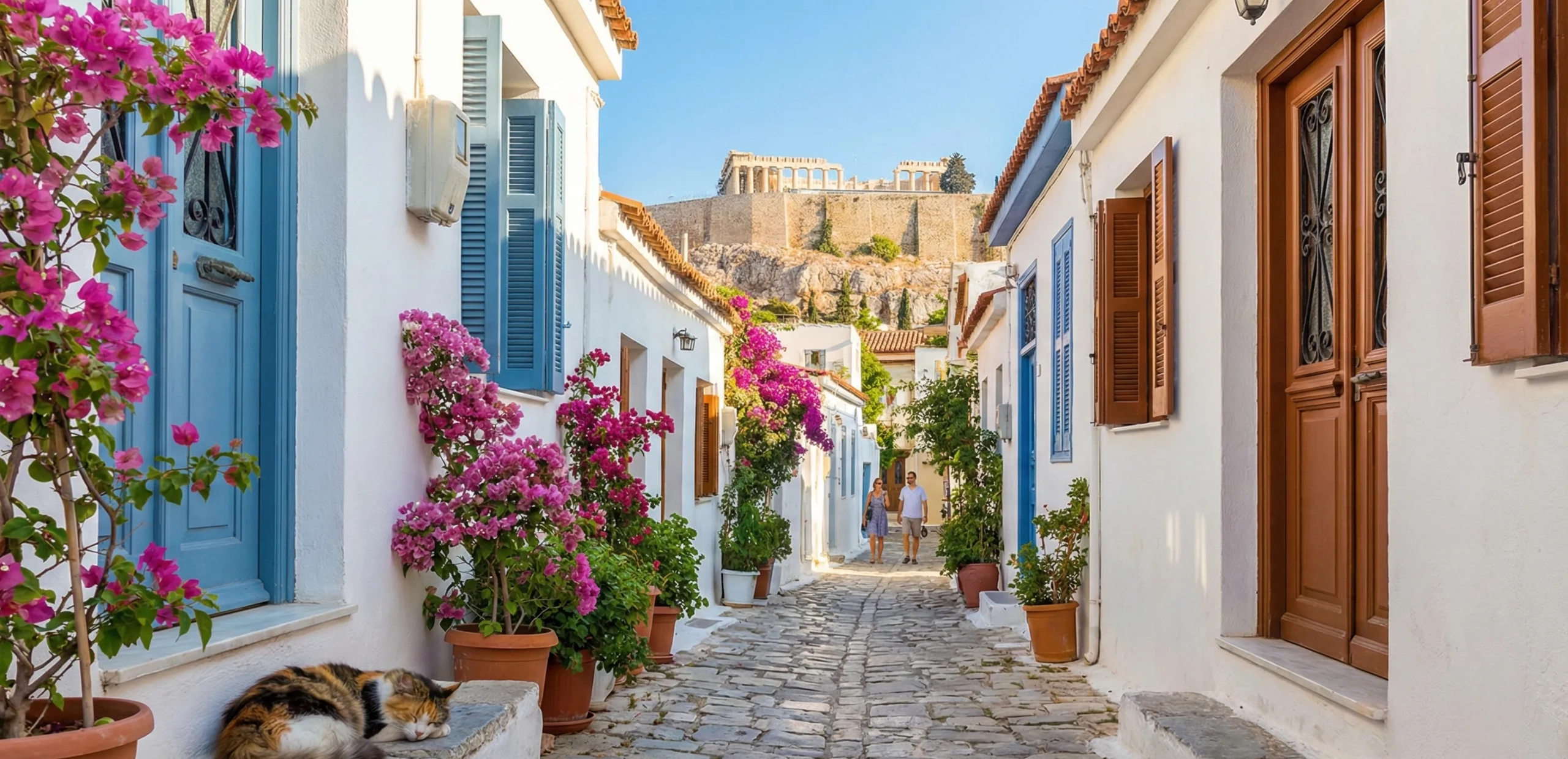
Neighborhood Comparison Guide
| Neighborhood | Character | Top Attraction | Best For | Walk from Syntagma |
| Plaka | Historic village | Anafiotika alleys | First-time visitors | 5 minutes |
| Monastiraki | Market energy | Ancient Agora | Shopping, culture | 8 minutes |
| Psyrri | Creative nightlife | Street art murals | Evening entertainment | 10 minutes |
| Syntagma | Political heart | Parliament building | Modern Athens | Central point |
| Kolonaki | Upscale elegance | Benaki Museum | Designer shopping | 15 minutes |
| Thissio | Archaeological | Temple of Hephaestus | Ancient sites | 12 minutes |
| Koukaki | Residential cool | Acropolis Museum | Local atmosphere | 15 minutes |
| Exarchia | Bohemian student | University district | Alternative culture | 20 minutes |
| Anafiotika | Island village | Cycladic houses | Photography | 10 minutes |
| Gazi | Industrial revival | Technopolis venue | Modern clubbing | 18 minutes |
| Pangrati | Authentic local | Panathenaic Stadium | Residential life | 20 minutes |
| Mets | Quiet charm | Arditos Hill cafés | Relaxed exploration | 18 minutes |
Colloquially called the “Neighborhood of the Gods” due to its position beneath the Acropolis’ north slope, Plaka represents most visitors’ first Athens neighborhood encounter. Its labyrinthine cobblestone streets, some following paths unchanged since classical antiquity, wind past tavernas where proprietors still negotiate with delivery drivers blocking narrow lanes with produce trucks. The tourist infrastructure is undeniable, yet authentic moments persist: elderly residents chatting on doorsteps, neighborhood cats claiming specific café territories, small grocers selling produce to locals who’ve shopped there for decades. Quality Athens tours use Plaka as an orientation point before venturing into less-traveled districts, establishing historical context through its visible archaeological layers.
This bustling square functions as Athens’ unofficial crossroads, where three metro lines converge beneath an Ottoman-era mosque facing the Ancient Agora’s columns. Sunday’s flea market transforms surrounding streets into organized chaos, antique dealers displaying Byzantine icons beside vendors hawking knockoff sunglasses, record collectors flipping through vinyl crates while tourists photograph the Acropolis rising behind stalls. The neighborhood embodies Athens’ talent for historical layering: you can examine ancient pottery shards in the Agora’s archaeological site, then ascend one level to a rooftop bar where DJs spin electronic music as sunset illuminates the Parthenon. Experienced all about athens tour operators schedule Monastiraki visits strategically, avoiding Saturday afternoon crush while ensuring markets remain active.
Twenty years ago, Psyrri remained Athens’ manufacturing heart, leather workshops, metal fabricators, printing presses occupying neoclassical buildings city planners considered demolishing. Then artists discovered cheap rent, galleries colonized former warehouses, and restaurateurs transformed ground-floor workshops into intimate dining rooms. Today’s Psyrri represents Athens’ most successful organic gentrification: yes, trendy cocktail bars replaced traditional tavernas, but metalworkers still operate among the clubs, elderly residents coexist with young creatives, and street art covering every available surface chronicles neighborhood transformation rather than concealing it.
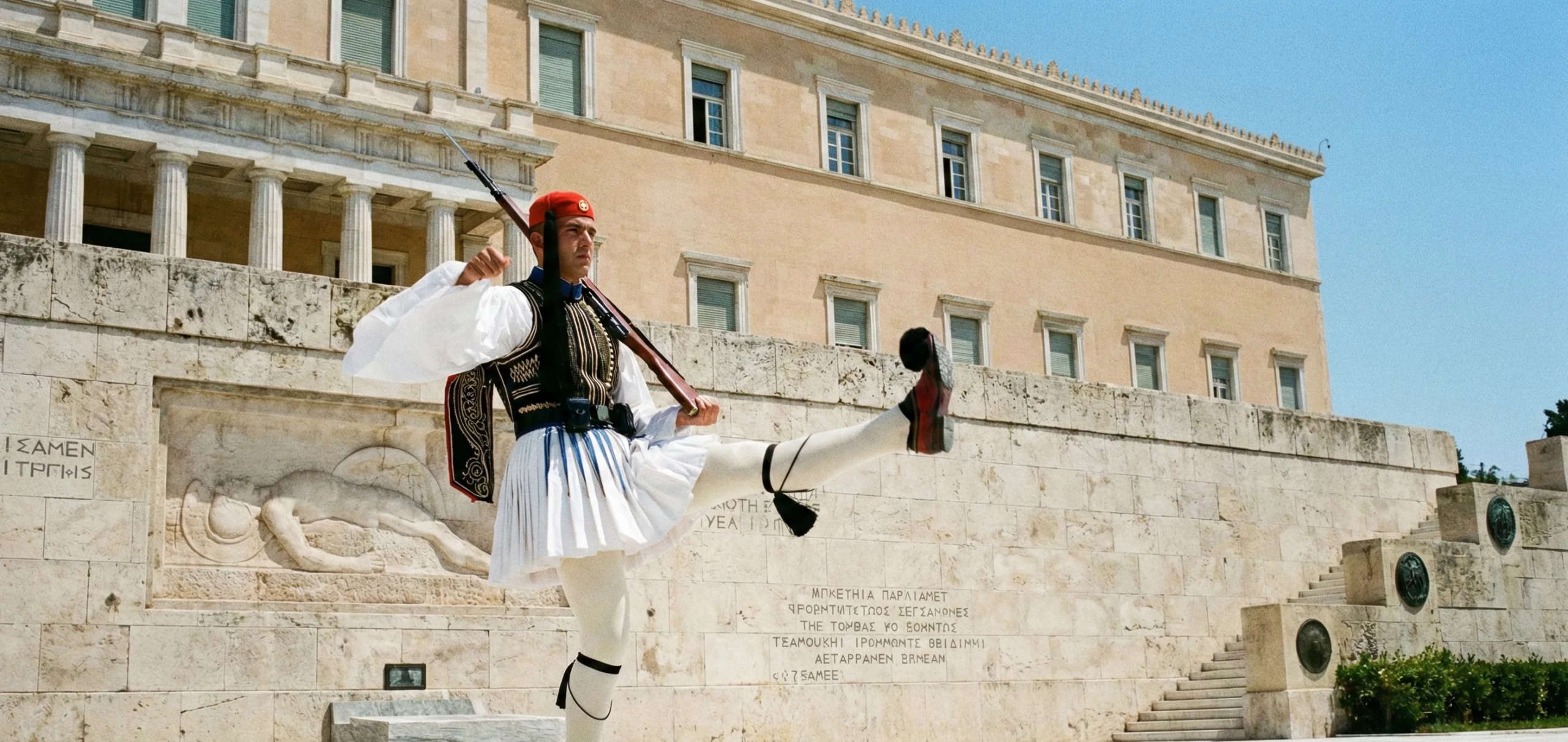
Syntagma Square functions as the beating heart of contemporary Athens, parliament guards perform hourly ceremonial changes before crowds photographing their pompom shoes, while protests periodically fill the square with demonstrators whose chants echo against neoclassical facades. The surrounding Commercial Triangle comprises Athens’ primary business district, where office workers flood cafés during breaks and luxury hotels occupy buildings overlooking the square. Behind parliament’s imposing marble, the National Garden provides unexpected green refuge, its 15.5 hectares of botanical gardens and shaded pathways offering respite from urban intensity.
Athens’ wealthiest central neighborhood climbs the slopes of Lycabettus Hill, its tree-lined streets hosting designer boutiques, art galleries, and cafés where cappuccinos cost triple Monastiraki prices. But Kolonaki offers substance beyond conspicuous consumption: the Benaki Museum’s extensive Greek cultural collection, Cycladic Art Museum’s minimalist galleries, and Byzantine & Christian Museum justify exploration even if luxury shopping doesn’t appeal. The neighborhood also demonstrates Athens’ class geography, Kolonaki residents historically wielded political influence disproportionate to the district’s small size, and that legacy persists in its manicured streets and diplomatic residences. Combining Kolonaki exploration with sunset Cape Sounion tour extensions creates full-day itineraries balancing urban sophistication with coastal antiquities.
Few neighborhoods integrate archaeological sites into daily life as seamlessly as Thissio, where residents walk dogs past the Temple of Hephaestus, mainland Greece’s best-preserved ancient temple, and cafés line pedestrianized streets offering direct Acropolis views. The Apostolou Pavlou walkway connecting Thissio to Plaka represents Athens’ most successful recent urban planning: this car-free promenade encourages evening strolls where locals outnumber tourists, musicians busk at strategic viewpoints, and elderly couples claim specific benches nightly. When planning comprehensive Delphi day trips from Athens, operators often incorporate Thissio walks as city-based archaeological context before venturing to rural sanctuaries.
This residential neighborhood south of the Acropolis demonstrates Athens at its most authentically livable, not preserved as historic district nor transformed by tourism, but functioning as actual neighborhood where families raise children, elderly residents maintain decades-long café allegiances, and corner stores sell produce rather than souvenirs. Koukaki’s recent renaissance follows the Acropolis Museum’s 2009 opening, attracting quality restaurants and wine bars that cater equally to residents and culture-seeking visitors. The pedestrianized Olympiou Street epitomizes this balance: summer evenings bring crowds that feel convivial rather than overwhelming, and recommendations from Meteora day tour guides often include Koukaki restaurants for pre-departure dinners showcasing contemporary Greek cuisine.
This politically charged student district surrounding Athens’ universities maintains its reputation as leftist stronghold and anarchist haven, graffiti covers every available surface, squats occupy abandoned buildings, and residents maintain fierce independence from both tourism and gentrification. While recent years brought increased police presence and some short-term rentals, Exarchia retains authentic edge: bookstores stock radical political theory, cafés host impromptu debates about Greek economic policy, and the weekly Saturday laïki agora (farmers market) demonstrates community-supported agriculture before such concepts became fashionable.
Tucked beneath the Acropolis’ northeast slope, this tiny neighborhood of whitewashed houses and narrow staircases was built by stonemasons from Anafi island who came to construct King Otto’s palace in the 1840s. They replicated their island’s Cycladic architecture, cube-shaped houses with blue shutters, tiny gardens bursting with jasmine and bougainvillea, cats sleeping on sunny doorsteps. With only about 40 houses and minimal commercial presence, Anafiotika functions more as photogenic detour than destination, but its village atmosphere provides surreal contrast to urban Athens surrounding it.
Named for the gasworks that dominated this industrial zone until 1984, Gazi epitomizes Athens’ post-Olympic reinvention. The restored gasworks now house Technopolis, a cultural center hosting exhibitions and concerts, while surrounding streets transformed into clubbing district where venues don’t get crowded until after midnight. Unlike Psyrri’s organic evolution, Gazi’s development followed more planned trajectory, attracting LGBTQ+ venues and contemporary restaurants alongside mainstream clubs. The neighborhood demonstrates both Athens’ capacity for architectural recycling and tensions between nightlife economies and residential quality of life.
East of the Panathenaic Stadium, Pangrati remains refreshingly unaffected by tourism despite proximity to major sites. This middle-class residential district maintains neighborhood rhythms largely unchanged for decades: elderly men occupy specific café tables daily, playing tavli (backgammon) for hours; local shops know customers by name; and evening volta (promenade) tradition persists along main streets. Varnava Square anchors neighborhood life, its surrounding tavernas and bars attracting locals who appreciate quality without pretension.
Bordering Pangrati and tucked between the Panathenaic Stadium and First Cemetery, Mets combines residential calm with proximity to central Athens. This small neighborhood attracts professionals seeking quieter alternatives to Kolonaki’s bustle, artists priced out of Psyrri, and families wanting walkable access to parks and schools. Arditos Hill’s pine-covered slopes provide neighborhood green space, while main streets host cafés and small restaurants that fill with locals rather than tourists, even during high season.
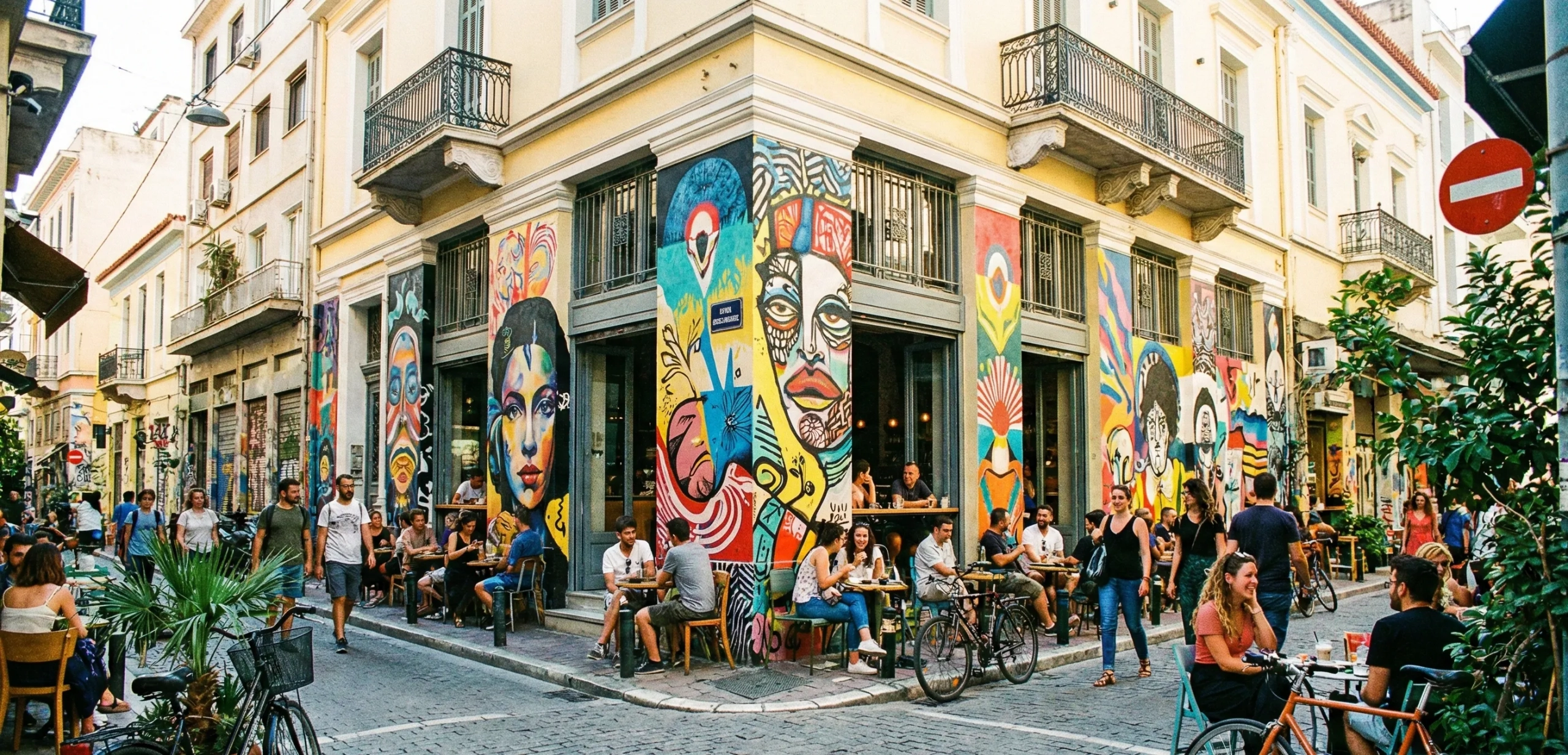
Effective athens daily tours balance ambition with reality, attempting all 12 neighborhoods in one day produces superficial impressions rather than meaningful understanding. First-time visitors should prioritize the Plaka-Monastiraki-Psyrri-Syntagma quartet, spending 4-6 hours exploring these interconnected central districts with breaks for coffee and lunch. This core provides essential context: ancient sites establish historical foundation, Ottoman heritage demonstrates later occupations, 19th-century neoclassicism reveals modern Greece’s origins, and contemporary layers show current evolution.
Return visitors or those with multiple days can expand systematically: add Kolonaki and Thissio for cultural depth, include Koukaki or Pangrati for authentic residential perspectives, venture to Exarchia for alternative viewpoints. Many operators combine Athens neighborhood exploration with regional excursions like Argolis day trips, creating itineraries that contextualize Athens within broader Greek cultural geography.
The walkability that makes Athens neighborhood tours possible also creates practical challenges, summer heat makes afternoon exploration genuinely uncomfortable, while winter rains transform marble-paved streets into slippery hazards. Successful day tours athens itineraries adapt to seasonal realities: May-September tours should start early (8-9am) to complete Acropolis climbing before midday heat, break for long lunches during peak temperature hours (2-5pm), then resume with evening neighborhood walks. October-April allows more flexible scheduling but requires backup plans for weather.
Transportation strategy depends on neighborhood combinations. The central quartet (Plaka, Monastiraki, Psyrri, Syntagma) connects entirely on foot, while reaching Gazi, Exarchia, or Pangrati efficiently requires short metro rides. Athens airport transfers often include brief city orientations, helping visitors understand metro lines and neighborhood geography before independent exploration. Private tours solve logistics through dedicated vehicles but sacrifice the street-level perspective that makes neighborhood exploration compelling.
Duration varies significantly based on depth and neighborhoods covered: Half-day tours (4 hours) typically explore 4-6 central neighborhoods with brief stops for overview and photos. Full-day experiences (7-8 hours) allow deeper exploration of 8-10 districts including lunch breaks and museum visits. For comprehensive coverage of all 12 neighborhoods with meaningful time in each, plan 2-3 days of structured exploration combined with independent wandering.
Comprehensive tours encompass major archaeological sites (Acropolis, Ancient Agora), key squares (Syntagma, Monastiraki), characteristic neighborhoods (Plaka, Psyrri), and cultural context explaining Athens’ evolution. Quality operators provide licensed guides with archaeological or historical backgrounds, skip-the-line access to major monuments during peak season, and strategic breaks at neighborhood cafés demonstrating local life. Some include traditional lunch in family-run tavernas, while others focus purely on walking exploration.
Yes, though neighborhood selection matters significantly for family engagement. Plaka’s pedestrianized streets and ice cream shops appeal to children, Monastiraki’s flea market provides treasure-hunt atmosphere, and Thissio’s park areas offer playing space. Exarchia’s political edge and Gazi’s nightlife focus suit adults better. Heat management becomes critical, families should prioritize morning exploration, plan frequent water and shade breaks, and consider splitting multi-day visits between neighborhood walks and museum time.
Absolutely, customization represents private tours’ primary advantage over group alternatives. Communicate specific interests during booking: archaeological focus, contemporary art and street culture, food and markets, or residential authenticity each suggest different neighborhood priorities. Operators experienced with Corinth and Nafplion tour combinations can also design itineraries balancing Athens neighborhoods with nearby archaeological sites for visitors wanting urban and ancient diversity.
The Plaka-Monastiraki-Syntagma-Psyrri quartet provides essential foundation covering historical, commercial, political, and contemporary facets. This central cluster demonstrates Athens’ layered character, ancient ruins integrated into modern city, Ottoman heritage visible in architecture, 19th-century neoclassicism revealing national identity formation, and current creative energy in revitalized districts. First-timers with extra time should add Kolonaki (cultural institutions) or Koukaki (authentic residential life) before exploring more peripheral neighborhoods.
Professional guides substantially enhance neighborhood exploration, particularly for districts where history isn’t immediately visible. Knowledgeable athens guided tours leaders explain why certain buildings survived while others fell, identify architectural details revealing construction periods, share stories about neighborhoods’ social evolution, and provide contemporary context for political graffiti or urban development debates. Independent exploration works well for atmospheric neighborhoods like Anafiotika or Pangrati where simply wandering suffices, but historical districts benefit enormously from expert interpretation.
Early morning (8-11am) or late afternoon (5-8pm) provide optimal conditions May through September, avoiding midday heat that makes extended walking uncomfortable and photographing ancient sites challenging due to harsh light. October-April offers more flexibility with pleasant midday temperatures, though occasional rain requires contingency planning. Evening neighborhood walks showcase different atmosphere, Psyrri and Gazi come alive after dark, Thissio’s pedestrian zone fills with strolling locals, and rooftop bars provide illuminated Acropolis views impossible during daylight.
Athens’ neighborhood diversity transforms what could be monument-focused tourism into genuine urban exploration, where each district reveals distinct aspects of this ancient capital’s ongoing evolution. From Plaka’s tourist-friendly charm establishing historical context to Exarchia’s defiant independence challenging comfortable narratives, these 12 neighborhoods demonstrate Athens’ refusal to be reduced to ancient ruins surrounded by modern mediocrity. The compact geography that allows exploring multiple districts within single days rewards curious travelers willing to venture beyond Acropolis-centric itineraries.
Smart visitors combine iconic sites with neighborhood immersion, understanding that Athens’ authentic character emerges more clearly in Koukaki’s evening café culture or Pangrati’s Sunday markets than tourist-saturated zones. Whether starting with comprehensive athens tours providing professional structure or independently mapping personalized routes based on specific interests, neighborhood-based exploration unlocks perspectives impossible through conventional sightseeing. Athens isn’t just Europe’s oldest capital, it’s a living city where ancient foundations support contemporary creativity, and understanding that dynamic requires walking its diverse streets rather than simply photographing monuments.

The single most appreciated benefit of private tours athens is escaping the tyranny of group schedules where you’re perpetually waiting, for late arrivals at the meeting point, for that one person still browsing the museum gift shop, for bathroom breaks that somehow require 15 minutes for a 20-person group.
Private athens tour experiences let you start when you want (early morning for best light at the Acropolis, or leisurely 10 AM after hotel breakfast), pause spontaneously when discovering an intriguing artisan workshop in Plaka, and extend time at sites that captivate you while breezing through stops that don’t.
Real-world example: A photographer captured sunrise at the Parthenon by starting their private tour at 7:30 AM, impossible with group tours that depart 9-10 AM. A family with a tired five-year-old cut their Acropolis visit short after 45 minutes without feeling guilty about “ruining” anyone else’s experience.
Group tour guides deliver scripted commentary to the middle of the audience, too detailed for casual visitors, too superficial for history enthusiasts, and field maybe three questions before needing to move along to stay on schedule.
Athens private tours transform your guide into a personal Athens professor who gauges your interest level and adapts accordingly. Ask about Byzantine architecture’s evolution? Your guide launches into a 10-minute passionate explanation with examples throughout your route. More interested in contemporary Greek politics? Your guide pivots to discussing modern Athens while walking through neighborhoods.
The intimacy enables genuine dialogue rather than lecture format. Guides share restaurant recommendations, explain cultural nuances about Greek social customs, and answer the “silly questions” visitors hesitate asking in group settings (“Is it rude to photograph church interiors?” “Why do Greeks celebrate name days more than birthdays?”).
Anyone who’s traveled with children under 10 knows the futility of rigid schedules when a sudden bathroom emergency strikes, snack time cannot be delayed, or exhaustion hits unpredictably at 11:37 AM despite everyone sleeping well the previous night.
Private Athens tour operators build flexibility into family experiences: bathroom breaks whenever needed without group-waiting guilt, snack stops at playgrounds letting kids burn energy while parents rest, and the freedom to skip the Ancient Agora’s final 30 minutes when attention spans evaporate.
Guides working private family tours naturally adjust their storytelling for young audiences, emphasizing Greek mythology’s dramatic stories, pointing out ancient graffiti kids find hilarious, and asking children questions that maintain engagement. The best private tours in athens for families include age-appropriate activities like finding hidden cats in Plaka or spotting Evzone guards’ synchronized movements at Parliament.
Discover family-friendly Athens day tours →

Group tours allow maybe 10-15 minutes at major photo spots before herding everyone onward, forcing photographers into rushed compositions that miss ideal lighting or interesting angles requiring patience to capture.
Private athens tours remove all time pressure. Want to wait 20 minutes for clouds to clear from behind the Parthenon? Your guide sits comfortably nearby. Need to walk around the Temple of Hephaestus three times testing different perspectives? Take your time. Discovered perfect golden-hour light hitting the Erechtheion’s Caryatids? Your guide adjusts the schedule to maximize that moment.
Professional and serious amateur photographers particularly value private tours for timing flexibility, starting tours to hit multiple sites during optimal lighting windows (early morning at Acropolis, late afternoon in Plaka’s narrow streets, sunset at Lycabettus Hill viewpoint). Guides experienced with photographer clients know the best angles, least-crowded vantage points, and seasonal lighting considerations.
Standard group tours follow formulaic routes hitting Athens’ greatest hits, Acropolis, Plaka, Ancient Agora, Syntagma Square, regardless of whether you’ve visited before, have specific interests, or desperately want to see sites most tours skip.
Athens private tour itineraries are built around your preferences from the planning stage. Already seen the Acropolis on a previous visit? Skip it entirely and explore Exarchia’s street art scene, Byzantine churches in Monastiraki, or Kerameikos’ ancient cemetery that group tours ignore. Passionate about Greek Orthodox traditions? Your guide designs a tour visiting four historic churches with architectural explanations.
Return visitors particularly benefit from private tour athens greece customization, crafting entirely unique second or third Athens visits focused on neighborhoods (Koukaki’s dining scene, Psyrri’s nightlife evolution), specific historical periods (Byzantine Athens, Ottoman influences, modern 1896 Olympics sites), or special interests (street food walking tours, architecture-focused explorations).
Explore customizable Athens tour options →
Here’s where private tours athens pricing becomes surprisingly competitive: Most tours charge per vehicle/guide, not per person, making them cost-effective for small groups.
The breakdown:
For six travelers, private tours actually cost less per person than group experiences while delivering all the customization, flexibility, and personalized attention benefits. Even couples (€140-175 each for half-day tours) often find the premium worthwhile for special occasions, honeymoons, anniversaries, milestone birthdays, where personalized experience quality matters more than budget optimization.
Luxury private tours Athens with premium vehicles, sommelier-guided wine tastings, or exclusive after-hours site access run €450-800 for half-days but deliver once-in-a-lifetime experiences impossible to replicate with standard tours.

While many group tours include skip-the-line Acropolis entry, private Athens tours take privileged access further, guides navigate you through less-crowded alternative entrances, know optimal timing to minimize encounters with other tour groups, and leverage professional relationships for special access considerations.
Time savings compound throughout the day. Where group tours lose 15-20 minutes per site managing crowd control and keeping participants together, private tours flow seamlessly from location to location. A 4-hour group tour might deliver 2.5 hours of actual content after accounting for waiting, organizing, and transitioning. A 4-hour private tours in athens experience provides nearly 3.5 hours of productive exploration.
Price range: €280-350 total cost (not per person)
Best for: Acropolis and Ancient Athens highlights, Plaka neighborhood exploration, or focused single-theme tours (street art, food markets, Byzantine churches). Four hours allows covering 3-4 major sites comfortably with photo time and one coffee/refreshment break.
Popular half-day itineraries: Acropolis + Ancient Agora + Plaka walking tour, or National Archaeological Museum + Syntagma Square + Panathenaic Stadium route.
Price range: €450-600 total cost
Best for: Combining Athens city highlights with day trip destinations like Cape Sounion, Ancient Corinth, or Delphi (though Delphi’s 10-hour drive round-trip pushes into premium pricing). Full days work well for comprehensive Athens coverage plus a secondary destination, or deep-dive explorations of multiple neighborhoods.
Popular full-day combinations: Athens morning highlights + Cape Sounion sunset, or Athens Acropolis + Ancient Corinth archaeological site.
Combine Athens with Corinth tour →
Understanding actual per-person investment helps evaluate whether private athens tour pricing makes sense for your group:
Family of 4 travelers:
Couple (2 travelers):
Group of 6 friends:
Compare these figures against standard group tours (€45-65 half-day, €95-120 full-day) while considering the enormous experience quality difference. For groups of 4+, the math often favors private options.
Perfect first-timer itinerary covering: Acropolis with Parthenon and Erechtheion, Ancient Agora with Temple of Hephaestus, Plaka neighborhood winding streets, Panathenaic Stadium (1896 Olympics venue), and Syntagma Square with Parliament building guard change.
This concentrates Athens’ essential ancient and modern landmarks into one efficient morning or afternoon, leaving remaining days free for island day trips or independent exploration.
Browse Athens day tour options →
Combines morning Athens highlights (Acropolis, Plaka) with scenic coastal drive to Cape Sounion for sunset at the Temple of Poseidon. This popular private athens tours itinerary maximizes a single day by offering ancient ruins, Aegean coastline, and golden-hour photography opportunities.
Timing flexibility means adjusting Athens exploration length to reach Cape Sounion precisely at sunset (varies seasonally: 7:30 PM summer, 5:00 PM winter).
Book Athens and Cape Sounion combination →
Designed for return visitors or travelers wanting contemporary Athens beyond ancient sites: Exarchia neighborhood street art and alternative culture, Kerameikos ancient cemetery (tourist-free), Central Market (Varvakios) food exploration, Psyrri’s gentrified dining scene, and Koukaki’s residential charm.
This itinerary reveals the Athens locals inhabit rather than the tourist Athens of guidebooks.

Private tours in athens deliver optimal value for these traveler profiles:
Before booking any athens private tours, confirm these essential details:
Licensed guide verification: Greece requires professional tour guides to hold Ministry of Tourism licenses after passing rigorous history, archaeology, and language exams. Request guide credentials, licensed professionals dramatically outperform unlicensed “tour leaders” in knowledge depth and site access.
Vehicle type and condition: For tours including transportation, confirm air-conditioned, modern vehicles with comfortable seating. Request photos if booking online.
Itinerary flexibility: Clarify how much customization is genuinely available. Can you adjust timing day-of, or must itinerary be finalized during booking?
What’s included: Confirm whether pricing includes entrance fees (€20 Acropolis), skip-the-line arrangements, hotel pickup/drop-off, bottled water, and gratuities. Hidden fees destroy budget planning.
Learn about Athens tour operators →
Summer (June-August): Book 2-3 weeks advance as top-rated private tour athens guides fill summer schedules quickly, particularly for sunset tours and full-day experiences.
Shoulder season (April-May, September-October): 1-2 weeks advance typically sufficient. These months offer ideal weather (20-28°C) without summer’s intensity.
Winter (November-March): Often possible to book 3-7 days ahead, though Christmas/New Year weeks require more advance planning.
After 15+ years organizing private athens tour experiences, local operators share these crowd-beating and quality-maximizing strategies:
Best start times by season: Summer tours should begin 8-8:30 AM to experience Acropolis before heat and crowds peak (11 AM-2 PM sees maximum congestion and 35°C+ temperatures). Winter allows more flexible 9-10 AM starts with comfortable temperatures.
Hidden photo spots: Private guides access less-known vantage points, a quiet taverna rooftop in Plaka with perfect Acropolis views, the Anafiotika neighborhood’s whitewashed alleys resembling Cycladic islands, and Mars Hill (Areopagus) at sunset for dramatic Acropolis silhouettes.
Lunch break recommendations: Unlike group tours with predetermined stops (often tourist traps paying commissions), private guides recommend authentic neighborhood tavernas where locals eat. Flexible scheduling means dining when Greeks actually eat lunch (2-3 PM) rather than tourist-targeted noon slots.
Private Athens tours cost €280-350 for half-day experiences (4 hours) and €450-600 for full-day explorations (8 hours), with pricing covering your entire group (not per-person). For families of four, this breaks down to €70-125 per person depending on duration, competitive with group tours when factoring the superior flexibility, customization, and guide attention.
Yes, for groups of 3+ travelers or anyone prioritizing flexibility and personalization. The per-person premium shrinks dramatically with group size, six friends pay just €58 each for half-day private tours versus €50 for group experiences, making the €8 difference negligible given the vast quality improvement. Families with young children, photographers, and visitors with specific interests find private tours deliver exponentially better value despite higher absolute costs.
Absolutely, customization is the defining feature of private tours. Work with operators during booking to design itineraries matching your interests, pace, and must-see priorities. Want to skip the Acropolis you’ve already visited and explore neighborhood street art instead? Private guides adapt completely. Need to accommodate mobility limitations with vehicle-proximity planning? Easily arranged. The flexibility extends to day-of adjustments when discovering unexpected interests.
Most professional private Athens tours include skip-the-line Acropolis and major site access, though confirm during booking as some budget operators exclude this. Skip-the-line privileges save 60-90 minutes during peak summer mornings when general admission queues stretch across Dionysiou Areopagitou Street. Licensed guides also know alternative, less-crowded site entrances for smoother experiences.
The 4-hour Classic Athens Highlights itinerary covering Acropolis, Ancient Agora, and Plaka provides optimal first-timer orientation, hitting essential ancient landmarks while introducing Athens’ layout and contemporary character. This leaves afternoon time for independent exploration or rest, with tour insights informing your subsequent days. Upgrading to 8-hour experiences adds Cape Sounion or deeper neighborhood explorations.
Standard private tours accommodate 1-8 participants using sedans (1-3 people), minivans (4-6), or larger vehicles (7-8). Some operators cap groups at six for optimal guide interaction and site maneuverability. Larger groups of 10-15 require specialized arrangements and premium pricing but remain possible for family reunions or corporate groups.
Private Athens tours transform good visits into extraordinary personalized adventures by delivering schedule control, custom itineraries, and dedicated guide attention impossible with conventional group experiences. While absolute costs run higher, €280-600 versus €45-120 for group tours, the per-person mathematics favor private options for groups of four or more travelers, with enormous quality-of-experience benefits justifying premiums even for couples.
The winning formula: Book half-day private tours for Athens highlights combined with full-day group experiences for distant destinations like Meteora or Delphi where personalization matters less than logistics. This hybrid approach maximizes value across your Athens visit.
Ready to explore Athens your way, on your schedule, with guide attention focused entirely on your interests? Book your private Athens tour today →
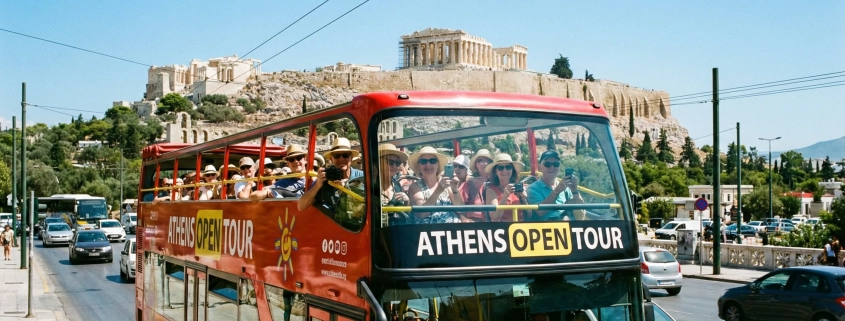
The red double-decker buses circling Athens’ ancient streets promise convenient hop-on hop-off flexibility for exploring this historic capital. Big bus tour athens operates three routes connecting 40+ stops across the city center, Piraeus port, and Riviera beaches through open-top vehicles offering 14-language audio commentary. For solo travelers on strict budgets, these buses provide legitimate orientation value around €23-30 per ticket. But here’s what tour companies won’t advertise: most travelers, especially couples, families, or groups, discover that personalized private tours athens deliver exponentially better experiences at comparable per-person costs when group pricing is factored correctly.
How does Big Bus Tour Athens work? Big Bus Athens operates hop-on hop-off double-decker buses across three routes (Athens city, Piraeus port, Riviera beaches) with 40+ stops, audio commentary in 14 languages, and 24/48/72-hour tickets starting around €23, though private tours offer superior value through personalized attention, flexible itineraries, and expert guides at comparable group pricing.
Big Bus Tours operates the most visible hop-on hop-off service in Athens, deploying open-top double-decker buses along predetermined routes where passengers can disembark at designated stops, explore attractions independently, then reboard subsequent buses using the same ticket. The system theoretically offers flexibility, buy a 24, 48, or 72-hour pass, jump on at any stop, create your own itinerary. Reality proves more complex: buses run every 15-30 minutes depending on route and season, meaning each “hop off” commits you to waiting periods that fragment your day. The recorded audio commentary provides basic historical facts translated into 14 languages, but can’t answer questions, adjust explanations to your interests, or provide insider recommendations that transform good visits into memorable experiences.
The athens tours landscape has evolved significantly beyond basic bus circuits, today’s travelers increasingly recognize that personalized exploration with expert guides who adjust pacing, skip lines at monuments, and share authentic local knowledge creates fundamentally different value propositions than following predetermined routes on crowded buses.
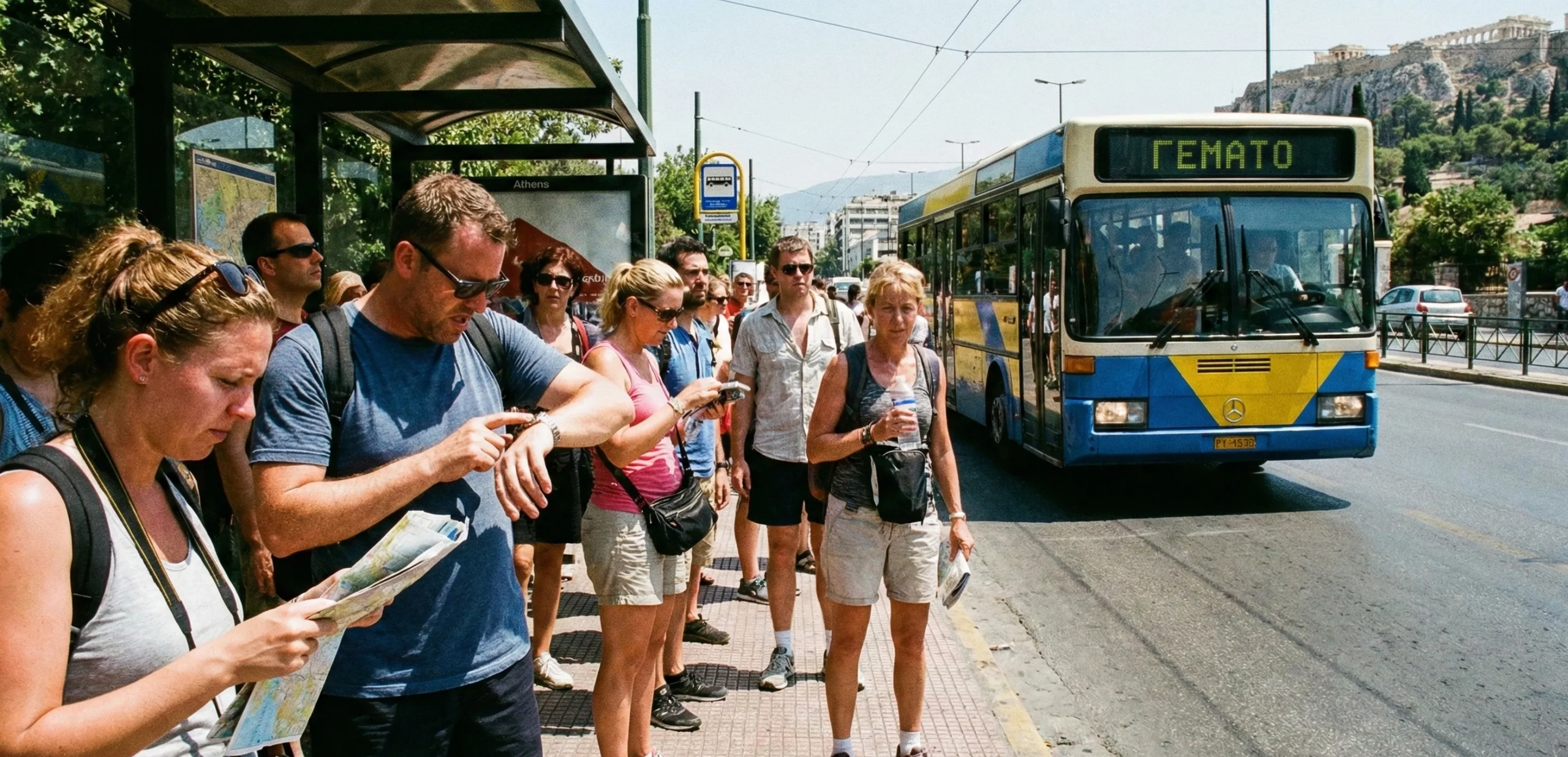
This primary route covers central Athens’ archaeological and cultural highlights across 15 stops operating 8:30am-6:30pm with departures every 15-20 minutes during peak season. Key stops include Syntagma Square (Parliament), Plaka’s pedestrian quarter, the Acropolis south entrance, Temple of Olympian Zeus, Panathenaic Stadium, National Garden, Kolonaki’s museum district, and Omonia Square. The complete loop requires approximately 90 minutes without disembarking, meaning if you actually hop off to visit the Acropolis (2-3 hours minimum), you’ve consumed half your day at one site while your expensive ticket clock keeps ticking.
Experienced all about athens tour operators recognize this fundamental flaw: hop-on hop-off systems penalize you for actually exploring. Private tours solve this by providing dedicated vehicles and guides who wait while you explore, adjust schedules if you want more time somewhere, and skip attractions that don’t match your interests. When your guide’s vehicle follows YOUR preferences rather than predetermined stops, Athens reveals itself authentically instead of through rushed fragmented glimpses between bus waits.
This secondary route connects central Athens to Piraeus port across 8 stops, primarily serving cruise passengers with limited shore time. Buses depart less frequently, every 60 minutes, operating 12:45pm-2:45pm with severely restricted hours that make this route nearly useless for comprehensive planning. The connection theoretically helps cruisers reach Athens’ highlights, but the timing constraints and infrequent service create anxiety about missing your ship rather than relaxing into exploration.
Port-based travelers consistently report better experiences with athens layover tours that provide dedicated transport, expert guides, and guaranteed return timing. When you’re managing cruise logistics, the last thing you need is uncertainty about bus frequencies or worry about being stranded at a stop if you miscalculate timing. Private shore excursions eliminate this stress entirely.
The Riviera route extends from the Acropolis interchange south along the coast to Glyfada and Vouliagmeni beaches, operating 9:35am-5:35pm every 60 minutes. While this sounds appealing for combining city sightseeing with beach time, the once-hourly frequency makes practical planning nearly impossible, miss one bus and you’ve lost an hour sitting on pavement in Mediterranean sun. The route covers approximately 25km each direction, meaning the full circuit consumes significant time that could be spent actually enjoying beaches or archaeological sites.
Travelers seeking coastal experiences alongside Athens exploration find much better value through comprehensive day trips like sunset cape sounion tour that combine dramatic Temple of Poseidon visits with Athens Riviera scenery without the frustration of waiting for hourly buses. When an expert guide handles all transportation logistics while sharing cultural context, the additional per-person cost, often comparable to multi-day bus passes for groups, becomes obviously worthwhile.

Big Bus Athens pricing follows tiered structures: 24-hour tickets start around €23-26 for adults, 48-hour access costs €26-30, and 72-hour passes with all three routes reach €30-35. Children typically receive 50% discounts while those under 5 ride free. These prices initially appear reasonable for unlimited riding, until you calculate actual value received. Consider typical usage: most travelers ride the complete loop once for orientation (90 minutes), hop off at 3-4 major sites spending 2-3 hours at each, then catch evening buses back to hotels. That’s perhaps 4-5 actual bus rides over 24-48 hours, essentially paying €6-7 per basic transport ride with zero personalization, no skip-the-line access, no expert guidance, and constant schedule anxiety about catching next buses.
Now compare group dynamics: four travelers purchasing 48-hour Big Bus passes spend €104-120 total. That same €120 books half-day private tours through athens day tours providers offering dedicated vehicles, expert guides, flexible itineraries, skip-the-line monument access, and personalized attention. For families or small groups, the math becomes obvious, why accept crowded bus mediocrity at prices that could purchase genuinely excellent experiences?
Value Analysis: Athens Sightseeing Options
| Feature | Big Bus Hop-On-Hop-Off | Private Athens Tours |
| Price per person (group of 4) | €26-30 each = €104-120 total | €30-40 each = €120-160 total |
| Route flexibility | 3 fixed routes only | Completely customizable |
| Guide interaction | Recorded audio, no questions | Live expert, unlimited Q&A |
| Passenger count | 60-80 per bus | Your group exclusively |
| Skip-the-line access | None, wait with crowds | Included at major monuments |
| Pace control | Bus schedule dictates timing | Your preferences entirely |
| Weather considerations | Open-top exposure to elements | Climate-controlled comfort |
| Itinerary changes | Impossible once routes set | Adjust anytime during tour |
| Photography stops | Limited by bus schedule | Unlimited as desired |
| Local restaurant tips | Generic guidebook info | Real-time recommendations |
| Monument depth | Surface-level recordings | Expert archaeological interpretation |
| Time efficiency | Lost waiting for buses | Maximized through planning |
This comparison reveals why experienced travelers increasingly choose private options: the modest price difference (often just €10-20 per person for groups) purchases dramatically superior experiences. You’re not paying extra for luxury, you’re paying for fundamental quality: actual conversations with knowledgeable guides who answer your specific questions, vehicles that wait at sites instead of forcing rushed visits, flexibility to spend three hours at the Acropolis or thirty minutes if crowds overwhelm, and insider knowledge about which tavernas serve authentic food versus tourist traps.
Consider real scenarios: Big Bus forces you onto predetermined schedules regardless of your interests, energy levels, or weather. Love Byzantine art? Too bad, the bus spends five minutes at the Byzantine Museum stop then leaves. Exhausted from Acropolis climbing? You still need to wait 20 minutes for the next bus in scorching sun. Found an amazing ceramics workshop in Monastiraki? Can’t stay because you’ll miss your scheduled bus. Private tours through experienced athens tour operators eliminate every single one of these frustrations while maintaining comparable costs for groups.
Comprehensive private tours lasting 7-8 hours cover Athens’ essential highlights, Acropolis, Ancient Agora, Plaka, Monastiraki, Panathenaic Stadium, Temple of Zeus, with expert guides adjusting pace and depth to your interests. Unlike Big Bus’s fragmented hop-on hop-off experience, private tours flow coherently: your guide provides historical context while driving between sites, answers questions specific to your curiosity, recommends lunch at family-run tavernas that buses never mention, and adjusts remaining itinerary based on what you’ve most enjoyed. Groups of 4-6 typically pay €35-50 per person, nearly identical to two-day Big Bus passes, while receiving exponentially better service.
Many travelers discover that focused half-day tours concentrated on specific interests, Acropolis and museums, food and markets, neighborhoods and street art, provide more value than exhausting attempts to see everything via bus circuits. These 4-hour explorations starting around €25-35 per person dive deeply into chosen themes with experts whose passion and knowledge transform sightseeing into education. You’ll learn why the Parthenon’s columns aren’t vertical, which spices in the Central Market indicate authentic home cooking, or how post-Olympic gentrification transformed once-industrial districts into creative hubs.
Big Bus’s Piraeus and Riviera routes attempt to extend Athens coverage but fail due to infrequent service. Travelers seeking diversity beyond city limits find much better experiences through dedicated day trips to meteora day tour monasteries, delphi day trips archaeological sanctuaries, corinth tour ancient cities, or argolis day trips to Mycenae and Epidaurus. These full-day adventures provide comfortable transport, expert archaeological guides, and comprehensive experiences impossible via any city bus route, typically at €50-70 per person, comparable to what budget-conscious travelers waste on multi-day bus passes that deliver minimal actual value.
Visitors spending 3-4 days in Athens area increasingly book combinations: private Athens city tour day one, Delphi excursion day two, corinth nafplion tour day three, with Cape Sounion sunset finale. This approach provides coherent narrative arc through Greek history and culture that hop-on hop-off buses, focused purely on Athens logistics, can’t remotely approximate. When you’re investing time and money traveling to Greece, why accept the lowest common denominator experience that bus tourism represents?
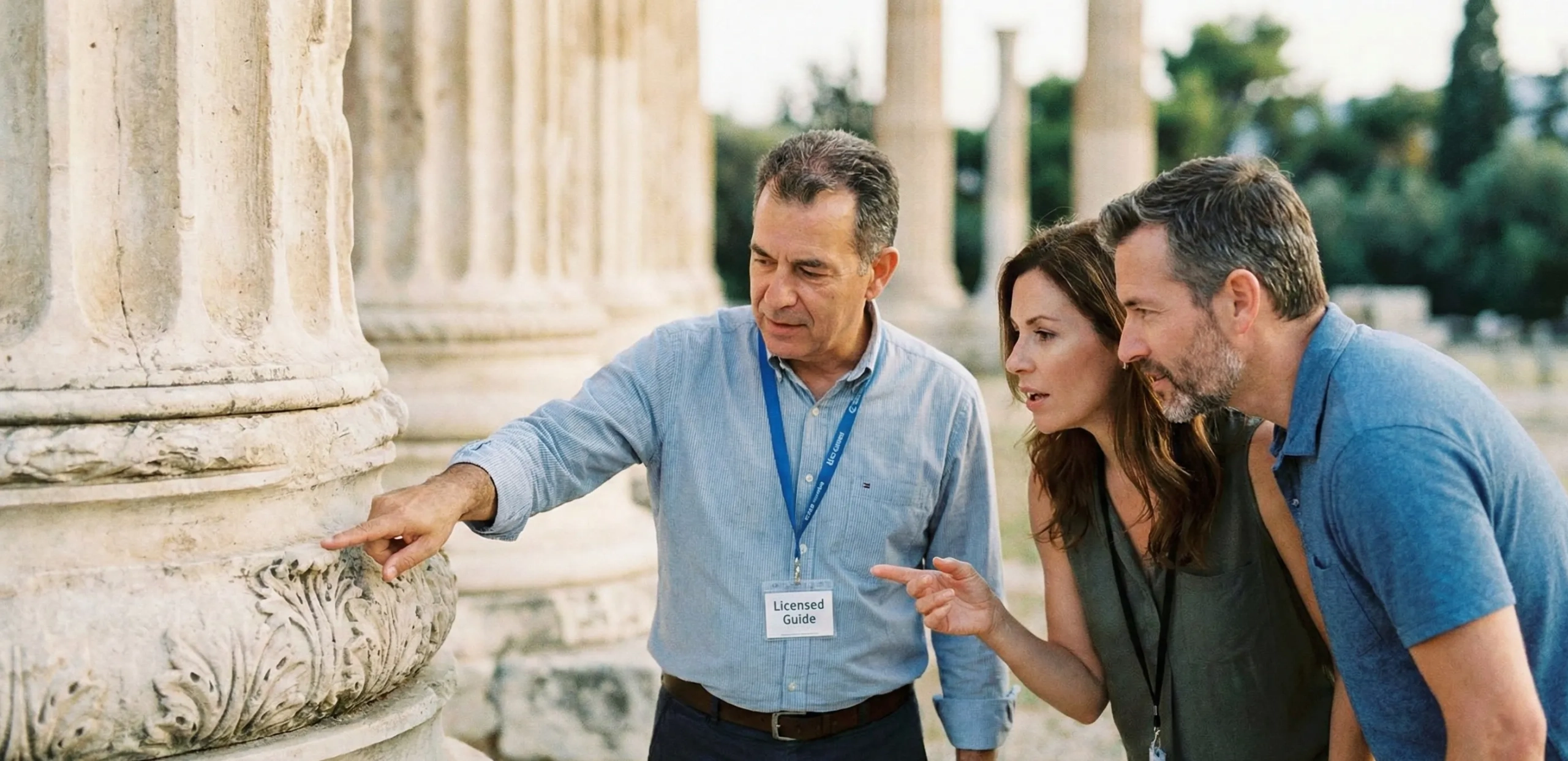
Intellectual honesty requires acknowledging legitimate Big Bus use cases, though they represent minority scenarios. Solo travelers on genuinely strict budgets who’ve already researched Athens extensively and simply need transportation between pre-identified sites can extract reasonable value from 24-hour passes. The buses function adequately as mobile orientation tools for arriving visitors who want broad geographical understanding before deeper exploration. Rainy days when outdoor walking becomes unpleasant make covered bus circuits reasonable shelters while still seeing sights through windows.
However, even in these scenarios, alternatives often prove superior. Solo travelers frequently discover that joining small group tours, which cost €40-60, provides immensely better experiences than saving €15-20 via isolated bus riding while missing cultural context entirely. First-day orientation works perfectly well through athens airport transfers that include brief city overviews during drives to hotels. And frankly, Greek weather stays pleasant enough year-round that “rainy day” contingencies rarely become necessary.
The pattern emerges clearly: Big Bus serves travelers who prioritize absolute minimum cost over quality, who travel solo, and who’ve already extensively researched destinations so that audio commentary adds nothing. For literally everyone else, couples, families, groups, travelers seeking genuine learning, private or small-group alternatives deliver so much more value that the modest additional cost becomes obviously worthwhile.
Worth depends entirely on your situation and priorities. Solo travelers on extreme budgets who don’t value expert guidance find legitimate utility in €23-26 day passes providing unlimited transport between major sites. However, couples or groups should calculate carefully: two people spending €52 for Big Bus could instead spend €60-80 total for private half-day tours offering dedicated guides, vehicles, and personalized attention. Four people paying €104-120 for bus passes could book comprehensive full-day private experiences at similar total costs. Factor in skip-the-line access, flexible timing, and expert knowledge that private tours include, and Big Bus becomes “worth it” only for specific solo budget scenarios, not for most travelers visiting Athens.
Complete loops require 90 minutes for Athens route, 60-75 minutes for Piraeus route, and 120 minutes for full Riviera circuit. However, these timing assume staying seated for entire loops without disembarking, which defeats the “hop on hop off” purpose. Realistic usage patterns where you actually exit to visit 3-4 major attractions span 6-8 hours including waiting times between buses (15-30 minutes at each stop depending on route and season). Multi-day tickets attempt to solve this compression by extending access to 48-72 hours, but most travelers find they’ve exhausted interest after one full day of fragmented bus riding.
No, Big Bus tickets provide zero skip-the-line privileges at Athens monuments. You’ll wait in standard entrance queues at the Acropolis, museums, and other attractions exactly like independent visitors. This represents a significant hidden cost: summer high season sees Acropolis entry lines consuming 60-90 minutes in brutal sun, Ancient Agora waits extending 30-45 minutes, and popular museums requiring similar patience. Private tours through athens private tours operators include skip-the-line access as standard, immediately justifying modest additional costs through time saved. When you calculate that two hours saved in lines translates to two additional sites visited or leisurely lunches instead of rushed eating, skip-the-line access becomes essential rather than luxury.
Private tours deliver superior value for 95% of travelers. Big Bus makes sense only if you’re traveling solo, operating under severely restricted budget, don’t value expert guidance, and feel comfortable navigating Athens independently using audio commentary. For couples, families, small groups, travelers seeking cultural depth, or anyone wanting flexible itineraries, private tours win decisively. The modest per-person cost difference (often €10-20 for groups) purchases dedicated expert guides, comfortable vehicles, skip-the-line access, completely flexible timing, personalized attention, and local insider knowledge that transforms tourism into authentic experiences. Quality tours in athens recognize this value proposition, structuring private options at group-friendly pricing that makes bus riding seem penny-wise but pound-foolish.
Three distinct routes operate under Big Bus Athens: the grey Athens route covering city center across 15 stops (Syntagma, Acropolis, Plaka, Monastiraki, Temple of Zeus, Panathenaic Stadium, museums), the blue Piraeus route connecting port across 8 stops for cruise passengers, and the yellow Riviera route extending south to beaches at Glyfada and Vouliagmeni across coastal roads. Routes interchange at the Acropolis stop but operate on different frequencies, Athens route every 15-20 minutes, Piraeus and Riviera hourly, creating logistical complications if you want to combine routes during single days. Multi-route tickets theoretically allow seamless transfers; practical reality involves significant waiting times and careful schedule coordination.
Absolutely not, Big Bus operates on completely fixed routes and schedules. You’re limited to predetermined stops, riding prescribed circuits, and following scheduled departure times regardless of your interests, energy levels, or discoveries along the way. Found an amazing Byzantine icon gallery in Plaka? Too bad, the bus left 2 minutes ago and you’re waiting 20 more minutes. Want to spend an extra hour at the Acropolis because you’re fascinated by Caryatid architectural engineering? Bus schedule says too bad. This inflexibility represents hop-on hop-off tourism’s fundamental flaw. Private tours offering complete customization, adjusting pace, skipping uninteresting sites, adding recommendations based on what excites you, cost barely more for groups while delivering incomparably better experiences through services like athens excursions that prioritize your preferences over predetermined efficiency.
Yes, Big Bus operates year-round with seasonal schedule adjustments. Summer peak season (May-September) sees maximum frequency with Athens route buses every 15 minutes, while winter months (November-March) reduce schedules to 20-30 minute intervals and shortened operating hours (last buses departing 4:15pm versus 6:30pm summer). Piraeus and Riviera routes maintain hourly frequencies year-round but may suspend service during severe weather. The reduced winter schedules create additional frustrations when you’re already working with limited daylight hours, another reason why dedicated private tours of greece operating on YOUR schedule regardless of season prove superior for serious travelers.
Big Bus Tour Athens fills a specific niche: providing bare-minimum Athens transportation for solo travelers under severe budget constraints who don’t value expert guidance or cultural depth. For this narrow demographic, the €23-30 tickets deliver functional service connecting major sites via predetermined routes. But honest assessment reveals that most travelers, couples, families, groups, and anyone seeking memorable experiences rather than mere transport, waste money on hop-on hop-off buses when superior private alternatives cost barely more per person while providing exponentially better value.
The mathematics prove compelling: four people spending €104-120 on Big Bus passes receive crowded vehicles, recorded commentary, no skip-the-line access, and constant schedule anxiety about catching buses. That same €120-140 books comprehensive private tours with dedicated expert guides, comfortable vehicles, completely flexible itineraries, skip-the-line privileges at monuments, and personalized attention that transforms tourism into education. When you’ve invested time and money reaching Athens, accepting the lowest common denominator experience that bus circuits represent becomes penny-wise but memory-poor.
Ready to experience Athens through personalized exploration rather than predetermined bus routes? Discover authentic athens tours with expert guides who adjust itineraries to your interests, vehicles that follow your pace rather than schedules, and cultural insights that audio recordings can never approximate. Book today and understand why travelers consistently rate private experiences as trip highlights while describing bus tours as missed opportunities, the difference costs less than an airport taxi but transforms your entire Athens visit.
Video By GNTO
Greece Named the Most Beautiful Country in the World for 2024
Greece, a nation synonymous with ancient wonders, azure seas, and sun-soaked islands, has been crowned the most beautiful country in the world for 2024. This recognition came from a global survey conducted by US News and World Report, where Greece secured the top spot ahead of countries like New Zealand and Italy. Let’s explore what makes Greece deserving of this prestigious title.