Loading

CALL US TEL: +30 6942 200 299

  • Shopping Cart Shopping Cart
    0Shopping Cart
ATHENS TOURS
  • Home
  • Tours
  • Transfers
  • Profile
  • Reviews
  • Blog
  • Contact Us
  • Reservations
  • Menu Menu

Uncategorized

Nafplion Day Trip Guide From Athens by Car

Nafplion Day Trip Guide From Athens by Car

August 2, 2026/0 Comments/in Uncategorized/by

Athens is surrounded by extraordinary archaeological sites, but few routes deliver as much variety in one day as the road to Nafplion. This Nafplion day trip guide is designed for travelers who want more than a quick photo stop: ancient kingdoms, a dramatic canal, a Venetian old town, sea views, and an excellent Greek lunch, all without changing hotels.

Nafplion sits on the Argolic Gulf in the Peloponnese, approximately two hours from Athens by road, depending on traffic and stops. It was the first capital of modern Greece and remains one of the country’s most elegant small cities. For couples, families, cruise guests, and private groups with limited time in Athens, it is an exceptionally rewarding full-day experience.

Why Nafplion Is Worth a Full Day From Athens

A day trip to Nafplion works because the journey itself is part of the experience. The route crosses the Corinth Canal, enters the northeastern Peloponnese, and passes landscapes connected to ancient Corinth, Mycenaean royalty, Byzantine history, Venetian rule, and the birth of the modern Greek state.

The main trade-off is time. Nafplion deserves an overnight stay if you want slow evenings, museums, beach time, and unhurried dining. Yet a well-planned private day trip gives you a meaningful introduction, particularly when paired with Mycenae and the Corinth Canal. You see several defining chapters of Greek history in a single, comfortably paced itinerary.

Public transportation is possible, but it limits flexibility and makes combining the major sites more complicated. A private vehicle is especially valuable for families, travelers with mobility considerations, and visitors arriving from a cruise ship at Piraeus who need a dependable return time.

A Nafplion Day Trip Guide: The Best Route and Timing

An early departure from Athens is the simplest way to enjoy Nafplion before the old town becomes busier. Leaving around 8:00 a.m. usually allows enough time for the Corinth Canal, Mycenae, Nafplion, and the return journey without turning the day into a race.

First stop: Corinth Canal

The Corinth Canal is a short and worthwhile stop on the way to the Peloponnese. Completed in the late 19th century, it cuts through the narrow Isthmus of Corinth and connects the Aegean Sea with the Ionian Sea. From the bridge, the steep limestone walls make the scale of the engineering project immediately clear.

Plan for 15 to 25 minutes here. It is a scenic break rather than a major archaeological visit, but it gives the day a memorable opening and helps break up the drive from Athens.

Continue to Ancient Mycenae

Mycenae is the essential historical partner to Nafplion. This UNESCO World Heritage site was a powerful Bronze Age citadel and is closely tied to the legends of Agamemnon, the commander of the Greek forces in the Trojan War. Archaeology and mythology meet here in a way that feels vivid even to travelers who do not consider themselves history specialists.

Walk through the Lion Gate, climb toward the fortified palace complex, and look across the plain of Argos. The site is exposed, uneven, and uphill in places, so supportive shoes, water, and sun protection matter from late spring through early fall. The Treasury of Atreus, a monumental tholos tomb near the main site, is also well worth seeing if time permits.

Allow around 90 minutes to two hours for Mycenae, depending on your interest in archaeology and whether you visit the museum. Travelers who prefer a more relaxed day can spend less time at the citadel and prioritize Nafplion’s atmosphere instead.

Arrive in Nafplion for lunch and old-town wandering

After Mycenae, the drive to Nafplion is short. The city feels distinctly different from Athens: narrow lanes, neoclassical facades, bougainvillea-filled corners, small squares, and the deep blue of the Argolic Gulf nearby.

Begin around Syntagma Square, the old town’s central gathering point. From there, stroll through the pedestrian streets toward the harbor, where Bourtzi, the small Venetian fortress on an islet, sits just offshore. Nafplion is not a place to conquer with a checklist. Its appeal is in the details: shaded courtyards, polished stone walkways, local shops, and the changing view of the sea between the buildings.

Lunch is best enjoyed at an unhurried pace. Look for seasonal Greek dishes, fresh seafood, grilled meats, salads, and local wine. A private itinerary makes it easier to choose a restaurant that matches your group, whether you want a traditional taverna, a harbor table, or a lighter meal before climbing to the fortress.

Should You Visit Palamidi Fortress?

For many visitors, Palamidi Fortress is the highlight of Nafplion. Built by the Venetians in the early 18th century, it rises above the town with wide views over the gulf, the old town, and the surrounding mountains. The fortress can be reached by car or by climbing the famous stairway from town.

The stairs are rewarding but demanding, especially in summer heat. The number often quoted is 999 steps, though the actual count varies according to the route. If you are traveling with young children, older relatives, or anyone who prefers to conserve energy, driving up is the smart choice. You still get the views and the history without making the climb the center of the day.

At the fortress, allow 45 minutes to an hour. The site has open spaces, stone ramparts, and several bastions, so it is wise to bring water and wear shoes with good grip. Sunset is beautiful here, but it is not always practical on a day trip from Athens unless your schedule allows for a later return.

What to Wear and Bring

Nafplion’s old town is easy to explore, but Mycenae and Palamidi require more preparation. Comfortable walking shoes are more useful than fashionable sandals, and a light layer helps outside the hottest months. Between May and September, bring sunglasses, sunscreen, and a refillable water bottle.

In winter, the weather can be cool and occasionally wet, but Nafplion remains appealing because the old town is lively year-round. Spring and fall are often ideal for travelers who want pleasant temperatures at Mycenae and fewer crowds than peak summer. July and August offer long, bright days, although an early start becomes even more important.

Private Tour or Independent Drive?

Independent travelers can rent a car and follow this route easily if they are comfortable driving in Greece, navigating toll roads, and managing parking near the sites. The benefit is freedom. The downside is that the day’s historical context, timing, and driving responsibilities fall entirely on you.

A private tour is often the more relaxed choice for visitors who want to use the travel time well. A professional local driver can manage the route, parking, and schedule while you focus on the scenery and sites. With advance planning, the itinerary can be tailored around your priorities: more time at Mycenae, a longer lunch in Nafplion, a visit to Palamidi, or a stop at ancient Corinth on the return.

For travelers seeking deeper archaeological interpretation, a licensed guide can add real value at Mycenae and other ancient sites. The best arrangements combine comfortable transportation with the right level of expert storytelling for your group. Timeless Athens Tours can organize private Nafplion day trips in premium Mercedes vehicles, with flexible timing and clear, fixed pricing.

Make the Day Feel Like Greece, Not a Transfer

The difference between a good day trip and an unforgettable one is not simply how many monuments you fit in. Leave room to pause at the canal, stand beneath the Lion Gate, order lunch without watching the clock, and wander Nafplion’s streets long enough to notice why Greeks return here again and again. When the route is paced around your interests rather than a bus schedule, Nafplion becomes far more than a stop between Athens and the Peloponnese.

https://www.athenstours.gr/wp-content/uploads/2026/08/nafplion-day-trip-guide-from-athens-by-car-featured.webp 1024 1536 https://www.athenstours.gr/wp-content/uploads/2018/01/Timeless-2018.png 2026-08-02 08:15:222026-08-02 08:15:22Nafplion Day Trip Guide From Athens by Car
How to Plan Your Delphi Visit From Athens

How to Plan Your Delphi Visit From Athens

July 31, 2026/0 Comments/in Uncategorized/by

Delphi is not a quick stop between Athens attractions. It is a full-day journey into the mountains of central Greece, where ancient pilgrims once traveled to consult the Oracle of Apollo. Knowing how to plan a Delphi visit well makes the difference between a rushed photo stop and a day that feels worthy of one of Greece’s most powerful archaeological sites.

From Athens, Delphi is entirely achievable in one day, especially with private transportation. The key is to allow enough time for the road, plan your route around the site’s opening hours, and decide how much historical context you want along the way. For many travelers, Delphi becomes the unexpected highlight of a Greek itinerary because its setting is as memorable as its ruins.

Decide Whether Delphi Is Right for a Day Trip

Delphi sits approximately 115 miles northwest of Athens. The drive generally takes about 2.5 to 3 hours each way, depending on traffic, stops, and the route selected. That means a successful day trip requires an early start and a realistic expectation that you will spend a meaningful part of the day on the road.

For travelers with only two or three days in Athens, Delphi is still worthwhile if ancient history, mythology, and dramatic landscapes are priorities. It is particularly rewarding for couples, families with curious older children, and small groups who want to see more than the capital. Cruise guests should be more cautious: a Delphi excursion is usually too long for a standard Piraeus port call unless the ship has an unusually extended schedule.

An overnight stay near Delphi or in nearby Arachova offers a slower alternative. This works well for travelers continuing onward to Meteora, or for those who prefer to explore the museum and archaeological site without watching the clock. But if your schedule is centered on Athens, a properly planned private day trip is efficient and comfortable.

Choose the Best Time to Visit Delphi

Spring and fall are often the most pleasant seasons for Delphi. From April through June and again from September through October, the mountains are green, temperatures are usually comfortable, and the views across the olive groves toward the Corinthian Gulf are especially beautiful.

Summer offers long daylight hours but can be hot at the archaeological site, where shade is limited. Start early, wear a hat, carry water, and expect the uphill walk through the sanctuary to feel more demanding at midday. Winter can be quieter and atmospheric, although rain, cold temperatures, and shorter days make timing more important. Snow is possible in the surrounding mountains.

If you can choose the day of your visit, avoid major Greek public holidays and check seasonal site hours before confirming plans. Opening times can change, and the museum and archaeological site may operate on different schedules. A private itinerary has the advantage of adjusting the departure time to fit the day’s conditions rather than following a fixed group-tour timetable.

How to Plan a Delphi Visit: Build a Sensible Route

Most Delphi day trips from Athens follow a route through Boeotia and central Greece. The journey itself is part of the experience. You pass the plain of Boeotia, traditional towns, and vast olive groves before reaching the slopes of Mount Parnassus.

A well-paced itinerary typically begins with an early hotel pickup in Athens. On the way, many visitors stop briefly near Livadia or at a scenic point overlooking the valley. The principal stop is Delphi’s archaeological site and museum, followed by lunch in Delphi village or the mountain town of Arachova. Depending on timing, a visit can also include the Sanctuary of Athena Pronaia, home to the iconic Tholos, before returning to Athens.

Trying to add too many destinations is the most common planning mistake. Thermopylae, Hosios Loukas Monastery, Galaxidi, or even Meteora may look close on a map, but each changes the pace considerably. It depends on your interests and whether you have an overnight stay. For a single day from Athens, Delphi deserves the majority of your time.

The Sites Worth Prioritizing

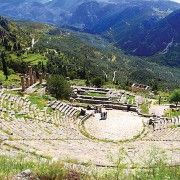
The Archaeological Site of Delphi is built into a steep hillside, so the visit involves walking uphill on uneven ancient paths. Start with the Sacred Way, the processional route once lined with treasuries and monuments dedicated by Greek city-states. It leads toward the Temple of Apollo, where the Pythia delivered the Oracle’s prophecies.

Continue upward to the theater for one of the site’s finest views. Above it lies the stadium, which is well worth the additional walk for travelers who are comfortable with the climb. The stadium is often less crowded and gives a vivid sense of Delphi as a place of athletic festivals as well as religious ceremony.

The Delphi Archaeological Museum should not be treated as optional. Its collection provides the context that the ruins alone cannot always convey. Highlights include the bronze Charioteer of Delphi, the Sphinx of Naxos, and architectural sculptures from the Temple of Apollo. Plan at least 45 minutes to an hour, more if you enjoy ancient art.

Below the main sanctuary, the Sanctuary of Athena Pronaia offers a different atmosphere. The circular Tholos is one of the most photographed structures at Delphi, and the lower setting makes it a useful stop before or after the uphill main site. It is not always included on large bus itineraries, which is one reason private travel can provide a more complete experience.

Pick Transportation That Matches Your Travel Style

Rental cars give independent travelers freedom, but the long drive, unfamiliar roads, parking, and site-hour planning can take attention away from the day itself. Public buses are budget-friendly but require strict adherence to schedules and leave less room for scenic stops or a leisurely lunch.

A shared bus tour is convenient for travelers who simply want transportation and a broad introduction. The trade-off is a fixed schedule, limited personal attention, and the need to move at the group’s pace. This can be frustrating when you want more time in the museum, need a slower walking pace, or spot a village you would like to explore.

For families, couples, and small groups, private transportation is often the most comfortable option. A professional driver can collect you directly from your Athens hotel, manage the mountain route, and shape stops around your interests. Premium Mercedes vehicles also make the long travel day far more relaxing, particularly in summer or after a busy few days of sightseeing in Athens.

A driver provides local knowledge and logistical support, while a licensed guide can bring the Oracle, the rival city-states, and the monuments of Delphi to life inside the archaeological site. For travelers who care deeply about the history, arranging both creates a richer experience. Timeless Athens Tours can tailor this kind of private Delphi experience around your available time, group needs, and preferred pace.

Plan for Comfort at the Archaeological Site

Delphi rewards preparation. Wear supportive walking shoes with good grip rather than sandals or smooth-soled shoes. The paths are ancient, sloped, and occasionally uneven. Bring sun protection, water, and a light layer, since mountain weather can feel cooler than Athens even when the city is warm.

Travelers with limited mobility should know that the main archaeological route is not fully accessible due to the terrain. The museum is generally easier to visit, and a private driver can arrange the most convenient drop-off points. Be honest about your group’s walking ability when booking. A thoughtful itinerary can still provide outstanding views and meaningful context without making the day exhausting.

Allow time for lunch rather than treating it as an afterthought. Arachova, just a short drive from Delphi, is known for its stone houses, mountain character, and traditional Greek cooking. Delphi village also offers convenient restaurants with sweeping valley views. Lunch is a natural pause between the archaeological site and the return drive to Athens.

A Practical Delphi Day Trip Timeline

An early departure, often around 7:00 or 8:00 a.m., gives the day room to breathe. After the drive from Athens and a possible comfort stop, expect to spend around two to three hours across the archaeological site and museum. Add time for Athena Pronaia, lunch, Arachova, and a relaxed return journey.

You will likely arrive back in Athens in the early evening, depending on the season and your chosen stops. This is a long day, but it should not feel like a race. The purpose of private planning is not to fill every minute. It is to make room for the view from the theater, the quiet of the mountains, and the stories that turned Delphi into the ancient world’s most influential sanctuary.

When you stand above the Temple of Apollo and look across the Pleistos Valley, leave your phone in your pocket for a moment. Delphi has been drawing travelers for more than two millennia. Give it enough time to do the same for you.

https://www.athenstours.gr/wp-content/uploads/2026/07/how-to-plan-your-delphi-visit-from-athens-featured.webp 1024 1536 https://www.athenstours.gr/wp-content/uploads/2018/01/Timeless-2018.png 2026-07-31 08:31:162026-07-31 08:31:16How to Plan Your Delphi Visit From Athens
Is a Mythology Tour Athens Experience Worth It?

Is a Mythology Tour Athens Experience Worth It?

July 29, 2026/0 Comments/in Uncategorized/by

The Acropolis is more than marble rising above Athens. It is Athena’s city, the place where gods, heroes, rivalries, and rituals shaped the way ancient Athenians understood their world. A mythology tour Athens experience gives those stories their proper setting, turning familiar names such as Zeus, Athena, Poseidon, and Dionysus into a living thread that runs through the city’s monuments, neighborhoods, and landscapes.

For travelers with limited time, mythology is often the missing context between taking a photograph of the Parthenon and truly understanding why it was built. With a private guide and comfortable transportation, the day can be shaped around the stories that interest you most, without being tied to a large group’s schedule.

What Makes a Mythology Tour Athens Experience Different?

A standard Athens sightseeing tour may introduce the Acropolis, the Ancient Agora, and the Temple of Olympian Zeus. A mythology-focused experience goes further by asking why these places mattered to the people who built them. Rather than treating myths as decorative tales, a knowledgeable guide connects them to civic identity, religious practice, architecture, and politics.

At the Acropolis, for example, the story is not only that Athena won her contest with Poseidon. It is also about what that contest represented. Poseidon offered saltwater, while Athena offered the olive tree – a source of food, oil, timber, and trade. The myth reflects Athens’ relationship with its land, its economy, and the goddess the city chose as its protector.

This approach is especially rewarding for first-time visitors who want to make sense of the landmarks, as well as returning travelers who have already seen the major sights and want a more focused perspective. Families often find it a practical way to keep younger travelers engaged, since the stories of heroic quests, jealous gods, and strange creatures give ancient ruins a human pulse.

The Mythological Places That Matter Most

The Acropolis and the Parthenon

No mythology itinerary in Athens should rush the Acropolis. The Parthenon was dedicated to Athena Parthenos, Athena the Virgin, and its sculptural decoration once presented a carefully chosen world of gods, giants, heroes, and civic ceremony. A guide can point out how myth and public life were inseparable here.

The Erechtheion adds another layer. This elegant temple is linked to the contest between Athena and Poseidon, the sacred olive tree, and the city’s early legendary kings. It is one of the best places to understand that Greek mythology was not a single, fixed collection of stories. Local traditions mattered, and Athenians had their own versions of the divine past.

Because the Acropolis can be crowded, timing makes a real difference. An early private visit is often the best choice in warmer months, offering cooler temperatures, clearer light, and a calmer atmosphere before the busiest arrival period.

The Ancient Agora and the Gods of Daily Life

Below the Acropolis, the Ancient Agora shows a different side of mythological Athens. This was a marketplace, political center, and gathering place, but it was also a sacred landscape. The well-preserved Temple of Hephaestus honors the god of fire, craftsmanship, and metalworking.

Hephaestus is an especially fitting presence in this part of the city. The surrounding area was associated with artisans and workshops, making the temple a reminder that the gods were connected not only to epic adventures but also to the work that sustained daily life. Here, mythology becomes tangible in the practical world of ancient Athenians.

The Temple of Olympian Zeus

The immense columns of the Temple of Olympian Zeus offer a powerful contrast to the Acropolis. Dedicated to the king of the gods, this ambitious sanctuary was built over centuries and completed under the Roman emperor Hadrian. Its scale tells visitors something important about Zeus: he was not simply a character in a story, but a divine authority whose worship carried prestige across the Greek and Roman worlds.

A mythology tour can also connect this stop with nearby Hadrian’s Arch and the larger question of how later rulers used Greek religious traditions to establish their own status. The best tours do not separate myth from history. They show where the two meet.

Dionysus, Theater, and the Art of Storytelling

The Theater of Dionysus, on the southern slope of the Acropolis, deserves more than a passing glance. Dionysus was the god of wine, celebration, transformation, and theater. The tragedies and comedies performed here brought myth before the public in a form that could be moving, political, funny, and deeply unsettling.

This is where stories of Oedipus, Medea, Agamemnon, and Antigone became shared cultural experiences. A guide who understands both mythology and classical history can explain why these tales still feel immediate. They confront family loyalty, power, grief, justice, and the consequences of human pride – subjects that have never become outdated.

Why a Private Tour Adds Real Value

Athens is compact in parts, but its terrain, heat, crowds, and traffic can make a self-guided mythology day more demanding than it appears on a map. Private transportation removes the uncertainty between sites, while an expert guide makes better use of the time at each stop.

The strongest advantage is flexibility. A couple interested in Athena and ancient religion may spend longer at the Acropolis and Agora. A family may prefer a livelier route built around Hercules, the Minotaur, Perseus, and the Olympian gods. Cruise passengers arriving at Piraeus may need an itinerary planned precisely around their ship’s schedule. There is no single perfect mythology tour because the ideal pace depends on your interests, mobility, available hours, and travel season.

A private experience also allows for thoughtful adjustments on the day. If midday heat is intense, outdoor sites can be scheduled early and a museum stop or a leisurely Greek lunch can provide a welcome break. If an unexpected closure affects one monument, a local team can adapt the route without leaving you to solve the problem on your own.

At Timeless Athens Tours, private travel is designed around that kind of personal attention: licensed local professionals, premium Mercedes vehicles, clear fixed pricing, and an itinerary that respects both the stories you want to hear and the pace you want to keep.

How to Plan the Right Mythology-Focused Day

Start by deciding whether mythology is the main purpose of your day or a richer lens for seeing Athens’ essential landmarks. For most first-time visitors, a half-day or full-day route centered on the Acropolis, the Ancient Agora, the Theater of Dionysus, and the Temple of Olympian Zeus provides an excellent foundation. A longer stay can add the National Archaeological Museum or a thematic visit to Cape Sounion, where the Temple of Poseidon stands above the Aegean Sea.

Cape Sounion is a particularly memorable option for travelers who want mythology paired with scenery. The temple’s association with Poseidon and the legend of King Aegeus add meaning to its dramatic coastal location. It does require more driving time than central Athens, so it works best as a separate afternoon or day trip rather than a rushed addition to an Acropolis morning.

When booking, ask what is included in the guiding service, whether site admission is separate, how much walking is expected, and whether the itinerary can be adjusted for children, seniors, or guests with mobility concerns. Transparent answers matter. Premium service should feel relaxed, not complicated.

The Stories You Will Remember After the Ruins

The best mythology tours leave room for uncertainty as well as wonder. Greek myths have multiple versions, and ancient sources often disagree. That is part of their appeal. A skilled guide can explain the variations without flattening them into one simple script, helping you appreciate mythology as a tradition that changed across centuries.

You may arrive hoping to see the Parthenon and leave thinking about Athena’s olive tree. You may expect grand tales of Zeus and remember instead the quiet temple of Hephaestus, where a god of craft stood close to the working life of the city. These are the details that turn Athens from a checklist of ancient sites into a place with character, memory, and meaning.

Choose a tour that gives the stories enough time to breathe. When the guide, route, and pace are right, the gods of Athens feel less distant – and the city stays with you long after the journey home.

https://www.athenstours.gr/wp-content/uploads/2026/07/is-a-mythology-tour-athens-experience-worth-it-featured.webp 1024 1536 https://www.athenstours.gr/wp-content/uploads/2018/01/Timeless-2018.png 2026-07-29 08:24:362026-07-29 08:24:36Is a Mythology Tour Athens Experience Worth It?
Private Tour Pricing Greece for Better Travel

Private Tour Pricing Greece for Better Travel

July 27, 2026/0 Comments/in Uncategorized/by

A private day in Greece should not begin with uncertainty about the bill. Whether you are stepping off a cruise ship in Piraeus, landing at Athens International Airport, or planning a family trip through the Peloponnese, private tour pricing Greece travelers see online can vary dramatically. The difference is rarely just the destination. It is the vehicle, the time reserved for you, the level of expertise, and whether the itinerary is truly built around your day.

Private travel is not simply a more comfortable version of a bus tour. It is a different way to experience Greece: your pickup time, your pace at the Acropolis, your preferred lunch stop, and the freedom to spend longer where history speaks to you. Understanding what shapes the price helps you compare options fairly and book with confidence.

What Private Tour Pricing Greece Includes

A professionally operated private tour is generally priced per vehicle or private group, rather than per seat. That matters for couples, families, and small groups. A private sedan for two guests and a Mercedes minivan for a larger family have different operating costs, but neither requires you to share your day with strangers or wait for a group that travels at a different pace.

The base price commonly reflects the vehicle and private driver for an agreed number of hours. With a quality operator, it should also cover fuel, tolls where applicable, parking, insurance, and pickup and drop-off within the stated service area. For Athens tours and shore excursions, pickup from central hotels, Piraeus Port, or the airport may be included or clearly quoted in advance.

The most useful question is not simply, “What is the lowest price?” Ask what is included in the day you are purchasing. A low starting rate can become less attractive if it excludes key transport costs, requires an inconvenient meeting point, or leaves too little time to see the sites that brought you to Greece.

The Main Factors That Shape Your Quote

Tour length and distance

A four-hour Athens orientation tour and a full-day journey to Delphi are not comparable services. Hours on the road, driver time, fuel, highway tolls, and the operational planning behind the day all influence the final price.

Athens city tours are often easier to price because distances are compact. Day trips to Corinth, Mycenae, Epidaurus, Nafplion, Delphi, Olympia, or Meteora require more driving time and, in some cases, early departures. Meteora in particular is a long and rewarding day from Athens, but the distance makes it a premium private experience. For travelers who prefer a more relaxed pace, an overnight itinerary may offer better value than trying to fit every stop into one ambitious day.

Vehicle category and group size

The right vehicle should fit your party and your luggage comfortably, not merely technically. A couple may choose a premium sedan, while a family or group of friends may need a spacious Mercedes minivan. Larger parties may require a minibus or coordinated vehicles.

Private pricing often becomes more favorable per person as a group grows. Four travelers sharing a private van can enjoy a lower per-person cost than four individual seats on a premium small-group excursion, while keeping the flexibility to alter the pace. For solo travelers, a private tour can still be worthwhile when time is limited or a tailored route is more valuable than the lowest possible cost.

Driver-host service and licensed guiding

This distinction deserves attention. A professional driver-host can provide local insight, coordinate your route, suggest authentic stops, and make the logistics effortless. For detailed interpretation inside archaeological sites and museums, many guests choose to add a licensed tourist guide.

A licensed guide brings historical context to places such as the Acropolis, Ancient Agora, Delphi, and Mycenae. Instead of seeing columns and ruins in isolation, you understand the civic life, mythology, political decisions, and artistic achievements that shaped them. Adding a guide changes the cost, but for first-time visitors or travelers with a serious interest in ancient Greece, it can transform the experience.

Not every itinerary requires a guide for every hour. Some guests prefer a guided Acropolis visit followed by private transportation and independent time in Plaka. Others want a guide throughout a full-day archaeological tour. The best option depends on your interests, pace, and budget.

Entrance fees, meals, and personal choices

Admission tickets to archaeological sites and museums are usually separate from transportation. This keeps the tour price transparent and allows each guest to use applicable reductions or choose which sites to enter. Meals, refreshments, and personal shopping are also typically separate unless an itinerary specifically states otherwise.

Separate admissions are not a hidden extra when they are disclosed clearly before booking. In fact, they give you more control. A family with younger children may choose fewer sites and more time for a coastal lunch, while history enthusiasts may want to include multiple monuments in one carefully planned day.

Why Fixed Pricing Matters

Greece should feel welcoming from the moment you arrive. It should not involve negotiating with a driver after a long flight, wondering whether port traffic will alter your fare, or learning at the end of the day that tolls and parking were not included.

Fixed pricing provides clarity before you travel. You know the agreed route, the duration, the vehicle category, and the stated inclusions. If you request additional hours, an extra destination, a late-night pickup, or a custom route outside the original plan, those changes should be discussed openly rather than added as a surprise.

This is especially valuable for cruise passengers. A Piraeus shore excursion has a firm return deadline, and the real value lies in having a knowledgeable team monitor timing, manage pickup at the port, and shape the itinerary around your ship schedule. The cheapest transport option is not always the best value if it creates stress on a day with no margin for error.

Comparing Private Tours Without Comparing Apples to Oranges

When reviewing private tour prices, compare the complete experience rather than the headline number. Check the stated duration and whether it begins at pickup or after you reach the first landmark. Confirm the vehicle type, maximum number of guests, luggage capacity, and whether the tour is exclusively for your party.

Also look for clear information about licensed guides, entrance fees, tolls, parking, airport or port pickups, and cancellation terms. Reviews can reveal whether an operator is known for punctuality, thoughtful planning, clean vehicles, and helpful communication. Those details are easy to overlook until your arrival day.

A private tour should also allow reasonable flexibility. Weather, crowds, children needing a break, a beautiful viewpoint, or an unexpected local festival can change the rhythm of a day. A well-planned itinerary has structure, but it does not feel rigid.

When a Custom Itinerary Is Worth the Investment

Custom private travel is particularly valuable when your interests do not fit a standard route. Perhaps you want to pair Ancient Corinth with a winery lunch in Nemea, visit Thermopylae on the way to Delphi, or organize a layover tour that balances the Acropolis with an on-time airport return. These plans require more than transportation. They require local judgment about driving times, opening hours, traffic, and what can realistically be enjoyed without rushing.

Timeless Athens Tours designs private experiences around that practical knowledge, with premium Mercedes vehicles, professional drivers, and the option of expert licensed guides. The goal is not to fill every minute. It is to make each hour in Greece count.

For many travelers, the best value is a thoughtfully paced day with fewer stops, meaningful stories, and time to enjoy the view. Request a clear, personalized quote, share what matters most to your group, and let your itinerary reflect the Greece you came to experience.

https://www.athenstours.gr/wp-content/uploads/2026/07/private-tour-pricing-greece-for-better-travel-featured.webp 1024 1536 https://www.athenstours.gr/wp-content/uploads/2018/01/Timeless-2018.png 2026-07-27 08:45:572026-07-27 08:45:57Private Tour Pricing Greece for Better Travel
Athens Sightseeing With Driver Made Personal

Athens Sightseeing With Driver Made Personal

July 25, 2026/0 Comments/in Uncategorized/by

The Acropolis may be Athens’ signature sight, but the experience of reaching it can shape the entire day. With Athens sightseeing with driver service, you leave the crowded coach schedules, unfamiliar streets, and parking worries behind. Instead, a private vehicle is ready when you are, connecting the city’s great landmarks with the places and stories that make Athens feel alive.

For cruise guests with limited hours, families traveling in summer heat, couples celebrating a special trip, or first-time visitors who want to make every hour count, a private driver offers something that group sightseeing rarely can: control over the pace. You decide where to linger, where to stop for photos, and when to trade another monument for a quiet coffee with an Acropolis view.

Why Athens Is Better Seen by Private Vehicle

Athens is a city of remarkable contrasts. Ancient temples rise above busy avenues, elegant neoclassical neighborhoods sit beside lively markets, and a short drive can take you from the center to the coast. Many important sights are within walking distance of one another, but the city as a whole is not best understood from one district alone.

A private driver makes it practical to combine the Acropolis and Acropolis Museum with the Panathenaic Stadium, Temple of Olympian Zeus, Syntagma Square, the changing of the guards, and Lycabettus Hill in one well-paced day. You can continue through Plaka and Monastiraki, then head toward the Athens Riviera for lunch by the sea if that is what suits your interests.

The advantage is not simply speed. It is the freedom to see the city in a logical order, with air-conditioned comfort between stops and a local professional handling traffic, drop-off points, and route changes. Athens can be hot, especially from late spring through early fall. A premium Mercedes vehicle offers a welcome place to cool down, recharge, and travel comfortably between sites.

Athens Sightseeing With Driver or a Guided Tour?

These services work beautifully together, but they serve different purposes. A private driver provides transportation, local orientation, timing expertise, and the flexibility to adapt the day as it unfolds. An expert licensed guide brings the detailed historical interpretation that turns marble ruins into a vivid story of democracy, mythology, warfare, and daily life.

For many guests, the ideal arrangement is a private driver and a licensed guide at key archaeological sites. At the Acropolis, for example, a guide can explain why the Parthenon’s proportions continue to fascinate architects and why the hill became the symbolic heart of ancient Athens. Your driver then remains available to take you efficiently to the next stop.

If your priority is a relaxed overview, photography, shopping, dining, or a custom route that includes less-visited neighborhoods, a driver-led private experience may be the better fit. There is no single right choice. It depends on how deeply you want to explore ancient history and how much flexibility you want throughout the day.

A Private Route Built Around Your Time

A thoughtfully planned Athens day usually begins with the Acropolis because morning light is beautiful and the site is generally more comfortable before midday temperatures rise. From there, the itinerary can follow your preferences rather than a fixed bus-tour script.

History lovers may pair the Acropolis with the Ancient Agora, Roman Agora, Hadrian’s Library, and the Kerameikos cemetery. Guests interested in modern Greek life may enjoy a drive through Kolonaki, the embassy district, and the city’s central squares, followed by time in Plaka for local crafts or a traditional meal.

For families, the route can include shorter visits, convenient restroom breaks, and time for a relaxed lunch. For travelers celebrating a honeymoon or anniversary, a sunset drive to Lycabettus Hill or Cape Sounion can create a memorable finish. A private itinerary should feel personal, not rushed.

Essential Athens Highlights

Most first-time visitors want to see the Acropolis and Parthenon, the Acropolis Museum, the Panathenaic Stadium, Syntagma Square, and the Temple of Olympian Zeus. These landmarks offer a strong introduction to the city’s ancient and modern identity.

The less obvious moments often become the most memorable. Watching the Evzones perform the changing of the guards, finding a family-run taverna away from the busiest streets, or seeing the city spread below you from a hillside viewpoint adds texture to a day of famous sites.

Add Piraeus, the Riviera, or Cape Sounion

A driver also makes Athens more flexible for guests arriving or departing through Piraeus. Cruise passengers can be collected at the port, taken directly to the city’s principal sights, and returned with time to spare. Luggage can remain securely stored in the vehicle while you visit, subject to the tour arrangements.

If you have a full day or more, consider extending your route along the Athens Riviera. The drive toward Cape Sounion reveals a different side of Attica: coastal villages, blue water, and the Temple of Poseidon standing high above the Aegean. It is a wonderful choice for travelers who have already seen central Athens or want to balance archaeology with scenery.

What Private Transportation Changes on the Day

The greatest luxury in private travel is often not the vehicle itself. It is the absence of small problems. You do not need to decipher transit routes, find a taxi large enough for your group, or worry whether a tour bus will wait if you need an extra few minutes at a viewpoint.

A professional local driver understands which routes make sense at different times of day and where access restrictions may affect your plans. They can adjust the order of visits when traffic, weather, cruise schedules, or opening times require it. This is particularly valuable on a short stay, when an avoidable delay can cost a meaningful part of your visit.

Private transportation also gives your group privacy. You are not sharing the day with strangers, following someone else’s shopping stop, or trying to hear commentary over a crowd. Whether you are traveling as a couple, a multigenerational family, or a small group of friends, the experience stays centered on your interests.

Choosing the Right Athens Driver Service

Not every transportation option offers the same level of care. When comparing private sightseeing services, look beyond the lowest price. Clear, fixed pricing matters because it allows you to plan confidently without surprise charges. Well-maintained premium vehicles, professional chauffeurs, and reliable communication before arrival matter just as much.

Ask whether the itinerary can be tailored around your hotel, cruise schedule, mobility needs, and preferred pace. If historical explanation is a priority, confirm whether a licensed guide can be arranged for archaeological sites. A responsible operator will be clear about what is included, what requires advance booking, and how long each visit realistically takes.

It is also wise to share practical details early: your flight or ship arrival time, the number of passengers, children’s ages if car seats are needed, luggage requirements, and any must-see sights. The more your driver service knows before the day begins, the more smoothly your time can be organized.

Make the Most of Your Private Athens Experience

A few choices can improve an already excellent day. Start early when possible, particularly in summer, and wear comfortable shoes for uneven archaeological ground. Keep the schedule realistic. Trying to visit every museum, monument, and neighborhood in a few hours can turn a private tour into a checklist.

Leave room for the Athens you did not plan for: a view from a quiet street in Anafiotika, the scent of grilled seafood near the coast, or a conversation about daily life with a local professional who knows the city beyond its postcards. Those are the moments that give a carefully planned visit its character.

Timeless Athens Tours creates private experiences around exactly this balance: iconic sites, local knowledge, premium transportation, and the freedom to make the day your own. Travel with the Best, don’t Guess. Choose the landmarks that matter most, allow time to enjoy them, and let Athens unfold at a pace that feels like yours.

https://www.athenstours.gr/wp-content/uploads/2026/07/athens-sightseeing-with-driver-made-personal-featured.webp 1024 1536 https://www.athenstours.gr/wp-content/uploads/2018/01/Timeless-2018.png 2026-07-25 09:03:402026-07-25 09:03:40Athens Sightseeing With Driver Made Personal
Athens Layover Tour for a Memorable Stopover

Athens Layover Tour for a Memorable Stopover

July 23, 2026/0 Comments/in Uncategorized/by

A long airport wait does not have to mean hours spent under terminal lights. With the right timing, an Athens layover tour can turn the space between flights into your first encounter with the Acropolis, Greek mythology, lively neighborhoods, and the flavors of the city. The key is not trying to see everything. It is choosing a private itinerary that respects your flight schedule and makes every available hour count.

Athens International Airport is about 30 to 45 minutes from central Athens in normal traffic. That makes a private tour a practical option for many international transit passengers, particularly those with at least six to eight hours between flights. Travel with the Best, don’t Guess: a local driver who understands airport procedures, traffic patterns, and realistic sightseeing times can make the difference between a memorable stopover and a rushed day.

Is an Athens Layover Tour Right for Your Connection?

Before leaving the airport, consider your total layover rather than the time printed between your arrival and departure. You will need time to disembark, pass through passport control if applicable, collect luggage, travel into Athens, return to the airport, clear security, and reach your gate. For international flights, arriving back at the airport around two to three hours before departure is the sensible choice.

A layover of fewer than five hours is usually best spent at the airport, especially if you must collect and recheck checked bags. With six to seven hours, a panoramic private drive and a carefully selected landmark or two can work well. Eight hours or more gives you greater freedom to visit the Acropolis area, enjoy a proper Greek meal, and see important city highlights without constantly watching the clock.

Your eligibility to enter Greece also matters. Travelers must meet the entry and visa requirements that apply to their passport and itinerary. If your bags are checked through to your final destination, confirm with your airline whether you can leave the transit area. A professional tour operator can plan the route, but airline rules and border formalities always take priority.

What You Can See on a Private Athens Layover Tour

A private tour is especially valuable on a short visit because the day is built around your interests and actual arrival time, not a fixed coach schedule. Your driver can meet you at Athens International Airport with a premium Mercedes vehicle, assist with the practical details, and take you directly toward the city center in comfort.

The Acropolis and Parthenon

For many travelers, the Acropolis is the reason to leave the airport. Rising above modern Athens, this sacred rock has watched over the city for more than 2,500 years. The Parthenon remains an extraordinary sight even for visitors who have seen it in books and films all their lives.

If time permits, a licensed guide adds real depth here. The Acropolis is not simply a collection of ruins. It is a place of political ambition, religious devotion, artistic achievement, and enduring ideas about democracy. A guide can explain the significance of the Propylaea, Erechtheion, and Temple of Athena Nike while helping you appreciate the wider view across Athens.

There are trade-offs. The site involves walking on uneven, sometimes slippery stone and can be busy during peak cruise and summer hours. Guests with limited time or mobility may prefer seeing the Acropolis from scenic viewpoints and visiting the Acropolis Museum area instead. A tailor-made itinerary allows for either approach.

Athens Highlights by Private Vehicle

A panoramic route is ideal when your connection is too short for lengthy stops. It can include Constitution Square and the Hellenic Parliament, where the Evzones stand guard at the Tomb of the Unknown Soldier; the Panathenaic Stadium, home to the first modern Olympic Games in 1896; the Temple of Olympian Zeus; Hadrian’s Arch; and the elegant neoclassical buildings of the Athens Academy, University, and National Library.

These places tell a compact story of Athens, from its ancient glory to its modern national identity. With a private vehicle waiting nearby, you do not lose valuable time searching for taxis, studying metro maps, or gathering a large group at every stop.

Plaka, Monastiraki, and a Taste of Local Athens

If your pace allows, a short walk through Plaka adds a more intimate side to the experience. This historic neighborhood sits beneath the Acropolis, with narrow lanes, small shops, shaded terraces, and a distinctly Athenian rhythm. Nearby Monastiraki offers views toward the Acropolis and a lively mix of old Athens and contemporary city life.

A quick meal can be part of the tour, but it should be planned realistically. Rather than a long, formal lunch, many layover guests prefer a well-chosen local stop for souvlaki, Greek salad, pies, or coffee. For food lovers with a longer connection, the itinerary can focus on markets, traditional flavors, and the stories behind Greek ingredients.

How Much Time Should You Book?

The best Athens layover tour is designed backward from your departure time. Your flight comes first, then the return journey to the airport, then the experiences that fit comfortably in between.

A four-hour private airport tour is best for travelers who want an efficient overview without venturing too deeply into the city. Depending on traffic and formalities, it may include a scenic drive, key photo stops, and an Acropolis viewpoint.

A six-hour experience can usually include central Athens highlights and time around the Acropolis. It is a strong choice for first-time visitors who want to feel they have truly seen Athens, even if they cannot explore every museum or neighborhood.

An eight-hour or longer stopover offers the most rewarding balance. You can visit the Acropolis at a measured pace, add a licensed guide, enjoy Plaka, and include a relaxed meal before returning to the airport. If your layover is overnight, a private transfer and a customized half-day or full-day tour may be a better fit than trying to pack everything into the arrival day.

Traffic, flight delays, weather, the day of the week, and the season all affect what is practical. Athens can be very warm in summer, while museum hours and archaeological-site access can vary. A flexible private service is not about promising the impossible. It is about making smart adjustments so your limited time still feels well spent.

Why Private Transportation Matters on a Short Stopover

On a layover, certainty has value. Public transportation may be economical, but it adds transfers, schedules, crowding, and extra room for error. Standard taxi service can be useful, yet it rarely provides a complete route, historical context, or a vehicle and driver reserved around your changing timetable.

Private transportation gives your group one point of contact from airport pickup to airport return. It also provides room for luggage when needed, climate-controlled comfort after a long flight, and the flexibility to adjust the day if your arrival is early or delayed. Families appreciate the convenience of traveling together, while couples and business travelers value the privacy and efficient pace.

At Timeless Athens Tours, guests can arrange private airport transfers and tailor-made city experiences with experienced local drivers, premium Mercedes vehicles, transparent fixed pricing, and licensed guides when requested. The focus is personal care: your time in Athens should feel organized, welcoming, and distinctly Greek, not like another line to stand in.

Practical Details That Make the Day Easier

Wear comfortable shoes, particularly if the Acropolis is part of your plan, and bring sun protection from late spring through early fall. Keep passports, boarding passes, medication, and valuables with you rather than leaving them in checked luggage. A small day bag is far easier to manage than several suitcases.

Share your flight numbers when booking so your pickup can be coordinated with your arrival. Also mention the number of travelers, luggage requirements, mobility considerations, children traveling with you, and must-see priorities. A family with young children may want shorter walks and frequent scenic stops; a history enthusiast may prefer more time with a licensed guide; a business traveler may simply want an impressive, calm introduction to the city before the next flight.

There is something special about seeing the Parthenon when you had expected only an airport connection. Leave enough margin for your return flight, choose the sights that matter most to you, and let Athens turn a necessary pause into a story worth bringing home.

https://www.athenstours.gr/wp-content/uploads/2026/07/athens-layover-tour-for-a-memorable-stopover-featured.webp 1024 1536 https://www.athenstours.gr/wp-content/uploads/2018/01/Timeless-2018.png 2026-07-23 08:51:362026-07-23 08:51:36Athens Layover Tour for a Memorable Stopover
How to Book a Cruise Excursion in Athens Wisely

How to Book a Cruise Excursion in Athens Wisely

July 21, 2026/0 Comments/in Uncategorized/by

A ship may be in Piraeus for only a few hours, but those hours can hold the Acropolis, the changing of the guard, the Temple of Olympian Zeus, a memorable Greek lunch, and views across Athens. Knowing how to book a cruise excursion before you arrive is what turns a limited port call into a well-paced, rewarding day rather than a race against the clock.

For cruise guests, the best choice is rarely the longest itinerary or the lowest advertised price. It is the excursion that fits your ship schedule, travel style, mobility needs, and priorities – with enough time built in to return to Piraeus comfortably.

Start With Your Actual Time Ashore

Your cruise itinerary shows arrival and departure times, but those are not always the exact hours you can spend sightseeing. Guests must disembark, walk or take a shuttle to the terminal exit, meet their driver or guide, and be back through port security well before all-aboard time.

When comparing excursions, share your ship name, docking date, arrival time, all-aboard time, and the number of people in your party. A knowledgeable local operator can then recommend an itinerary that works in real conditions, including traffic between Piraeus and central Athens.

Athens is approximately 30 to 45 minutes from Piraeus depending on traffic and the terminal where your ship docks. On a busy day, that travel time can change. A quality shore excursion accounts for this rather than filling every minute with sightseeing and hoping for the best.

If your ship is in port for six to eight hours, an Athens highlights tour is often the right fit. With a longer call, you may have time to add Cape Sounion and the Temple of Poseidon, ancient Corinth, or a relaxed stop in Plaka. Trying to combine Athens, Corinth, and Sounion during a short port call may sound ambitious, but it can leave little room to enjoy any of them.

How to Book a Cruise Excursion That Fits Your Style

The first decision is whether to book through the cruise line, join a shared local tour, or arrange a private shore excursion. Each option has a place, and the right answer depends on what matters most to you.

Cruise-line excursions are easy to reserve and often appeal to travelers who want everything handled through the ship. They can also be reassuring for first-time cruisers. However, they commonly operate on large coaches, follow fixed schedules, and may spend valuable time waiting for a full group to gather at each stop.

Shared excursions can cost less than a private experience and can be enjoyable for sociable travelers. The trade-off is less control over pickup timing, the itinerary, walking pace, and how long you spend at the sites that interest you most.

A private tour is especially valuable for families, couples, small groups, and travelers with specific interests. You decide whether the day centers on classical Athens, mythology, food, photography, museums, or a combination of landmarks and local neighborhoods. You can adjust the pace for children, older relatives, or guests who prefer minimal walking.

With a private driver and licensed guide, you also avoid the common problem of hearing only general commentary from the back of a crowded bus. At the Acropolis and other archaeological sites, an expert guide can bring the history into focus – from the political ideals of ancient Athens to the craftsmanship of the Parthenon and the stories behind the gods.

Confirm What Is Included Before You Reserve

Two tours with similar names can offer very different experiences. Before booking, ask exactly what the quoted price includes and whether it is fixed for your group. Clear details prevent surprises at the port.

A well-organized Piraeus shore excursion should clarify transportation, pickup location, vehicle type, driver, guide services, itinerary duration, entrance fees, meals, and gratuities. If you want a guided visit inside the Acropolis, confirm whether a licensed tour guide is included or whether the service is transportation only.

This distinction matters. A professional driver can provide local insight and manage the route efficiently, but licensed guides are qualified to lead tours inside archaeological sites and museums. For travelers who want historical depth at the Acropolis Museum, Ancient Agora, or Acropolis, adding a licensed guide is often worth it.

Ask about the vehicle as well. Premium Mercedes vehicles provide a more comfortable experience after a long morning ashore, particularly in Athens summer heat. Air conditioning, ample luggage space, and room to relax between stops are practical benefits, not extras.

Transparent pricing is another sign of a dependable operator. Be cautious with rates that look unusually low until you understand what has been excluded. Parking, tolls, entrance tickets, guide fees, and waiting time can change the final cost if they are not addressed upfront.

Choose an Itinerary With Priorities, Not Just Stops

A strong cruise excursion is not a checklist. It gives you time to understand and enjoy the places you see.

For most first-time visitors, the Acropolis is the essential stop. From there, a thoughtfully planned route might include panoramic views from Lycabettus Hill or Philopappos Hill, the Temple of Olympian Zeus, the Panathenaic Stadium, Syntagma Square, the Tomb of the Unknown Soldier, and a walk through Plaka or Monastiraki.

If you are passionate about ancient history, consider a route that pairs the Acropolis with the Ancient Agora and Acropolis Museum. If your interests lean toward mythology and coastal scenery, Cape Sounion can be an excellent choice for longer calls. Families may prefer a balanced day with fewer ruins, scenic stops, and time for a relaxed meal.

Do not underestimate the value of free time. A short walk through Plaka, a coffee with a view of the Acropolis, or time to shop for ceramics and local products often becomes one of the day’s best memories. Private touring makes these moments possible without sacrificing your return to the ship.

Book Early, but Keep the Plan Sensible

Popular cruise dates, especially from April through October, can fill quickly. This is particularly true for private vehicles, licensed guides, and small-group services on weekends or when several ships are in Piraeus at once. Booking in advance gives you the best selection and allows time to tailor the route.

That said, early booking should not mean overplanning. Leave room for the realities of a cruise day. Ship arrival can be delayed, summer temperatures can be intense, and some guests discover they would rather spend extra time at one site than rush to another.

Look for an operator that tracks your ship schedule and understands the importance of a timely return to port. This is one of the main advantages of working with a local company experienced in Piraeus shore excursions. Timeless Athens Tours, for example, builds private itineraries around each ship’s schedule, with comfortable transport and local expertise designed for travelers who want to make the most of their time ashore.

Share the Details That Make a Tour Personal

The more useful information you provide before booking, the better your experience can be. Let your operator know whether anyone uses a wheelchair, has limited mobility, travels with young children, or needs extra time at stairs and uneven archaeological surfaces.

Also mention your interests. A guide can shape the commentary differently for a family fascinated by Greek myths, a university group studying democracy, or a couple looking for scenic locations and authentic Greek flavors. If you have already visited Athens, say so. There is no reason to repeat every major landmark when you could explore the Byzantine churches, local markets, Riviera, or nearby ancient sites instead.

For the Acropolis, be realistic about walking. The ascent is manageable for many visitors but includes slopes and uneven marble surfaces. Comfortable walking shoes, sun protection, water, and a light layer in cooler months will make a noticeable difference.

Know Your Pickup Plan at Piraeus Port

Piraeus is a large working port with multiple cruise terminals, security zones, and restricted areas. “Meet at the port” is not enough detail. Before your arrival, confirm the terminal, meeting point, driver contact information, vehicle description, and what to do if disembarkation takes longer than expected.

A professional operator will provide clear instructions and monitor the ship’s arrival. You should also keep your phone available after leaving the vessel, even if you prefer not to use it throughout the day. A quick message can resolve a terminal change or unexpected delay.

Most importantly, confirm the planned return time. Aim to be back at the port well before your ship’s all-aboard deadline, not at the deadline itself. The final part of the day should feel relaxed – time to pass security, return to your cabin, and watch Athens fade into the Aegean with the feeling that you experienced it properly.

https://www.athenstours.gr/wp-content/uploads/2026/07/how-to-book-a-cruise-excursion-in-athens-wisely-featured.webp 1024 1536 https://www.athenstours.gr/wp-content/uploads/2018/01/Timeless-2018.png 2026-07-21 09:33:212026-07-21 09:33:21How to Book a Cruise Excursion in Athens Wisely
A Corinth Day Trip Itinerary From Athens

A Corinth Day Trip Itinerary From Athens

July 19, 2026/0 Comments/in Uncategorized/by

The first glimpse of the Corinth Canal is reason enough to leave Athens early. From the bridge, the narrow blue waterway appears to slice straight through the limestone, with sheer walls rising on either side. Yet the canal is only the opening act. A well-planned Corinth day trip itinerary connects one of Greece’s great engineering landmarks with the city where St. Paul preached, a hilltop fortress with sweeping views, and the relaxed coastal character of the Peloponnese.

For travelers with one free day in Athens, Corinth is an exceptionally rewarding choice. It is close enough for an unhurried private excursion, but layered enough to make ancient Greece, Roman history, Byzantine power, and modern Greek life feel vividly connected.

Why Corinth Works So Well as a Day Trip

Corinth lies about 50 miles west of Athens, usually around an hour to 90 minutes by road depending on traffic and your exact pickup point. That short distance matters. You can spend your time at the sites rather than watching the clock, and still return to Athens in time for dinner.

The region also offers more range than many visitors expect. Ancient Corinth is an archaeological site of major importance, especially for guests interested in the Roman period and early Christianity. Acrocorinth, its vast fortified acropolis, adds dramatic landscape and military history. The canal, nearby coastal stops, and the possibility of continuing to Mycenae, Epidaurus, or Nafplion make the route easy to tailor.

A private vehicle is particularly useful here because the most rewarding stops are spread across the area. Travelers can adjust the pace for children, mobility needs, photography, a long lunch, or a deeper visit with a licensed guide. Travel with the Best, don’t Guess: fixed planning and a comfortable premium vehicle remove the small logistics that can otherwise eat into a short day.

Corinth Day Trip Itinerary: A Well-Paced Full Day

This itinerary is designed for a departure from central Athens at approximately 8:00 AM. Cruise guests from Piraeus should allow additional time for disembarkation and arrange a pickup that respects the ship’s all-aboard time.

8:00 AM: Private Pickup From Athens

An early start avoids the busiest morning traffic and leaves room for a relaxed lunch. The drive west follows the coastal route toward the Isthmus of Corinth, the narrow strip of land that joins mainland Greece to the Peloponnese.

As Athens recedes, the scenery changes from city neighborhoods to sea views and low, rugged mountains. A knowledgeable local driver can point out the significance of the Saronic Gulf and explain why this narrow crossing shaped Greek trade, warfare, and travel for centuries.

9:15 AM: Stop at the Corinth Canal

The Corinth Canal is roughly four miles long, but its importance is much larger than its size suggests. Completed in the late 19th century, it created a passage between the Saronic Gulf and the Gulf of Corinth, sparing vessels the long journey around the Peloponnese.

Allow 20 to 30 minutes for the viewpoint. This is a simple stop, but it is one of the best photography moments of the day. If you are traveling with children, it is also an easy way to make the geography of Greece feel immediately real.

Some guests ask whether the canal is worth a boat ride. It can be, particularly in warmer months, but it is not essential for a first Corinth visit. A road viewpoint is efficient, while a canal cruise adds time and may reduce the time available for Ancient Corinth or Acrocorinth.

10:00 AM: Explore Ancient Corinth

Ancient Corinth is the heart of the day. In antiquity, Corinth was among the wealthiest and most powerful Greek city-states, commanding trade routes between northern Greece and the Peloponnese. Under Roman rule, it was rebuilt as a prosperous provincial capital.

The archaeological site rewards visitors who look beyond the ruins as individual monuments. The imposing Temple of Apollo dates to the 6th century BC and remains one of the earliest surviving Doric temples in Greece. Its sturdy columns stand in striking contrast to the Roman buildings around it.

The Agora, or marketplace, reveals the scale of Roman Corinth. You can see the Bema, the raised platform traditionally associated with St. Paul’s trial before the Roman governor Gallio. For many Christian travelers, this is a moving stop. The story becomes more meaningful when placed in the setting of a busy, cosmopolitan port city rather than treated as a distant religious reference.

Plan to spend at least 90 minutes here, including the on-site museum. The museum contains pottery, mosaics, sculpture, and everyday objects that give useful context to the ruins outside. Guests with a strong interest in archaeology or biblical history may prefer two hours with a licensed guide.

12:30 PM: Lunch Near Ancient Corinth or the Coast

A good Corinth day trip should not feel like a race between stones. Lunch is the moment to slow down, enjoy Greek hospitality, and discuss what you have seen. The village near the archaeological site offers traditional tavernas, while the nearby coast provides a more relaxed waterside setting.

Choose according to your priorities. A village taverna is convenient and often more traditional; a coastal lunch offers sea views and a pleasant break before the uphill visit to Acrocorinth. Fresh fish, grilled meats, Greek salad, local cheeses, and seasonal vegetables are reliable choices. If you have dietary requirements, a private driver can help plan a suitable stop in advance.

2:00 PM: Climb Into History at Acrocorinth

Rising above Ancient Corinth, Acrocorinth is one of the largest and most impressive fortresses in Greece. Its strategic position made it valuable from antiquity through the Byzantine, Frankish, Venetian, and Ottoman periods. The approach alone explains why so many powers fought to control it.

The site is expansive, uneven, and uphill. Comfortable walking shoes are essential, and the visit is best for travelers who can manage slopes and irregular stone paths. The effort is worthwhile: from the upper areas, the views extend across the Corinthian Gulf, the Peloponnese, and the plains below.

Do not expect a single polished monument. Acrocorinth is compelling because it feels like a living archive of fortification. Gates, walls, churches, mosques, fountains, and ruins from different eras appear across the hill. In summer, visit later in the afternoon only if you are comfortable with the heat. Spring and fall offer the most pleasant conditions.

3:45 PM: Choose a Flexible Final Stop

The best final stop depends on your interests and energy. Travelers who prefer a gentler finish can pause in Ancient Corinth village for coffee, browse small local shops, or enjoy a final view of the Acrocorinth hill. Those interested in engineering can return to a different canal viewpoint before heading back.

If you are building a longer private tour, this is where Corinth can become part of a larger Argolis route. Mycenae adds Bronze Age royal tombs and the Lion Gate. Epidaurus offers its famously preserved ancient theater. Nafplion brings Venetian architecture, waterfront promenades, and a charming old town. Trying to fit all of these into one rushed day, however, is rarely the best choice. Corinth deserves time on its own, while the complete Argolis route is better as a full-day private experience with an early departure.

5:00 PM: Return to Athens

The drive back is a welcome chance to rest after a day of walking and absorbing centuries of history. Depending on traffic and your chosen final stop, you can generally expect to arrive in Athens around 6:00 to 6:30 PM.

Practical Tips for Your Corinth Day Trip Itinerary

The ideal season is April through June or September through October, when temperatures are more comfortable for Ancient Corinth and Acrocorinth. July and August are still possible, but an earlier start, water, sunscreen, sunglasses, and a hat are essential. Winter visitors often enjoy fewer crowds, though weather can be cooler and wetter.

Wear supportive shoes with a good grip. Ancient Corinth is manageable for most visitors, but Acrocorinth has noticeably more demanding terrain. If mobility is limited, you can still enjoy the canal, Ancient Corinth, the museum, and scenic viewpoints while skipping or shortening the fortress visit.

For a private tour, decide before departure whether your priority is archaeology, biblical history, scenery, food, or a combination. This gives your driver and guide the chance to shape the day around what will matter most to you. Timeless Athens Tours can arrange a private Corinth experience with comfortable Mercedes transportation and the flexibility to make the day feel personal rather than prepackaged.

Corinth is most memorable when you give it room to unfold. Stand above the canal, walk where Roman merchants once gathered, look out from Acrocorinth, and let the distance between ancient ambition and modern Greece feel surprisingly small.

https://www.athenstours.gr/wp-content/uploads/2026/07/a-corinth-day-trip-itinerary-from-athens-featured.webp 1024 1536 https://www.athenstours.gr/wp-content/uploads/2018/01/Timeless-2018.png 2026-07-19 09:27:522026-07-19 09:27:52A Corinth Day Trip Itinerary From Athens
Athens Private Tour vs Bus Tour: Make the Right Choice

Athens Private Tour vs Bus Tour: Make the Right Choice

July 17, 2026/0 Comments/in Uncategorized/by

The Acropolis opens early, Piraeus ships arrive on a schedule, and Athens traffic does not wait for anyone. When your time in Greece is limited, the choice between an Athens private tour vs bus experience can shape far more than your transportation. It determines how much you see, how rushed you feel, and whether the stories behind the Parthenon, Plaka, and ancient Agora stay with you after the day ends.

A bus tour can be a sensible option for travelers who want a straightforward overview at a lower per-person price. A private tour is designed for guests who value flexibility, comfort, personal attention, and the ability to make their time in Athens truly their own. Neither choice is automatically right for every visitor. The best fit depends on your group, schedule, interests, and travel style.

Athens Private Tour vs Bus Tour: The Real Difference

The central difference is simple: bus tours follow a shared schedule, while private tours follow your priorities. On a large coach, the route, timing, photo stops, and pace are set for the entire group. You may visit the city’s major highlights, but you experience them alongside dozens of other guests with different needs and expectations.

With a private Athens tour, your day begins where it makes sense for you – at your hotel, the airport, Piraeus Port, or another agreed location. Your driver and, where requested, licensed guide can shape the route around your available time and interests. A family traveling with children may prefer shorter walks and a relaxed lunch. A couple passionate about archaeology may want more time at the Acropolis Museum and Ancient Agora. Cruise guests may need a carefully timed return to the ship.

This is not about trying to see everything. Athens deserves better than a race between monuments. It is about seeing the places that matter to you with enough time to appreciate them.

Timing and Flexibility Matter in Athens

Athens is a living capital built around an ancient city. That makes timing especially valuable. The most popular sites can become crowded quickly, and road conditions can change during the day. A fixed bus itinerary has limited room to respond. If your group is delayed at a stop, the entire schedule can be affected. If you fall in love with a view over the city from Lycabettus Hill, the bus may still need to depart.

Private touring gives you more control. You can start earlier to reach the Acropolis before the busiest period, pause for coffee in Plaka, or adjust the route when heat, crowds, or energy levels call for a different plan. Your private driver knows the city’s roads and can help make the most practical choices throughout the day.

For Piraeus shore excursions, this flexibility can be particularly reassuring. Cruise travelers often have only a few hours ashore and cannot risk a long delay or confusion over meeting points. A private vehicle and pre-arranged itinerary offer direct pickup and a clear plan for returning to the port on time.

Of course, flexibility has limits. Archaeological sites have operating hours, traffic is real, and no responsible provider should promise impossible timing. The advantage is not magic. It is having a knowledgeable local professional who can make smart adjustments when the day changes.

Comfort Is More Than a Luxury Detail

A bus tour usually involves walking to a central meeting point, waiting for the group to assemble, climbing on and off a coach, and sharing space with travelers you have just met. For some visitors, that is part of the group-tour atmosphere. For others, especially families, older travelers, or guests arriving after a long flight, it can feel tiring before the sightseeing has properly begun.

Private transportation offers a more comfortable rhythm. Premium Mercedes vehicles provide climate-controlled space, room for personal belongings, and direct travel between stops. You can leave a light jacket, water, or shopping bags in the vehicle instead of carrying them across the city. You can also take a short break between monuments without separating from the group or losing your place in a large crowd.

Comfort is not only about leather seats or air conditioning, though both are welcome during an Athens summer. It is also about privacy. Your conversations remain your own. You can ask questions freely, take family photos without feeling hurried, and travel at a pace that suits your group.

The Quality of the Story Changes the Experience

The Acropolis is extraordinary on its own. But it becomes more meaningful when you understand why the Parthenon was built, how Athenian democracy worked, and why the city’s ancient legacy still shapes the modern world. This is where the difference between a general commentary and personal interpretation becomes clear.

On a bus tour, guides often need to speak to the broadest possible audience. Their commentary must fit a fixed schedule and a large group. You may hear a useful introduction, but there is rarely time to follow every question, explore a special interest, or connect the history to the places you are seeing next.

A private experience creates room for conversation. Interested in Greek mythology? Your guide can bring Athena, Poseidon, and the great myths of Attica into the day. Curious about modern Greek life, food, architecture, or the country’s recent history? Ask. Traveling with teenagers who need the story to feel vivid rather than academic? The experience can be adapted accordingly.

For meaningful visits inside archaeological sites and museums, a licensed guide adds important depth. A professional driver handles the road, parking, and logistics; an expert guide brings the monuments to life. Together, they allow you to focus on Athens rather than maps, tickets, traffic, and directions.

Price: Compare Value, Not Just the Ticket

Bus tours often look less expensive because the cost is divided among many guests. If you are a solo traveler with a flexible schedule and simply want an introductory city overview, that lower entry price can be appealing.

But the comparison changes for couples, families, and small groups. A private tour is priced per vehicle or group in many cases, which means the cost per person can become more competitive than expected. It also includes benefits that are easy to overlook when comparing a basic ticket price: direct pickup, private transport, tailored timing, personal attention, and no time spent collecting or waiting for a large group.

The most useful question is not, “Which is cheapest?” It is, “What will this day cost me in time, energy, and missed opportunities?” If you have one day in Athens before a cruise departure or a flight home, spending hours on transfers, waiting, or a route that does not match your interests may not feel like a bargain.

Ask what is included before booking any tour. Confirm the duration, pickup point, vehicle type, guide arrangements, entrance fees, and whether the price is fixed. Transparent pricing lets you decide with confidence and avoids unwelcome surprises during your trip.

When a Bus Tour Can Be the Better Choice

A bus tour is not a poor choice by definition. It can work well for independent travelers on a very tight budget, visitors who enjoy meeting other travelers, or guests who want a quick panoramic introduction to Athens without many custom requests. Hop-on, hop-off buses can also be practical for those who prefer to explore at their own pace over a full day or two.

The trade-off is that you must be comfortable with a shared timetable, limited personal interaction, and less control over your day. If those conditions sound fine, a bus may serve you well.

Who Benefits Most From a Private Athens Tour?

Private touring is especially valuable for cruise passengers, families, couples, small groups, first-time visitors with limited time, and travelers who want to combine Athens highlights with a more personal local experience. It is also ideal when your interests go beyond the standard route.

Perhaps you want to pair the Acropolis with the Temple of Poseidon at Cape Sounion, add a food-focused stop, or create a day trip to Corinth, Mycenae, Epidaurus, and Nafplion. A shared bus itinerary cannot easily make room for those choices. A tailor-made tour can.

Timeless Athens Tours approaches private travel as a service, not simply a ride between landmarks. With experienced local drivers, expert guides, premium vehicles, and fixed transparent pricing, the focus remains on making your time in Greece comfortable, informed, and personal.

Your Athens day should reflect the reason you came: to stand where history happened, enjoy the city’s energy, and return home with more than photographs. Choose the format that gives you the freedom to experience that day the way you will remember it.

https://www.athenstours.gr/wp-content/uploads/2026/07/athens-private-tour-vs-bus-tour-make-the-right-cho-featured.webp 1024 1536 https://www.athenstours.gr/wp-content/uploads/2018/01/Timeless-2018.png 2026-07-17 07:06:412026-07-17 07:06:41Athens Private Tour vs Bus Tour: Make the Right Choice
Acropolis Tour for Families Made Easy in Athens

Acropolis Tour for Families Made Easy in Athens

July 15, 2026/0 Comments/in Uncategorized/by

The Acropolis is not a place children need to endure before the fun begins. For most families, it becomes the moment Athens turns from a name in a history book into something real: a hill above the city, a temple built for Athena, and stories of gods, heroes, and ancient athletes told where they happened. The right Acropolis tour for families makes that experience engaging without asking young travelers to keep pace with a large group or stand in the midday heat.

A private visit gives parents the freedom to move at their family’s speed. There is time for water, photos, questions, and the occasional pause when little legs need a break. Just as importantly, a knowledgeable licensed guide can turn marble ruins into a story children can follow, while giving adults the historical depth they came to Greece to find.

Why a Private Acropolis Tour Works for Families

The Acropolis is magnificent, but it is also a hill with uneven stone paths, exposed areas, stairs, and very limited shade. It is not the place to arrive with a rigid schedule, an overlong lecture, or the expectation that every child will be interested in every architectural detail.

Private touring changes the rhythm. Your guide can focus on the Parthenon, the Theater of Dionysus, the Erechtheion, and the Temple of Athena Nike without trying to cover every monument at the same pace as a bus group. If your children are fascinated by Greek mythology, the conversation can center on Athena and Poseidon’s contest for Athens. If they are older and studying ancient history, the guide can explain democracy, theater, and the Persian Wars in greater detail.

Parents also gain practical control. A private driver and premium Mercedes vehicle mean you are not navigating Athens traffic, searching for parking, or walking long distances before the actual visit begins. Pick-up can be arranged from your hotel, residence, airport-area accommodation, or Piraeus cruise terminal, depending on your itinerary. This is particularly valuable after an overnight flight or during a short port day, when every hour matters.

Choose the Right Time for an Acropolis Tour for Families

An early morning start is often the best choice, especially from late spring through early fall. The air is cooler, the light is beautiful, and children are usually at their most patient before lunch. It also gives your family the option to continue with the Acropolis Museum, a relaxed meal, or other Athens highlights afterward.

A later afternoon visit can work well in cooler months or for families who prefer an unhurried morning. The trade-off is that popular days may still be busy, and site operating hours vary by season. A private itinerary should be built around current opening hours, your children’s ages, and whether the Acropolis is the only major stop of the day.

Summer deserves a realistic plan. Athens can be intensely hot, and the Acropolis has little natural cover. This does not mean families should skip it. It means choosing an early time slot, carrying water, wearing sun protection, and keeping the day balanced. A comfortable vehicle waiting nearby and a guide who knows how to pace the route are meaningful advantages, not small luxuries.

What Children Actually Remember

Children rarely remember dates as clearly as they remember a great story. A skilled family-focused guide will not simply point at the Parthenon and recite measurements. They may ask who Athena was, why she became the city’s protector, or how people carried enormous blocks of marble up this hill more than 2,400 years ago.

The setting does much of the work. From the Acropolis, families can see modern Athens spread in every direction, with hills, neighborhoods, and distant mountains beyond it. That view helps children understand that this was never an isolated monument. It was the sacred and civic heart of a living city.

For younger children, a visit of roughly 60 to 90 focused minutes on the hill is often more rewarding than trying to cover every detail. Teenagers and history-loving adults may want longer, particularly when the Acropolis Museum is included. There is no single correct length. The best experience is one that leaves your family curious rather than exhausted.

Make mythology part of the day

Greek mythology provides a natural bridge between ancient ruins and young imaginations. Athena’s olive tree, Poseidon’s trident, the birth of Athena, and the legends represented in the Parthenon’s sculptures all create memorable reference points.

That does not require turning the tour into a costume performance. The strongest guides know when to make a story vivid and when to explain the evidence behind it. Families get both the magic of mythology and an honest understanding of the civilization that created these monuments.

Plan for Comfort Before You Reach the Hill

Good preparation keeps a special visit from becoming a stressful one. Closed-toe shoes with grip are preferable to sandals on polished, uneven stone. Bring refillable water bottles, hats, sunscreen, and a light snack for after the site. Strollers are generally impractical on the Acropolis, so families with very young children should consider a carrier.

It is also wise to set expectations. Tell children they are visiting a real ancient hill, not a theme park, and let them know there will be walking and steps. In return, promise them room to ask questions and a stop for a favorite Greek treat afterward. A simple plan helps everyone arrive in a better mood.

Mobility needs should be discussed before booking. The Acropolis has an accessible route and elevator arrangements in certain circumstances, but access can be affected by weather, maintenance, and site operations. Families traveling with a wheelchair user, a guest with limited mobility, or a child who tires easily benefit from advance planning and a flexible alternative route.

Pair the Acropolis With the Right Athens Stops

The Acropolis can be a complete half-day experience, especially with the museum. The museum adds context that is difficult to absorb outdoors: original sculptures, models of the hill, and galleries that show how the monuments changed over centuries. For children who enjoy visual learning, it can make the site above feel more tangible.

If your family has energy for a broader private Athens day, combine the Acropolis with a scenic drive past the Panathenaic Stadium, the Temple of Olympian Zeus, Syntagma Square, and the changing of the guard. The route should remain flexible. A family with a curious 12-year-old may enjoy several landmarks, while a family traveling with a preschooler may prefer the Acropolis, lunch, and a leisurely walk through Plaka.

Cruise passengers from Piraeus need especially careful timing. A private shore excursion can coordinate port pick-up, the Acropolis visit, and a reliable return to the ship, while avoiding the uncertainty of large coach schedules. Timeless Athens Tours can tailor that day with private transportation, a licensed guide, and a pace that works for your group rather than a crowd.

Give Each Generation a Role

Multigenerational travel is one of the best reasons to choose a private experience. Grandparents may want historical context and comfortable transport. Parents often need efficient logistics. Children need stories, movement, and permission to be curious. A well-designed itinerary respects all three without making anyone feel rushed or left behind.

Before the tour, ask each family member to choose one thing they want to see or learn. One child might choose the Parthenon, another might want to hear about Greek gods, and an adult might want time for photographs. Your guide can use those preferences to make the visit feel personal from the first stop.

Athens rewards families who allow a little room for wonder. Walk up the sacred hill early, listen for the stories behind the stones, and leave enough time afterward for a cold drink, a plate of souvlaki, and your children’s own version of what they think happened there.

https://www.athenstours.gr/wp-content/uploads/2026/07/acropolis-tour-for-families-made-easy-in-athens-featured.webp 1024 1536 https://www.athenstours.gr/wp-content/uploads/2018/01/Timeless-2018.png 2026-07-15 08:57:472026-07-15 08:57:47Acropolis Tour for Families Made Easy in Athens
Page 3 of 6‹12345›»

Most Popular Tours

  • Athens Sightseeing Tours, Greece Tours, Acropolis ToursBy Locals
    Athens Panorama Sightseeing Day TourApril 7, 2015 - 16:07
  • Private Athens Riviera day tourhttps://www.athenstours.gr/
    Athens and Cape Sounion Day TourApril 6, 2015 - 19:26
  • Temple of Apollohttps://www.athenstours.gr/
    Athens and Corinth TourApril 7, 2015 - 15:41
  • Cape Sounion Day Tour
    Cape Sounion with SwimmingJanuary 11, 2020 - 18:47
  • Full-day private tour from Athens to Delphi with Arachova visithttps://www.athenstours.gr/
    Delphi Day TripsApril 7, 2015 - 19:23

F a c e b o o k

Timeless Athens Tours | Athens Private Tours - AthensTours.GR © 2004
GNTO License( MH.T.E.): 0261E60000638601
  • Link to Facebook
  • Link to X
  • Link to Instagram
  • Link to Pinterest
  • Link to Youtube
  • Link to Mail
  • Home
  • Useful
  • News
  • Terms | F.A.Q | Privacy Policy
  • Contact Us
Scroll to top Scroll to top Scroll to top